Another link to a famous, colourful bygone era of the Pacific has been lost with the death of Carolina (Carol) Schultze, the last European baby to be born in New Ireland before the Japanese invasion of WW2.
Carol (pictured left with sister Doff) died at Westmead Hospital, Sydney, on January 7 aged 84.
Carol was descended from the renowned Coe family of Samoa. Her grandmother, also named Carolina, was the niece of the pioneer Coe sisters in New Guinea, “Queen Emma” (Coe) Forsayth and Phebe (Coe) Parkinson.
Her great grandfather was William Pritchard Coe, brother of Emma and Phebe and the first US Governor of Guam. The siblings’ parents were the US Consul in Samoa Jonas M. Coe and Joana Le’utu Taletale from Samoa’s royal Malietoa family.
Willie Coe may be less known in PNG but also lived a rich, eventful life. He was decorated with a valour medal by US President Ulysses S Grant for rescuing dozens of American sailors during a hurricane in Apia harbour, Samoa. Willie sailed with notorious buccaneer Bully Hayes before joining his sisters in Herbertshöhe (Kokopo) in what was then German New Guinea in the mid 1880s.
But Willie clashed with German officials and had to flee New Guinea. They wanted to arrest him for insulting the German flag. They were furious when he refused to fly their ensign over his property. Willie eventually raised the flag – over his new latrines (toilets). After a tip-off from sister Emma, he sailed away, never to return. But the USA thought very highly of Willie and appointed him the first governor of Guam after it was ceded by Spain to America in 1899 after the Spanish-American War.
Willie had left his three young daughters to be raised by Emma and Phebe in New Britain. One of them was Carolina (“Carrie”) Rosminia Coe who as a teenager famously survived a massacre of Europeans at Varzin plantation in 1905. Carrie Coe was struck by an axe but her long Samoan hair tied in a bun protected her neck from the blow and she managed to crawl under the house and escape. Willie’s daughters Ettie, Carrie and Emma pictured top left, Queen Emma in middle and Phebe Parkinson bottom right.
Carrie’s life however would end in tragedy when she died of malnutrition in a Japanese prison camp on New Ireland only days before the end of WW2. Her aunt Phebe Parkinson perished in the same camp. Carrie’s sister Emma Kapple was also interned there but survived.
Carrie had married Curt Schultze, the German vice-consul In Brisbane who went to New Guinea in 1901as secretary to German Governor Albert Hahl. When the pair married they took over Lebrechtshof, a plantation near Kavieng gifted to Carrie by Queen Emma.
One of their sons was Bob Schultze who married Goulburn woman Doris Best. Their first daughter was Carolina Alice Ellinor Schultze, born November 7, 1941, exactly one month before the attack on Pearl Harbour changed the world.
There was little doubt Japan would attack New Guinea. When the last women and children were being evacuated from New Ireland to Rabaul then Australia in December, Carrie decided to stay on, thinking the Japanese would leave an old woman alone.
As descendants of Phebe Parkinson, my family is blood related to the Schultzes. The late Carol and her surviving sister Dorothea (Doff) are our cousins. Some years ago, I wrote the of the heart-shaped jade brooch that baby Carol was given by her grandmother Carrie on their fateful last farewell.
“DREAD and foreboding gripped Carrie as she helped her loved ones onto a wooden schooner about to make a dash across New Guinea waters to escape the Japanese invasion in 1942.
As her son’s wife and infant scrambled aboard with other evacuees, Carrie took a stunning jade stone necklace from around her neck and thrust it in the hands of her daughter-in-law. In the mist of teary goodbyes, she explained it was for her baby granddaughter.
“Carrie” was Caroline Rosmina (Coe) Schultze of the pioneer American-Samoan Coe family and niece of the legendary sisters Queen Emma Forsayth and Phebe Parkinson who established the first plantations in New Guinea in the 1880s. As a teenager, she famously survived a tribesman’s tomahawk blow to her neck. But she wouldn’t survive WW2.
Carrie died of starvation in a Japanese prisoner of war camp near Namatanai on New Ireland on August 10, 1945, only five days before Japan surrendered unconditionally in what’s known as Victory in the Pacific (VP) Day in Australia and Victory over Japan (VJ) Day elsewhere.
The jade heart is a treasured memento for my cousin relative Carolina “Carol” Schultze, the infant girl on Namatanai wharf, New Ireland, that day in 1942 . It was remodelled as a brooch by her father, and Carol will wear it at a special Last Post at the Australian War Memorial in Canberra on September 6 to commemorate the surrender of Japanese forces at Rabaul.
“I never knew my grandmother, but she knew me. She would have held me in her arms for the first few weeks of my life,” said Carol yesterday.
“My mother and I were evacuated when I was six weeks old due to the advancing Japanese invasion force. My grandmother gave my mother the green jade heart to be given to me when I was old enough.
I treasure that jade heart, as I consider that it’s a tangible link between her heart and mine.”
Men weren’t allowed to be evacuated, so Bob Schultze (father of Carol and Doff) also remained on New Ireland.
After the Japanese invasion, Bob became one of the many heroic figures in the various escapes by civilians and Australian soldiers from occupied New Britain and New Ireland. He and others commandeered a plantation boat called the Gnair. Using only a map torn from a National Geographic magazine, Bob commanded Gnair and piloted it through treacherous reefs to the Solomon Islands from where the men were evacuated to Australia just ahead of the Japanese.
The family returned to Lamagan, New Ireland post war but moved to Brewarrina, NSW, where Doff was born.
Sisters Carol and Doff have been active and popular members of the Papua New Guinea Association of Australia (PNGAA) for some years, attending many functions in Sydney and Canberra. They made a visit to Samoa to connect with family roots.
My sister Rita and myself have been privileged and delighted to get to know our cousins after we “discovered” each other later in life. Below is the four of us at a PNGAA Christmas luncheon.
A memorial service will be held for Carol at Pitt Town Anglican Church near Windsor on February 20th.
Last week in my first visit in three decades back to my old home town Lae, PNG, I made a poignant visit to a special place to honour a special Australian. Bill Newton VC lies in the beautifully-kept commonwealth war cemetery, a serene site so at odds with the mayhem and carnage of a war which stole so many young lives. Newton was beheaded in 1943. He was 23 years old. His story is forever linked to two old Lae families close to mine.
Dashing, charismatic, an all-round sports star. A cricketing prodigy who represented with Test greats Keith Miller and Ian Johnson and once bowled Bill Ponsford.
A young Aussie rules champion who’d “run through brick walls to get the job done”.
A bomber pilot who flew through walls – walls of murderous anti-aircraft fire – to do just that when “the job” became life and death.
Above all, Bill Newton VC was brave beyond belief.
He’s one of those great Australian stories most Australians don’t know.
The only RAAF flyer to receive the Victoria Cross in the WW2’s Pacific theatre – the only one ever while serving in a RAAF squadron – Bill Newton became an inspiration to generations of Australian airmen.
His name adorns the walls and trophies of Melbourne Grammar School, the Royal Melbourne Golf Club and Fitzroy RSL, while the William Ellis Newton Steeplechase is run every year on ANZAC day and his medals are displayed in the Hall of Valour at the Australian War Memorial.
But too few Australians know of this selfless ace – captured and beheaded in a documented Japanese Bushido ceremony after ditching his flaming Boston bomber into the sea in New Guinea and swimming ashore in March 1943.
Bill had been a prize capture by the Japanese. They named him as “The Firebug” and “blue cap” – for the baggy blue Victoria cricket cap he wore on missions. He flew so low on bombing runs, they’d recognise him in the cockpit, skimming coconut trees, ignoring dense ack ack and machine gun fire to hold course and drop his payload on vital targets.
Two days before he was shot down, Bill had nursed his crippled bomber 180 miles back to Port Moresby where ground staff counted 98 bullet holes in the aircraft. Undaunted, he returned within 48 hours in a different aircraft.As he bombed his designated target, Newton’s Boston was hit by flak and burst into flames.
Attempting to save his crew, Newton flew along the shore, as far from Japanese positions as possible, and ditched the burning aircraft into the sea.
As the aircraft sank, two men were spotted swimming for the shore, about 900 metres away.
The two men in the water were in fact Newton and Sergeant John Lyon. The following day, they were captured by the Japanese and taken to Lae, where Lyon was executed by bayonet. Newton was taken back to Salamaua and beheaded on 29 March 1943. The third crew member, Sergeant Basil Eastwood, had been killed in the crash.
Bill’s execution and the accompanying ritual were recorded in graphic detail in the diary of a Japanese officer. William Ellis Newton was 23 years old. The painting below is of his last flight.
OLYMPUS DIGITAL CAMERA
As I picked some tropical flowers at the cemetery to lay on Newton’s gravestone, I thought of course of his family and descendants, some of whom I’ve been lucky to meet over the years. One is the airmen’s nephew Nick Newton who grew up hearing stories about him from his father, Bill’s brother Lindsay. Nick’s eldest son, William Ellis Newton, is named in his honour. Another descendant is Adam Joseph who has long campaigned for the story of Bill Newton VC to be more widely known. A treasured family photograph is displayed above. It’s a studio portrait of the three brothers, Lindsay Newton, a dentist in the Australian Army Medical Corps, Surgeon Lieutenant John Newton, Royal Australian Navy, and Flight Lieutenant William (Bill) Newton, Royal Australian Air Force. The photograph was a spontaneous idea after the three brothers met by chance at the Hotel Australia in Melbourne. It would be the last time they were all together.
I also thought of the personal quirk of fate and my loose link to the Newton story via two families close to the Uechtritz clan as we grew up in there Markham Valley, Lae – and our holiday homes at Salamaua.
Carl Jacobsen was the father and grandfather of our Jacobsen family friends. Carl was responsible for the retrieval of Bill Newton’s body. After the Australians re-took Salamaua from the Japanese, locals took him to the spot where Newton was beheaded. He drained the crater and found Bill’s headless body and took it to Lae to be buried with 2,809 other Australians.
Rod Pearce, longtime Lae resident now living in Rabaul, is the other close personal connection. Rod has spent a lifetime diving and discovering wartime wrecks in PNG. He wants to locate the wreck of Newton’s Boston. No story and no quest or mystery is closer to his heart – because Bill Newton was a dear friend of Rod’s parents.
His dad Eric played football, cricket and tennis with him at school and his mother Damaris jived and waltzed with Bill and his friends at the big, pulsing St Kilda hall “Palais de Danse” in the pre-war years.
Rod would like to locate the Boston bomber on the seabed less than a mile off Salamaua – a picturesque pre-war Australian isthmus town and then wartime Japanese stronghold, now a sleepy settlement and secluded holiday haven. In an incredible coincidence, Rod’s parents moved to nearby Lae in the 1950s and his family owned a weekend house at Salamaua for decades. The proximity – not far from Bills execution site – moved Rod’s mother to write a tribute.
Rod’s mother Damaris sat on the steps of that house in 1974 – gazing out to where the bomber went down – and penned a poignant poem about her friend Bill.
SALAMAUA: In memory of Bill Newton and the crew of A28-3.
Here where the bamboo makes
Black patterns on the sand,
Softly the water takes
Pebbles, on to the strand.
There, where the green hill rise
Clasping the land-locked bays
None but the quiet bird cries
Breaking the calm always.
Swift tho the years pass by
Not yet forgotten quite
Horror and blood did lie
Split by an armoured might.
Alone on this alien shore,
Blue sky and laughing crest,
These were the last he saw
Here let his memory rest. D.B.Pearce, Salamaua 1974
It was almost as if 103-year-old digger Barney Cain held on to give one last final, sombre salute to lost mates.
And what a stylish cameo send-off it was: there on a huge screen in front of the Prime Minister, Chief of Army and multiple international ambassadors at a commemorative dinner at the Australian War Memorial on Monday night.
It was to be his final bow. A few hours later Barney Cain VX3069 slipped away. He was the last survivor of the first WW2 attack on Australian territory – the Japanese invasion of Rabaul on January 23, 1942.
Meeting Barney Cain was a privilege Barney Cain VX3069
It was a privilege for cinematographer Neale Maude and me to meet and interview Barney in May when he still, defiantly, lived independently in his own home on the Mornington Peninsula.
And fun! A renowned wise-cracker, Barney had us in stitches at times.
“Deaf as a beetle!” … he roared and laughed at himself repeatedly as his son Dennis and daughter-in-law Yvonne relayed questions via instant text transcripts on the Iphone.
Then, we’d struggle with our emotions along with Barney when he talked about the mates who never managed to escape from Rabaul like he did when the order went out “every man for himself”.
There were more than a few moist eyes among the 140 dinner guests as they watched Barney falter ever so slightly then sink into silence, his eyes and face momentarily a haunting kaleidoscope of grief, memories and what he saw as the sheer folly of war.
Prime Minister Anthony Albanese watches the documentary featuring Barney Cain
Neale and I listened in awe as Barney described his 78-day escape ordeal through jungle, over mountains and across croc-infested rivers dodging Japanese hunting them from land, sea and air. Before finally being plucked from a plantation beach by a rescue boat, Barney had suffered intense malaria, dysentery and malnutrition. His clothes and boots rotted off and giant leeches sucked his blood. His soul was shattered when he saw others die or give up, surrendering to the Japanese in the hope of food, rest and the Geneva Convention.
“We didn’t have a bloody chance,” Barney said about his under-equipped, out-gunned Lark Force of 1400 when a massive Japanese fleet (fresh from Pearl Harbour) sailed into Rabaul Harbour disgorging thousands of troops and hundreds of warplanes from aircraft carriers.
As his ailments worsened during what was one of the greatest escape treks in Australian history, Barney felt he had about two weeks of life left in him.
His health was nearly a moot point when he rounded a corner near a plantation called Tol. He and his mates saw some barges, as he’d recounted previously.
“There were a lot of troops there, all in these small parties, and a Major Bill Owen was organising to get everyone over to the other side of the river,” he said.
“The natives were going to ferry us across in canoes, and around the corner came these barges.
“Someone said, ‘They’ve come to rescue us,’ but I had a pair of binoculars, and I won’t tell you what I said first.
“I said, ‘No, they’re Japanese,’ and they let us know then. Boom, boom, boom. They started firing – I think they were mortars – and it scattered the natives, so they abandoned us, and took off in the canoes.”
Amid a hail of fire, Barney’s bunch took off into the hills. About 160 other Australian soldiers and civilians were captured that dreadful day at Tol and were brutally killed in what’s known as the Massacre of Tol and Waitavolo.*
One man who’d been bayoneted 11 times and left for dead – Private Billy Cook – crawled out of the jungle to join Barney’s group in what was the most incredible of survival stories.
Neale Maude filming Barney Cain for the documentary “Finding the Montevideo Maru”Barney was an avid sportsman and coach
I am indebted to Claire Hunter of the AWM who met and interviewed Barney as well and wrote a beautiful pen picture.
Barney went on to serve with the 2/4th Battalion during the Aitape-Wewak campaign. Three of his younger siblings also served during the war: his brother Jimmy served with him in the 2/4th Battalion until he was struck down by Dengue fever; his sister Sally served as a corporal in Signals; and his brother Mick served as a postmaster in the air force.
Today, Barney still lives independently, enjoys dabbling in new technology and likes to swing a golf club from time to time. He celebrated his 100th birthday earlier this year (2020) and has seven grandchildren, 12 great grandchildren and one great-great grandchild.
“People say, ‘I was that scared,’ but I can’t say I was ever really scared,” he said.
“You get revved up a bit, and … you get to the point when you are ill, and you are that crook, that you start to worry a bit whether you are going to make it or not, but I couldn’t say I was ever that scared…
“It’s weird, but you get to the stage that you are just accepting of it – I might get killed tomorrow –and I’d say the big majority of blokes were like that.
“As a unit, you depend on one another for your whole life, and if you don’t work together, there’s every chance you are going to die.”
“There’s no way you would have got me to tell you all this after the war,” he said.
“I didn’t talk about it up until recently, but I think it probably helps to get things off your chest, doesn’t it?
“I always thought of my mother afterwards. They were informed that I was missing-in-action, and well, my father was in World War I, so naturally, he knew straight away what that meant, and then they said I was missing for three months; he thought I was dead.”
Today, Barney is known for his witty one-liners and his home-made bread. Looking back, he still considers himself fortunate; fortunate to have survived the three and a half months in the mountains and jungles of New Britain, fortunate to have married the love of his life, and fortunate to have had a sense of humour and zest for life that helped him through it all.
“I’d tried too hard to stay alive,” he said. “You’re not going to waste it, are you?”
Vale Barney Cain. Rest easy digger. We hope you’ve joined your mates lost on the Montevideo Maru.
*a personal footnote, Waitavolo plantation was owned by my relative Tilly Ross who has escaped to Australia. On the way to Tol, men who died at Tol or on the Montevideo Maru took refuge at our family plantation Sum Sum. Nearly 100 RAAF men escaped to Sum Sum and were airlifted to safety on flying boats.
Prime Minister Anthony Albanese delivers a moving tribute to the lost men and boys of the Montevideo MaruYvonne Cain, daughter-in-law of Barney Cain with descendant Patrick Burke Silentworld Foundation chairman and founder of the non-profit organisation with wife Jacqui in a solemn tribute Andrea Williams, who lost her grandfather and great uncle on the Montevideo Maru with the Prime Minister Barney made Neale and I laugh aloud more than once!
Little Ivor Gascoigne pleaded with his mum not to be evacuated with her on the last ship out of Rabaul before the Japanese invasion.
Ivor was 15 years old that late December day 1941, when hundreds of women and children from the New Guinea islands were scrambling aboard the islands passenger ship MV Macdhui. Pearl Harbour was attacked barely three weeks earlier. Everyone knew Rabaul, capital of the then Australian Territory of New Guinea, was in the sights of the Imperial Japanese Navy.
Ivor was flushed with his first job as a copy boy. Besides, he wanted to stay and help his Dad, Cyril. But the rule was that children under 16 must be evacuated. His mum finally reluctantly, tearfully, relented. Ivor was given special permission by authorities to stay.
Nearly 1000 Australian men and boys perished along with Allies from 13 nations. It was Australia’s greatest maritime disaster. It was also our greatest maritime mystery – and most overlooked tragedy – until April this year when the Silentworld Foundation expedition team finally found the war grave wreck in 4200 metres deep waters off The Philippines. The whole episode has also been one of national shame – to anguished relatives who suffered generational trauma, denied closure for themselves, recognition for their loved ones and, for decades, even the dignity of commemoration in the national narrative.
That’s why tomorrow (Monday Nov 27) night’s special commemorative dinner for descendants, hosted by Silentworld at the Australian War Memorial with the Prime Minister in attendance will be a special milestone moment in a tragedy few Australians know, but all should.
More on that below, but first it is important to acknowledge the torment of the women who clung to hope for their men and boys and families torn asunder by bewildering loss, official silence, guilt and regret.
Grief resolution took years and in this particular case four decades:
One family decided that their lack of a funeral in 1942 was contributing to the way in which their grief was still unresolved 40 years later. In about 1982 at the suggestion of the therapist, the Spensley family enacted a funeral ceremony for husband and father. Funeral Directors and a hearse with a coffin bearing the nameplate of George William Spensley arrived at the psychiatrist’s rooms where a celebrant conducted a funeral in a setting of flowers and candles, and in the primal room, a big, padded room’ the relatives :
“went down into the grieving and having to say to each other what we really needed to say. It was a very intense affair. It was very important.”
That’s an extract from theincredible research author Margaret Reeson gathered for her Masters thesis and book A Very Long War, and so is this:
“Arthur Brawn, a Methodist minister, who had been a friend and colleague of the Methodist men who had died, conducted private commemoration services in New South Wales for many years. In churches, school halls, a retirement village and RSL clubs. Sometimes the only other person present was the caretaker.“
One of those Methodists was Sidney Colin Beazley, uncle of former Opposition leader Kim Beazley and Ambassador to the USA , now chair of the Australian War Memorial council.
For some of the wives and children who’d been evacuated to Australia there was not only immeasurable anguish at being kept in the dark, but there was also the cruellest of financial consequences. Because their husbands had not been formally declared dead, there was no war pension. No income. Some young mothers had no choice but to put their children into orphanages and go to work in factories to sustain themselves.
Some families, right up until late 1945, were sending Red Cross aid packages addressed to their men, supposedly alive as POWs in Japan. Then came the devastating telegrams that their loved ones had perished more than three years earlier.
(Reeson)At various times rumour had it that the Rabaul men were in Manchuria or seen on the street in the Philippines or loading cargo in Japan or on Watom Island off New Britain. But there was nothing of substance. Mrs Tyrell, an officer’s mother, wrote of the monthly meetings of the Rabaul Fortress Relatives Association, ‘It is quite pitiful to see so many who have never heard one word from their loved ones. I do hope and pray they will hear soon.’
…any means of hearing news became of prime importance to the anxious families, radio news reels, newspapers and the Postal Service all took on powerful roles in daily life. One woman described the stress of waiting for the post: ‘In those days, the postman came twice a day, and you just waited from one postman’s whistle to the next, and it just went on and on and on.’
(Reeson) Mrs. Lyons, mother of young soldier Vin, was deeply embittered towards ‘officialdom’, so much so that she rejected the medals awarded posthumously to her son by the government which had let him die.
“One dreadful day my brother’s metals arrived. I never saw them. She threw them out. My father described it to me. She took the lid off the dustbin and threw them in.”
When inquiring about the eligibility for a female relatives badge, worn with pride by women whose men were serving overseas, wives and mothers of Rabaul militiamen were informed that they were not eligible because members must have embarked for service with the AIF beyond the limits of the Commonwealth of Australia. Those serving in Darwin, Rabaul and the mandated territory are not considered to be serving abroad. Rabaul was not overseas as far as officialdom was concerned. But neither was it truly part of Australia. The missing men seem to belong nowhere.
For nearly 50 years one woman worried that her husband been among those soldiers who had surrendered and was killed in grisly fashion in what’s known as the Tol massacre. In 1992, by now widowed twice, she had a vivid dream, as described to Margaret Reeson:
“I dreamt I saw a ship sink. It was going down like that. I can still see it. All this white froth and I saw a chap shoot up out of the water in a ragged uniform, and I woke up screaming out his name.”
When she had calmed down. She got up and wrote to Veterans Affairs in Canberra asking for information. They sent her a detailed reply about the sinking of the Montevideo Maru and a list of her man’s name marked. This was, she said, the first time she or the rest of his family had been told that he was on the lost ship.
There were yearly reminders of neglect around Anzac Day and Remembrance Day – let alone the July 1 anniversary of the ship sinking – with public and media commemorations devoid of mention of the ship or their loved ones. They watched and read the extensive publicity around the eventual discovery of the HMAS Sydney or the yearly reminders about the losses in the bombing of Darwin.
In 1995 for the 50th anniversary of the end of WW2, there was mass media coverage under the banner of “Australia Remembers”. But our Australian institutions and media mostly did not remember. Not the Montevideo Maru at least.
(Reeson) In at least two ABC TV presentations, it was stated that the tragic loss of HMAS Sydney was the greatest single loss of the war. In ‘A Great Survivor’ for example, it was claimed that
‘HMAS Sydney was sunk by the German Raider Kormoran and all 645 crew died the greatest single loss of life on any day in Australian history.’
In this void, a group of us formed the Montevideo Maru Society which became the Montevideo Maru Memorial Committee. The mission was to further recognition of the tragedy, the lost men and their families. Kim Beazley was our first patron. When he was posted to Washington, the new patron was Peter Garrett of Midnight Oil fame, then a government minister. Garrett’s grandfather Tom Vernon Garrett was lost on the Montevideo Maru and one of Peter’s songs paid homage to him.
We raised $400,000 for a fine memorial in the grounds of the AWM and there was a special parliamentary acknowledgment in 2012. But without doubt it was the discovery of the ship, a few days before Anzac Day this year, which finally seemed to capture public imagination.
The expedition was years in the making and the driver was John Mullen, founder and chair of Silentworld Foundation which also located the missing WW1 submarine AE1 in PNG in an historic mission in 2017. Captain Roger Turner (RN rtd.) and Commodore Tim Brown (RAN retd.) were the brains trust to finding the ‘needle in a haystack’ shipwreck more than four kilometres down. I was privileged to be part of the five-year expedition planning and the search itself on the state-of-the-art vessel Fugro Equator, along with my friend Andrea Williams, who lost her grandfather and great uncle in the tragedy. Another friend and cinematographer Neale Maude took all the video images which were used around Australia and the world.
We’ve since interviewed various descendants, including Mark Dale the great nephew of the three Turner brothers – left to right below Dudley, Daryl, Sidney – who all died together on that fateful night. Mark will be at Monday’s dinner.
Mark told us harrowing stories of how the triple loss had affected each member of what had been a very happy, lively and loving family.
“They were a very, very, very close family. Unbelievably close tight family and the damage from done from that was monumental. The family was never the same. They were the only Turner males. Our family’s Turner name died with them.”
In 2008 we ran an online petition for government funding to find the Montevideo Maru and there were hundreds of emotional responses from both relatives and genuinely shocked members of the public, many who’d never heard of the ship.
None was more heartrending than this:
So, it was incredibly heartening a couple of years ago when the Defence department agreed to provide significant funding for the Silentworld expedition as well as the technical expertise of the Army’s Unrecovered War Casualties Unit.
Silentworld was also lucky to tap into the vast knowledge of a highly skilled Japanese professional who prefers to stay out of the limelight but was critical to our success.
“Closure” means different things to different people, but Monday’s commemoration hosted by John Mullen will be an important and much-appreciated emotional salve and salute to the victims and their families.
The presence of Prime Minister Anthony Albanese, various defence chiefs and departmental heads and seven ambassadors says to the descendants that Australia – and ‘officialdom’ – does now care.
ENDS
*Footnote My father Alf Uechtritz had not long turned 15 when he was evacuated from Rabaul on the Macdhui, the same ship that little Ivor Gascoigne was meant to be on. Had Dad been eight months older he would have been required to stay. If he had, he would have been killed in the Japanese invasion or died on the Montevideo Maru, like Ivor. I wouldn’t exist, nor would my nine siblings and his 33 grandchildren and dozens of great-grandchildren.Dad’s family lost a number of friends on the ship, none closer than Arthur Parry, the medical orderly who had helped at the birth of my father at Kokopo, near Rabaul, in 1926. Not all the women on New Britain and New Ireland managed to escape on the Macdhui and other evacuation ships. Dad’s beloved grandmother Phebe Parkinson was interned by the Japanese and died of starvation in captivity. Two other of his female cousins also died in prison camps. It is little wonder, then, that he spent much of his life researching the Montevideo Maru and other WW2-related events on the islands he loved. I will be thinking of him on Monday night.
“I saw Bob being killed by tribesmen up in the hills. It was so vivid I got out of bed and knelt down to pray for his safety, but I had the strange feeling that my prayers had not got through”
Memoirs of Maggie Harris
So close was the sibling love that in faraway Kenya Maggie Harris had ghastly dreams that her beloved brother Bob was murdered. Tragically her premonitions came true.
By Max Uechtritz
Our Uncle Bob Harris was a British spy in wartime Persia, murdered by tribesmen on the orders of a pro-Nazi commander who a decade later was installed as Prime Minister of Iran in a coup orchestrated by the CIA and MI6.
Robert Skipworth Harris worked for the Special Operations Executive (SOE), the elite British spy network of World War Two. His job was to prepare tribal resistance groups in Persia (Iran) in the event of German occupation.
His brutal murder in August 1942 along with an Australian missionary and his 10-year-old son indirectly halted German plans to invade Iran and so changed history.
That’s because it was a catalyst for the “surgical” removal from the country of our uncle’s executioner: a man plotting and preparing the way for the Germans, the malignant Persian General Fazlollah Zahedi. He was spirited out of the country in a daring snatch-and-grab raid by British special forces. It was led by none other than the legendary Fitzroy Maclean, the founding SAS soldier who later became Winton Churchill’s personal envoy, parachuting into Yugoslavia to fight with Tito and the Partisans. Fitzroy Maclean also was one of the inspirations for James Bond.
Adding to the intrigue of it all, when Bob Harris and his group were ambushed in remote mountains, he’d been on a mission to recover secret documents from the wreckage of a Soviet aircraft carrying Americans and Russians and, almost certainly, matériel for Stalin’s war against Hitler.
If that reads like a potential gripping and complex movie script, it certainly is – albeit a dreadfully tragic and bitterly ironic one, given the later British support for the murderer General Zahedi.
“Keen, straight, modest, of splendid physique and dauntless courage, but with deep sympathy and understanding towards men of other races, Skipworth Harris is one who will be long remembered as one who represented both the Empire and Christianity at their best”
SOE officer quoted in London Times obituary, September 1942
For his tight knit family, his parents and 11 siblings it was heartbreaking to lose their Bob or “Skippy” as he was known. His murder has reverberated down through family generations. For my generation technically he was our grand uncle but has always been just Uncle Bob to us thanks to family missives from our mother Mary Lou Harris (Uechtritz). She was the daughter of Bob’s oldest sibling Gordon Harris, also an SOE member for a time. Bob’s sister Ruth Gell Harris also worked secretly at Station X , Bletchley Park, where Alan Turing broke the Enigma code.
Ruth was close to Bob, as was another sister Maggie. So close was Maggie that in faraway Kenya in early August 1942 she had premonition dreams of his murder by tribesmen. When she learned two weeks later that Bob had, in fact, been killed just as in her ghastly vision, this daughter of an Anglican minister railed against God and nearly lost her faith. More from Aunt Maggie’s memoirs later.
As this story unfolds it is also important to note the heartache and loss of the family of the other victims, Reverend Leslie Griffiths and his little boy Ian. We know a lot about the Griffiths family and this wretched assassination thanks to the research collaboration by a relative by marriage, Mark O’Brien, with my sister Maryann Uechtritz. Maryann (pictured) made a pilgrimage to Iran in 2010 to find Uncle Bob’s grave. She sourced Uncle Bob’s SOE file. Crucial detail on the murders and aftermath also comes from eminent British historian Adrian O’Sullivan in his book Espionage and Counterintelligence in Occupied Persia (Iran): The Success of the Allied Secret Services, 1941-45.
Robert Harris was called Bob by his family and Skipworth Harris by his SOE friends, hence the use of the latter in formal and historical reports. Bob had a degree in Oriental Languages from Oxford and was fluent in Persian after spending three years there from the age of 19. He‘d been working in the Malay Civil Service from 1931-1941 and served in the reserves there as a machine gunner and coordinator of plans against Japanese penetration. While in Malaya, he’d written of his ambition to serve in Persia.
“What I was aiming at was (working) .. especially among the nomadic tribespeople of Central and Southern Iran who proved such a useful instrument for similar manipulation by German hands in the last war. I believed that knowledge of the country and the people arising from three years fairly incessant travel among them (1926-1929) and hospitality in their villages and tents, together with my qualifications in the written and spoken language, might establish a claim for consideration.”
Robert Skipworth Harris
The SOE didn’t need much consideration. Bob was signed up by what was known as ‘Churchill’s Secret Army’ when home on leave from Malaya in 1941. Bob had been shipwrecked on the return voyage and suffered severe exposure before being rescued in the North Atlantic. His niece, my mother Mary Lou, was a schoolgirl of 12 and spent time with him during his recovery. “He was such a lovely, handsome man,” she’d say. She spoke of burns Bob had received when his ship went down. When fit, he was seconded by SOE and made an immediate impact during training.
He has entered into the training with evident zest and picked up the elements of demolition work and close combat very quickly. He is already an accomplished map reader.”
SOE Commander
On November 1, 1941, his SOE commander advised: ”Robert Harris is a highly intelligent and sound type of man. Has an active and enquiring mind. Obviously reliable and inspires the highest confidence as well as being physically tough. An agreeable personality is somewhat quiet in manner. He has entered into the training with evident zest and picked up the elements of demolition work and close combat very quickly. He is already an accomplished map reader.”
Bob was given the SOE identification code of D/N 14, and dispatched to Isfahan, with the cover of Vice Consul for languages in early 1942. Part of his mission was to raise guerrilla bands in the Feridan area for sabotage and counter sabotage during the expected German occupation. He spent seven months in the field doing just that.
That’s where he ran foul of the powerful malcontent General Fazlollah Zahedi, governor-general of Isfahan. Fitzroy Maclean, who would later kidnap Zahedi, wrote disdainfully of the future Iranian prime minister.
“A bitter enemy of the Allies, (Zahedi is) a man of unpleasant personal habits and, by virtue of his grain hoarding activities, a source of popular discontent and an obstacle to the efficient administration of South Persia. He was plotting with the Germans and tribal leaders. Indeed one of the opening moves in General Zahedi’s plot was the liquidation of the British Consulate in Isfahan” as a prelude to a general uprising against the occupying powers.
Fitzroy Maclean in his memoir Eastern Approaches
Zahedi had even been intercepted by British intelligence saying “it would be a good thing” if Skipworth Harris were killed in Bakhtiari country.
SOE intelligence (later) reported that, after Harris and his party left on their ill-fated journey, Zahedi had visited another pro-German commander in the area. They surmised that was when the ambush plot was hatched. That commander was military governor of the Fereidan region, Colonel Serhang Feruhar. He worked closely with Nazi agents Franz Mayr and Bernard Schultze. Their roles are well covered elsewhere by author O’Sullivan and others. But it was obvious they knew about the murders because it emerged later that, well before the British had even discovered the bodies of Harris and the Griffiths, their killings had been reported on radio in Axis capital Rome.
“Dear maggots….happier than in England”
“There is an extraordinary attraction about this place. I really think the time I have spent here has been happier than any period in England”.
Bob Harris April 1942 letter to his sister Maggie, nicknamed affectionally ‘maggots’
In a letter posted to his sister Maggie in Kenya from Istfahan on April 17, 1942 Bob Harris was enjoying his Persia post so much he was even advising her about joining him there as a teacher at a girls’ school.
“There is an extraordinary attraction about this place, I really think the time I have spent here has been happier than any period in England,” he wrote.
Isfahan, 211 miles south of the capital Tehran, is the third biggest city in Iran. It was twice capital of the Persian Empire in the 16th and 18th centuries and possesses what some regard as the most beautiful collection of buildings in the Muslim world.
“I am finishing this at midnight on the verandah. The mosquitoes and frogs are deafening me. Every now and then a devout Mohammedoan raises a halloo to the skies. It really is the most attractive country, Bob Harris wrote.
The Church Missionary Society (CMS) had a college in Isfahan and that’s where Bob Harris was stationed as a 19-year for three years from 1926. He and a friend traversed the region on foot, once walking 356 miles in 17 days while climbing spectacular mountains as high as 18,000 feet. He knew the country, became fluent in the language and shared an obvious empathy with its people.
Sadly that counted little when it mattered most. The tribes were split in their allegiances during the war and Colonel Feruhar was known to have been handing out large cash incentives to tribal leaders for loyalty to him and the Germans.
The photograph here is courtesy of Mark O’Brien, the Griffiths relative by marriage, whose forensic research has added significantly to our understanding of what happened on that fateful expedition in 1942. His wife Kathy O’Brien is the granddaughter of Leslie Griffiths. Her mother was Joan, little sister of Ian.
The photo here shows Dr Leslie Griffiths and son Ian, both murdered with Bob Harris, the boy’s mother Phyllis and another sister Rosemary near Isfahan in 1940.
So, why was the doctor Leslie Griffiths and his son along with Harris when he ventured into the mountains? The search for the missing Soviet plane was only part of the trip. It was a hearts and minds journey to keep tribesfolk loyal to British and not join the German cause. Mark O’Brien, the Griffiths descendant in his superb, forensic research account, didn’t see it as strange in terms of the day and situation. Harris needed standing among the tribes, and what better way to help that end was to have a doctor “healing bodies along the way.”
O’Brien wrote that a document in Robert’s personnel file “acknowledges that the CMS had helped the SOE in Iran considerably. The fact that Leslie’s work would also have assisted Robert’s objective of winning over hearts and minds for the British would, I feel sure, have struck the two men as entirely congruent. It wasn’t a question of one using the other.”
Leslie was an accomplished surgeon, a medical missionary. He’d been in Isfahan since 1938. Little Ian was on vacation from Melbourne at the time. He had previously camped with his father in the Persian countryside.
The ambush happened in the Zagros mountains, an event of sheer ugliness in a breathtakingly beautiful setting. The historian Adrian O’Sullivan described it as “some of the finest mountain scenery Persia has to offer, below the perpetual snows of the spectacular Oshturan Kuh (over 4000m) about 48km east of Dorud.
The previous day Harris and Griffiths had located the crash site where Russians and Americans had perished earlier that year. The Soviet plane had been travelling from Basra in Iraq to Tehran when it disappeared.. The “Persia Corridor” was how the Allies were sending planes and armaments to Stalin and his Red Army for their death struggle with Hitler’s forces. The nine victims were given Christian burials and Harris retrieved documents, some “red coloured”, from the wreckage. Obviously.the SOE didn’t want them falling into the wrong hands. Little Ian Griffiths was kept back from the scene.
Next day, August 3, the party set off on horseback towards Dorud passing through Darreh Dozdan – which in Persian means “Valley of Thieves”. For this leg, they had picked up a new local guide, called Sayyid Murad Zahrai. He proved to be a traitor planted to aid the ambushers. Harris rode at the front with Griffiths behind him in front of his son. The servants and ‘caravanchis’ were further back with eight pack-donkeys.
The details of the ambush were provided by surviving servants, almost certainly left alive to tell the story as propaganda against the prestige of the British and a warning to others. Harris was shot first. The bullet passed through his leg into his horse and they both fell. Griffiths managed to fire off one shot from his rifle but was hit in the stomach. As he sat up on the ground, Harris was trying to pull out his revolver when the traitor guide Zahrai seized Griffiths’ rifle and shot him through the mouth. Presumably and hopefully, he died instantly. Little Ian jumped off his horse and scrambled under a bush. That was the last witnesses saw of him. Poor Ian’s last moments would have been terrifying.
Twelve days later a heavily armed cavalcade of horsemen, accompanied by a friend of the victims from the Imperial Iranian Bank, entered the valley. O’Sullivan writes that they found the corpses in a scene “as pitiful as it was hideous”.
O’Sullivan wrote in his book: “There, all three were shot to death in cold blood by a band of 200 Bakhtari tribesmen under Zahedi’s military control and probably bribed by Feruhar on Zahedi’s orders to ambush the British agent.”
British retaliation: ‘surgical’ commando extraction
The murders sent shockwaves through the country. Another SOE Vice Consul C.A. “Johnny” Johnson in a report wrote that “the whole of the region is waiting to see the reaction”. O’Sullivan’s investigation concluded: “The instigators were no doubt were none other than Zahedi and Feruhar”.There was no doubt the British blamed Zahedi for the the murders. If strong action wasn’t taken it would be highly detrimental to British prestige. Worse, more British lives might be lost. Zahedi might realise his stated ambition to “liquidate” the British Consulate. Under his auspices, Persians might aid and abet a German occupation.
The reaction came on December 7, 1942 with the surgical extraction of Zahedi. In what was to become the first a many famous covert operations, Scotsman Fitzroy Maclean was charged with carrying out the audacious kidnapping of the governor-general of Isfahan. He said that that the British spy bosses only gave him two conditions: “I was to take him alive and I was to do so without creating a disturbance.”
Maclean obtained and trained a platoon of Seaforth Highlanders for the operation. It went like clockwork. Zahedi was taken at gunpoint by Maclean in his home, whisked away in a British staff car and driven to a waiting plane. He was flown to exile and imprisonment in Palestine for the duration of the war. The German invasion of Persia never eventuated. Maclean reported that at Zahedi’s home he found a cache of German automatic weapons, correspondence with a Nazi agent, opium, silk underwear and an illustrated register of prostitutes in Isfahan.
Maclean was dubbed the ‘Kilted Pimpernel’. He’d visited Zahedi under the guise of paying his respects. Little wonder that Ian Fleming freely admitted that he partly based his James Bond novels on the martini-drinking debonair and dashing Maclean.
But five years later Zahedi was back in charge of military in Southern Persia, then became chief of national police in 1949 and Iran’s Minister of the interior in 1951. America and Britain didn’t like that Iran’s prime Minister Mohammed Mosaddeq had pro-communist leanings. The two powers plotted the return from exile of the Shah of Iran.
The New York Times reported that:
“Britain, fearful of Iran’s plans to nationalise its oil industry, came up with the idea for the coup in 1952 and pressed the United States to mount a joint operation to remove the prime minister. The C.I.A. and S.I.S.the British intelligence service, handpicked Gen. Fazlollah Zahedi to succeed Prime Minister Mohammed Mossadegh and covertly funneled $5 million to General Zahedi’s regime two days after the coup prevailed.”
Few, if any, noted the breathtaking cynicism of the British government to ignore Zahedi’s wartime venom.
It was left to the likes of historian O’Sullivan to condemn them, and the man who ordered the murder of Harris and the Griffiths in 1942: “It is of course scandalous and deeply ironic that, barely ten years later, after overthrowing the democratically elected government of Mohammad Mosaddeq in a now notorious coup orchestrated jointly with the CIA, essentially to protect Anglo-American oil interests, the British Secret Service (MI6) nominated none other than the murderous , anti-British Fazlollah Zahedi to succeed Mosaddeq as Persian Prime Minister”.
“It is of course scandalous and deeply ironic that, barely ten years later, after overthrowing the democratically elected government of Mohammad Mosaddeq in a now notorious coup orchestrated jointly with the CIA, essentially to protect Anglo-American oil interests, the British Secret Service (MI6) nominated none other than the murderous , anti-British Fazlollah Zahedi to succeed Mosaddeq as Persian Prime Minister”
Craig O’Sullivan, Espionage and Counterintelligence in occupied Persia (Iran)
Fazlollah Zahedi (left) in a group including future US president Richard Nixon at the Shah’s Palace in December 1953.
“One of those people on whom a fairy godmother seemed to bestow all her gifts”
The Harris family, as mentioned, was a large one to Reverend Charles Harris and wife Mary. Various of the 12 children served in the armed forces or secret agencies. They roamed the globe and all corners of the British Empire for adventure or work. Several landed in Kenya including Maggie who married a man called Dudgeon. She had a fascinating life worthy of its own book. The following extracts are from her short memoirs. The early family photograph below shows Maggie and Bob circled.
“Bob was one of those people on whom a fairy godmother seemed to have bestowed all her gifts. He was tall, handsome, very gay with a great sense of humour, had an extremely good brain and was a born linguist and good sportsman.”
Maggie Harris Dudgeon
Maggie Harris Dudgeon
Maggie was born in 1902, five years ahead of Bob, but they obviously had a special bond.
“Bob was one of those people on whom a fairy godmother seemed to have bestowed all her gifts. He was tall, handsome, very gay with a great sense of humour, had an extremely good brain and was a born linguist and good sportsman.”
Maggie wrote that Bob’s headmaster thought so highly of his potential that he offered to pay half his fees to Oxford.
“But unfortunately Bob came in the middle of the family and there were still many to educate and finances were critical. However, by his own enterprise and initiative, after many interesting jobs which took him to Persia, India and Malaya, he managed to pay his own fees for a course at Oxford, and from there got a post in the Diplomatic Service.
It must have been about 1942 during the second world war, I had a very vivid dream one night. I saw Bob being killed by tribesmen up in the hills. It was so vivid I got out of bed and knelt down to pray for his safety, but I had the strange feeling that my prayers had not got through. So I went back to bed and being very tired fell asleep, when I was again woken by the same dream. Again I got out of bed and again had the same feeling that my prayer was not heard. It was like hitting a stone wall. Three times this happened.
It was just a fortnight later that a cable arrived telling us the sad news. The reason for delay was that there had been some confusion over names in the head office and the information had gone to the wrong address. Anyhow the first intimation that Father had of the tragedy was when a friend rang him up to say how sorry he was to read Bob’s obituary notice and account of his life in the Times, which described his career as ‘brilliant’ and said that he had the potential to obtain possibly a governorship one day.
When the news came through I was stunned. I just could not believe it. It was a damp drizzly day and I remember going out into the grounds, wandering round and literally to my shame railing against God, pouring out loud my bitterness and anguish that he who said he was a god of love and loved us could allow such an evil thing to happen. I never realized till then how weak and fragile a thing my faith was. I felt it could not stand the shattering blow.
How could a God who called himself a God of love and us his children, let such an evil thing happen? Did he not really care, and so I poured out my doubt and distrust and in a shameful denial of him in my bitterness.
And quite suddenly all the anger, bitterness and hatred left me and I just had a wonderful sense of peace. My faith and trust were restored, and then there came to me a lovely feeling that not only was Bob alive but very close. I could not see him but could feel his nearness, just as one cannot see the wind, but one can feel its might and power and reality. I knew without doubt that Bob was indeed alive and in God’s hands. Then a strange thing happened. I do not know how to describe it. He seemed to pervade my life. I found myself thinking in a way he would have thought, not as I would have thought. I saw in the movement of a hand holding a tennis racquet, I heard him in a voice, even the wind blowing gently through the grass as if caressing it, it was as if he was there. Again and again in hundreds of different ways it happened during the next few months, I cannot tell how long. Gradually it faded away but it left me with the peaceful certainty of a life full of meaning after death.
It caused me to wonder if those we love who have gone on, sometimes stay near us for a time on this earth before going on to fulfill God’s plan for them for a future life.
The Harris brothers. Our grandfather Gordon far left. Unsure of Bob. Possibly second from right at the back.
Robert Christopher Skipworth Harris was obviously a special person. Adored by his family, greatly admired by his SOE colleagues and universally respected for his own respect for other cultures and peoples, he was devoted to service no matter the risk. His file shows that, not long before his death, he’d asked to be posted to Russia to join guerrillas behind German lines. In fact he was supposed to meet a Russia-based SOE comrade at the last stop planned for his last trip, a town called Durud.
Bob Harris never married but it was written that he was involved with “a spectacular Persian woman” in Isfahan.Who knows what our cousin lineage would have been if he’d survived the war. We’re so glad Maryann got to his lonely grave in Isfahan and add a photo memento from Mum. It was almost certainly the only such visit from family since 1942.
This blog is to honour his memory and that of my mother Mary Lou (Harris) Uechtritz who ensured her 10 children knew about her beloved hero Uncle Bob. She was determined that his life should not be lost in history. The photo below shows Mum at the age she last saw ‘Skippy’, not long before he departed for Persia (Iran).
They were the golden bears of a golden era of Queensland Country Rugby League yet recorded history of the game sells them short.
The Burleigh Bears 1979 premiership team boasted individuals who mixed and matched it with the finest players in the game – in Sydney and Brisbane and in a national competition.
They were Garry Thomas (Parramatta, Brisbane Wests), George Moroko (Wests, Cronulla, St George), Peter McNamara (Cronulla, Brisbane Brothers) and Ralph Michaels (Penrith, Brisbane Norths). They were coached by Brisbane Norths legend and former Devils skipper Eric Lilley.
Moroko and McNamara while playing for the Bears were members of the 1979 Queensland Country team which defeated three Sydney clubs – Parramatta, Norths and Newtown – in an extraordinary run to the finals of the national AMCO Cup competition. QLD Country were narrowly and controversially beaten 8-5 by a star-studded Brisbane side in their semi-final. Brisbane’s line-up included the names Lewis, Meninga, Close and Lang.
After finding some old clippings in a box and keen to have a nostalgic trip down memory lane, I tried the internet only to find league’s rich history of the era had a poverty of online records. This blog is an attempt to rectify that in a small way. More later on the other players in the Bears of ’79 but firstly some background on those named above, including Thomas whom I once profiled in Rugby League Week.
GARRY THOMAS
This great photo was taken and developed with special effects by Gold Coast Bulletin photographer Grant Knowles.
Garry Thomas starred for Parramatta in the 70s era that produced many of the greatest names in league. It was pre-Origin when Sydney clubs bought up all the talent in the country, so the annual representative clashes between Sydney and NSW Country were like trials for NSW and Australia. In that environment Thomas was elected in a Sydney Seconds side that boasted nine players who had played, or would play, for Australia.
They included Billy Smith, Max Krilich, Terry Randall, Geoff Starling, Johnny Mayes, Ken Maddison, Bill Hamilton, George Ambrum and Gary Dowling, who would also saddle up for the Bears in 1982-83. The team photo below shows Thomas in rare company. I hope to write separately about Dowling, tragically killed in a car accident coming home from a Bears game against Beaudesert.
Garry Thomas had a big boot, not just for goal kicking
Garry Thomas would move to Brisbane and play in the glamour Wests Panthers sides which won the 1975 and 1976 BRL premierships.
He would also figure in the Brisbane representative team which soundly defeated England 21-10 at Lang Park in July, 1975. Again, this momentous victory against the powerful English team which actually drew 10-all with Australia in their World Cup encounter a week earlier, has somehow escaped historical records. The team photo below shows Garry in company of the likes of John Lang, Harry Cameron, Lew Platz, Greg Vievers, Des Morris, Geoff Richardson and Nev Hornery. It was virtually a QLD state side.
GEORGE MOROKO
George Moroko would go on to captain the Cronulla Sharks in the early 1980s but it was his year with the Bears in 1979 that put him on the map playing for the Gold Coast rep team and the Queensland Country side which beat three Sydney teams (above) in the AMCO Cup. Yet google search entries on his name omit his Burleigh year. The below photo of him in Burleigh colours was in a clippings box my mother kept which I found in her effects only recently. Yes, time to declare I also played for the Bears in 1979 until a late-season injury that ended my career. I also shared a flat with George which is why I also know that only a couple of years earlier he had played in the Western Suburbs Under 23 team which won the Sydney premiership under the great coach Roy Masters (far right in second photo below).
When Burleigh saw Nerang Roosters recruit a number of stars from Brisbane Brothers and win the Gold Coast premiership the previous year 1978, Bears officials like Pat Toomey went about bolstering the Bears, not just with the likes of Thomas, Peter McNamara (Brothers) and Moroko (Tweed Seagulls). Other local players like hard hitting second rower John Grossi came across from the Surgery Paradise Pirates. Grossi represented the Gold Coast and was as tough as any player I ever came across. And it was the powerful Moroko-Grossi second row combination that shone right from one of our very first games, a match which augured well for the season.
That game was a pre-season trial against the glamorous Sydney Easts side captained by ‘Immortal’ Bobby Fulton. Burleigh shocked the Sydney Roosters by going into the half time break comfortably ahead thanks in part to two tries from the same subterfuge set move featuring Moroko, Grossi and five-eighth Jim Clancy. The second of those was a moment I’ll never forget as George and John came away laughing and incredulous that the Sydney stars had fallen for their ruse a second time. I can’t find the score online but from memory four decades on, Fulton came on and Easts snuck home by one or two points. For the record we won the after-game Moreton Bay Bug eating competition thanks to McNamara!
George’s season with the Bears didn’t go unnoticed and he was signed by Bob McCarthy, the new coach of Brisbane Souths Magpies. The Magpies lost a thriller of a grand final that year 17-15 to Norths and George was snapped back up by his old Sydney team Wests. He played there in 1981-82 then switched to Cronulla for 1983-84 playing 25 and 21 games respectively in those seasons. He was a highly respected captain of the Sharks. George also had some games for St George in his final year in 1985.
PETER MCNAMARA
As the RLW photo file says, Peter McNamara was a big fella who learned his craft at Brisbane Brothers under David Wright and Bob Cock then flourished into a leader of the pack. Peter was captain of the 1979 Burleigh Bears and led by example throughout. He played for the Gold Coast rep side then, as mentioned, in that amazing QLD Country side in the AMCO Cup that year. To knock over Newtown, North Sydney and Parramatta in succession is an amazing feat and had to come from forward domination. McNamara was central to that enforcer role along with Australian second rowers Greg Platz and Rohan Hancock, George Moroko and fellow Gold Coaster and future Test hooker Jay Hoffman (Southport). In the backs were stars like Colin Scott and Alan Smith along with Nerang’s Ian Dauth.
They were coached by former Queensland, NSW and Test star centre John McDonald who went on the coach Queensland in the famous first State of Origin in 1980 and become one of the game’s leading administrators.
McNamara had three seasons with Cronulla (1981-83), playing under coaches Greg Pierce and Terry Fearnley and alongside Steve Rogers , Gavin Miller and Dane Sorensen.
RALPH MICHAELS
Big Ralph Michaels – as he was always referred to – came to Burleigh after playing first grade in Sydney (Penrith) and Brisbane (Norths). Ralph was good friends with coach Eric Lilley after their stint together with the Devils. Sadly, both men have passed away. Until being injured, I was lucky to play alongside Ralph in the Burleigh centres for a time or on the wing if Mick Toomey played centre. We swapped around. Ralph and Mick would be the mainstay centre partnership in the finals series and grand final. He played for the Gold Coast and won another premiership with the Bears in 1982.
Ralph Michaels playing for Norths Devils In Brisbane wearing number 3.
ERIC LILLEY
The man who brought out the best in his handful of imported players and locals including Bears juniors was coach Eric Lilley.
When he died his old club posted a touching tribute which would resonate with the Burleigh club: “Eric Lilley, a champion winger and a champion bloke. Toowoomba born, the Wynnum Manly junior was conscripted into the army and saw service in Vietnam in 1967. He played five seasons of first grade 1970-74, played finals footy in all four of those years (the breathtaking 1970 grand final was a highlight) never missing a top grade game in that time. He played two Bulimba Cup games 1971-72. In 1973 he was appointed the Devils’ skipper. He scored 57 tries. You wouldn’t meet a nicer bloke.”
Eric had an easy manner as a coach which belied his great experience and clever footy brain, characteristics which meant his players would jump through hoops for him. The shot below, supplied by his daughter Jane, shows his sheer elation at winning a game. Perhaps it was moment the Bears sealed the grand final, beating Nerang 16-2. The man with the dark hair celebrating on his right is team manager and great Bears character Pat Toomey. His son Mick is a current day board member of the Burleigh Bears Leagues Club.
The grand final featured tries by classy centre Mick Toomey and flying winger Brian Beazley and five goals to Garry Thomas. Remember, tries in those days were only worth three points. Beazley was a true winger, gifted with extraordinary, pure speed and a great step. When he got a sniff of the line it was almost impossible to stop him. Archie Moore on the other wing was speedster as well and a tall man hard to tackle. I seem to remember him scoring five tries in one game for the Gold Coast at some stage in following years.
One of Burleigh’s best all season – and one of the best of that era on the Gold Coast – was the nuggety five eighth Jim Clancy. He was as tough as they come and extremely talented to boot. He played rep footy for the Gold Coast but could have gone on the even higher honours except that rugby league came second for Jim to his work. From memory he was a dairy farmer and would turn up to training after a 12 hour physical working day.
Mark Newman was a tough-as-teak forward who just never stopped working. He reminded me in that sense of “Mr Perpetual Motion” Ray Price. Mark and I had played together at Nerang the previous year and so it was two successive grand finals and premierships for him. Lock Paul Bugler, hooker Lee O’Neil, Chippy Duncan, John ‘Guru’ Gorry , Gary Adamson and Wayne Homer were other Bears stalwarts along with two blokes who were the essence of the club – Terry Toloa and Joe Tangata-Toa.
No matter where you put Terry or Joe – from front row to winger – they did the job and then some.
Joe Tangata-Toa Mick Toomey tackles with Bears hooker Lee O’Neil in support with Nerang’s Queensland fullback Ian Dauth looming
As mentioned here and in a previous blog on Mick Argeros who captain-coached Nerang Roosters 1978 premiership team, the lack of available historical record of that era led me to dust off the archives and delve into new ones. Short on money but long on talent, club spirit and organisation, Queensland country teams of that time were helping lay the foundation of the high octane years of dominance by Queensland in the State of Origin.
I hope that pieces like this draw out other photos and stories to recognise the players, coaches and administrators who made silk out of the proverbial sow’s ears.
Meantime a few more relevant images.
Peter McNamara playing for Brothers and (below) George Moroko playing for Wests and Cronulla.GEORGE WITH JOHN RIBOT George Moroko (centre) at St George. That’s Test prop Craig Young at right.
***MANY THANKS TO GARRY THOMAS, THE BRISBANE LEAGUE OLD BOYS (FACEBOOK PAGE BLOBS) AND IAN COLLIS AND DAN’S COLLECTABLES AND GETTY FOR SOME IMAGES USED HERE. CREDIT TOO TO STEVE RICKETTS WEBSITE.
*Hopefully one in a series of League Lookbacks, by Max Uechtritz
When you are coached by two of the greatest names in Rugby League, then the odds are that some of their magic will rub off on you – and it did with Mick Argeros who hoisted four premiership cups as captain-coach.
Clive Churchill. Harry Bath. Not a bad couple of mentors. Both legendary players and coaches. The ‘Little Master’ and ‘Immortal’ Churchill coached Argeros in the Gold Coast representative team and Bath did the same at Brisbane Souths. Mick Argeros was probably best known in Brisbane and Gold Coast league circles as captain-coach of one of the strongest ever country club sides, the star-studded Nerang Roosters team of 1978. It included Australian Test forward and UK Challenge Cup winner David Wright and two players who represented Queensland – from Nerang – that year, Ian Dauth and Bob Cock. That trio had walked out on Brisbane Brothers over contract disputes and, along with highly-regarded Brothers teammates John Short, Glen Frahm and Chris Ryan, joined Nerang at the beginning of the 1978 season.
Mick had been appointed to lead the Roosters well before those headline-grabbing signings. He told me in a video I produced for the 40th anniversary of that Roosters premiership – and again recently – how daunting it all was to suddenly be in charge of the Brisbane stars. But it was a measure of his maturity as a person and player-coach to quickly earn the utmost respect and loyalty of the newcomers. To me – a barely-20-years-old centre recruited by the Roosters from Gold Coast rugby union – Mick had seemed very much like a seasoned veteran way back then. I was bowled over this week when he told me he was only 25 at the time!
One of the first games we played had Mick butting heads with another legend of the game John Brass. A dual union and league international and Australian league captain, Brass was captain-coach of Tweed Heads Seagulls. Our pre-season knockout clash was only three years after Brass had starred with two tries in the famous 38-0 Sydney grand final rout of St George then skippered the Kangaroos in the 1975 World Cup match against New Zealand. Our clash with the Seagulls was closely fought with Brass’ team prevailing thanks largely to his massive boot continually getting the Seagulls out of trouble off their own line.
Mick Argeros (right) with Nerang’s QLD second rower Bob Cock (centre) and club stalwart Errol Dellit after one of the first games of 1978
The Roosters went on to beat the Tugun Seahawks 26-5 in a tough grand final but the season was no cakewalk. The Gold Coast competition was strong, peppered with former and future representative players. Mick’s opponents as captain-coaches included former Canterbury and North Sydney star Peter Inskip (Southport Tigers), former English, Manly and North Sydney half Graham Williams (Burleigh Bears) and the tough and experienced NSW country player John Johnson who led Tugun to the grand final in their inaugural season. Former international David Wright says that the 1978 Nerang Roosters side was capable of winning the Brisbane premiership. That in itself reinforces how strong was the Gold Coast league in that era, given how most sides tested the Roosters during the season.
Grand Final Blues … the Roosters players from left are John Short, Bob Cock, David Wright. Night sure of the pair wrestling in the dust!
Mick was picked in the Gold Coast representative team and that’s where he was coached by Clive Churchill. Mostly remembered as an ‘Immortal’ and the fullback in the Team of the Century, Churchill was also a great coach. He took South Sydney to four premierships from five grand finals and coached Australia and Queensland. He steered the Maroons to a rare pre-origin series win over New South Wales. Apart from his football nous, Mick remembers a humble Churchill being central to team spirit and culture. On a personal side note, I was thrilled when The Little Master came along and coached our Gold Coast Colts rep side that year.
Mick moved back to Maryborough in 1979 – and immediately won another premiership as captain-coach. It was his third title and second with Maryborough’s Western Suburbs. He’d coached the 1976 premiership team as a 23-year-old. The team photo (below) shows two teammates with big futures, Bob Kellaway and Brad Backer, who both went on to play State of Origin for Queensland. Flying winger Backer was in the Maroons’ fabled first origin team in 1980.
While playing in Maryborough, Mick played for the Wide Bay Bulls representative team and was to figure in one of the greatest boilovers in the new State League competition in 1982. He scored the winning try in the 17-16 win over Mal Meninga’s Brisbane Souths. League journalist Steve Ricketts (whose website is a must for league fans) recorded the wrath of the Magpies coach, legendary Bob McCarthy who was quick to blame the referee (see below). SA highlight for Mick was that this game was the only time he got to play against his young brother Bill, pictured.
Mick wasn’t finished with winning premierships. In 1987, now aged 34, he nabbed his fourth when his Rovers team took out the title. In a small twist his opposite number that day with the Brothers team was former Wallaby prop Tony Darcy. Way back in 1978 Mick and a young ‘Darc’ had played one game together in that Nerang Roosters team. It was after Darc’s UK tour with the famous Australian Schoolboys rugby union team featuring the Ella boys and Wally Lewis – and before him joining Brothers and going on the win Wallaby honours. Darc and I had played together in an Under 19 premiership win with the Gold Coast Eagles and he joined me for that one game as my centre partner against Tugun. He must have used a ‘Micky Lane’ type pseudonym given union was amateur in those days. The photo below shows us both with Greg Wilkins looming. The other is of Mick’s Rovers premiership team.
Tony Darcy lunges for the ball, with myself as other end of tackle sandwich and hooker Greg Wilkins looming
Mick obviously took a lot from the likes of Churchill and Bath, who he played under at Brisbane Souths. Bath had coached Australia to World Cup glory twice (1968/1970), won two premierships with St George (1977/1979) and also coached Balmain and Newtown. Mick showed his willingness to learn even on the eve of the 1978 grand final when he brought legendary Queensland coach Bob Bax into the Roosters camp for some sage advice.
That anecdote – which Mick also told in the 40th anniversary video – and others in this blog says a lot about Queensland rugby league in that era. It was collaborative. It was robust, full of mavericks and stars of the day and of the future. It was the foundation of Queensland’s soon-to-be dominance in State of Origin. The country leagues may not have had shiny stadia and facilities but were punching above their weight. The best example of that is Queensland Country’s incredible performance in the 1979 Amco Cup, when they beat in succession three Sydney clubs (Newtown, Norths, Parramatta) before just losing their semi-final 8-5 to a star-studded Combined Brisbane. When I say stars, think Wally Lewis, Mal Meninga, Chris Close and John Lang for starters.
Sadly, there is very little digital footprint online about those years. Histories are being lost or forgotten. When I came across a box in the garage with some yellowing clippings from the years I played for Nerang and Burleigh, it led to nostalgia and a bit of unsuccessful googling about some of those big names who made such an impression on me. I was just a kid and my career was short thanks to a crippling knee injury, but even at the time I knew how lucky I was to rub shoulders with the likes of the people mentioned in this blog. When you found references to men who’d played at the highest levels in Sydney – like Inskip and Burleigh’s Garry Thomas, George Moroko, Ralph Michaels and, later, even Test star Gary Dowling- there were zilch mentions of their Gold Coast careers. Ditto for many who’d been top of the tree in the Brisbane competition. So, while I have a little time over the Xmas period, I’ll attempt to put together a few League Lookback blogs to redress that in a very minor way.
From left: Max Uechtritz (3), Wayne Farrelly, Peter Inskip passing, Keith Farrelly, maybe Robert RiceMax Uechtritz (3), Peter Inskip on ground, perhaps Greg Anders , Ian DauthMax Uechtritz (3) tackling a Tugun player
Meantime, a few more photos from Mick Argeros’ 1978 Nerang Roosters and the excellent players they took on.
Marc NewmanFrom left for Nerang: Tony Darcy, David Wright, Ken Frahm , Greg Wilkins, ?, Max Uechtritz (tackling) with top GC referee Joe Ticehurst at the back.Max Uechtritz (3) tackling fellow journalist John Anderson from TugunDavid Wright Blog authorFrom left: Max Uechtritz (3) , Wayne Farrelly, Peter Inskip (passing), Keith Farrelly, possibly Robert Rice from Tigers
Bobby Gibbes DSO DFC and bar (right) with wife Jean and daughter Julie with another famous pilot Brian “Black Jack” Walker.
*note by Max Uechtritz: The story below is not mine. It was written in 1954 by adventurous Australian Womens Weekly journalist Dorothy Drain. I just happen to be doing a short film on Drain as one of Australia’s first women war correspondents (Korea, Malaya, Vietnam). I stumbled on this article during research – and was amazed and delighted at the number of wonderful, familiar New Guinea characters in it. She writes how she forged the raging Erap River on a horse to get to our old friend and Markham valley neighbour Tommy Leahy’s place(we then lived at Erap). How she came across the great WW2 ace Bobby Gibbes DSO DFC and bar and his family along with Brian “Black Jack” Walker. Also legendary pioneers like Doris Booth and George Greathead, whose son Dennis was an old school friend. George featured in the escape from Rabaul after the Japanese invasion. Other interviewees include world famous salvage king Johnno Johnstone and goldfields identities Jack Wilton and Terence Powell. It’s all too good not to share with the many people who knew these characters or at least their stories.
Story below written BY DOROTHY DRAIN
One of the things that people often say to journalists is, “You must meet such interesting people.”
In New Guinea it happens to be true. That is because the Territory is still an adventurous country, peopled by adventurous men and women.
Some of them are “Befores,” the Territory label for those who were there before the war. Some, as servicemen, saw the country under the worst conditions, but realised its possibilities and returned.
And some are newcomers looking for wider horizons.
I met all three types one afternoon in the Markham Valley. The newcomer was tall, fair-haired young Tommy Leahy.
Tommy Leahy with his cousins Joe Leahy (left) and Kum John:Picture from Tommy’s book “Markham Tom”
A nephew of the celebrated Leahy brothers, explorers and goldminers in New Guinea. Tommy was a schoolboy on the Darling Downs, Queensland, when parachutes were dropping into the now-peaceful valley; when the great Nadzab base there, now head-high in kunai grass, swarmed with Americans and Australians.
Tommy, whose wife and their new twin babies, boy and girl, are due to return soon from Australia, has a rice crop which could put him on his feet. (*twins Peter and Anne, longstanding Uechtritz family friends)
If it doesn’t come good, he says cheerfully, he’ll have to get a job working for some-one else.
The ex-serviceman was Bill Robertson, a New South Welshman who served as a commando in the hills over-looking the valley where he now manages a 5000-acre Gov-ernment livestock station. To-day cattle graze there in green paddocks that could be Australia were it not for the native stockboys.
His wife is a “Before.” She was the widow of a former Administration official when she and Mr. Robertson met at Alice Springs after the war.
To visit the station we had crossed the stony, seven-knot Erap River on horseback. This, as I hadn’t been on a horse for ten years, seemed pretty adventurous to me.
However, a seven-months old baby made the crossing too. The baby’s mother, fair skinned, red-haired Mrs. Jack Lamrock, wife of an agricultural officer, took it as a matter of course. A few years ago, she told me, she waded several miles waist-deep through water to her first home in the Territory.
New Guinea is that kind of country. It is not for softies.
In towns such as Port Moresby and Lae, when you sit in pretty homes over tea, you soon find’ that many of the smartly dressed women have had their share of isolation in the outposts.
It is a country full of people who ought to write books.
You hear stories all the time, tales of the old days, of wartime, and diverting snippets such as that of the man up in the wilds who had been told by his doctor to eat vege-tables for his eyesight.
So he ordered, by telegram, a case of carrots.
‘”Absurd mistake in transmission,” thought the addressee, and forwarded a case of claret.
Some people, of course, have written books. One of them is Mrs. Doris Booth, perhaps the best-known woman in the Territory. Her “Mountains, Gold, and Cannibals,” published in the ‘thirties, told of her experiences as the first woman on the Bulolo goldfields, back in 1924.
Mrs. Booth now lives at Wau. I met her, a fair-complexioned pretty woman, at a dinner party in Lae. She was on her way to Port Mores-by to the meeting of the Legis-lative Council of the Territory of Papua and New Guinea, of which she is a member.
At the same partv was Mrs H. R. Niall, wife of the District Commissioner for the Morobe district, of which Lae is the headquarters. Twenty four years ago, when Mrs. Niall accompanied her husband to Gasmata on the island of New Britain, she was the first white woman there. For the first six years of her ma-ried life she didn’t see another white woman except when she went on leave.
At Goroka, administrative headquarters of the Eastern Highlands, I met a concentrated bunch of celebrities, most of them growing coffee.
Jim Leahy has a place there. So does J. L. Taylor, who, with another patrol officer, made the first patrol through the area in the ‘thirties. Both Mr. Taylor, and Mr. George Creathead, who succeeded him in charge of the district, retired from the Administration to grow coffee.
George Greathead laid out Goroka. When he handed over the district in 1952 to Ian Downes there were only nine houses. Now there are about 70 timber houses set in bright gardens in this little township in the Asaro Valley, five thou-sand feet up and an hour’s flight from Lae.
Former District Officer George Greathead, who laid out Goroka with village official Nonopi
It is a pretty place, surrounded by high ranges, and its pleasant climate gives it a dream-like quality after the steamy heat of the lowlands.
Everything’ in Goroka, from the materials for the huge, newly completed Department of Civil Aviation hangar to the regular bread and meat has to be flown in from the coast.
Maybe that’s why there is such a high percentage of ex-pilots among the Highlands coffee-planters.
Across a ravine from the little hotel where I stayed is the plantation of Jerry Pentland, famous pioneer Territory pilot.
Up the road lives Bobby Gibbes (D.S.O., D.F.C. and Bar).
His pretty young dark-haired wife, formerly Jean Ince, of Melbourne, learned typing and
riband after their marriage in 1944 so that she could help Bobby in his post-war career. She went to Wewak with Bobby in 1946, when it was still full of the litter of war, and when ships bringing fresh food sometimes didn’t call for five months. Now she does his office work for him.
Bobby started an air service from Wewak just after the war. He opened up about 30 airstrips in New Guinea.
He still runs his Gibbes Sepik airways, grows coffee and tea near Mt. Hagen, has founded a co-operative farming venture called Highland Development Ltd., and recently invented a mechanical tea-picker of which he has high hopes.
Bobby Gibbes DSO DFC and bar
The day I met the Gibbes’ at Goroka they had with them another famous pilot, Brian (“Black Jack”) Walker, now a test pilot for De Havillands, who hopes to get land on the Highlands and grow coffee too. “This’ll do mc”
“BOBBY sold me this place by remote control,” he said. “I came here three days ago for the first time to test a plane, and I said to myself: “this’ll do me.”
At least two ex-managers of airlines are among Highlands coffee-planters, and there are several former goldminers.
Though gold is declining in importance in the Territory (unless someone should dis-cover a new Edie Creek) it runs like a theme through the New Guinea story.
At Bulolo I met two men who have personally handled most of the £30,000,000 worth that the Bulolo GolDredging Company has taken out of the valley.
In a little room that looked like a pantry, where chipped enamel mugs full of gold speci-mens sit beside a basin of sugar, they let me handle £6000 worth of it, making the cus-tomary joke to female visitors: “If you can pick it up with one hand you can take it away.” .
It was a bar the size of a small house brick, weighing 341b. avoirdupois.
Terry Powell says he has yet to find anything more interesting than gold, and he doesn’t mean what it can buy. He just likes the stuff for what it is.
Jack Wilton and Terence Powell holding blocks of gold
He and Jack Wilton are the only two men at Bulolo who actually handle the gold. They collect it from the dredges and see it through till it is poured from the crucible, cooled, and despatched by air to Sydney.
And at Lae, while waiting for a plane, I met another man who had had a lot to do with other people’s gold.
He was “Johnno” Johnstone, the famous diver who in 1941 directed the salvage operations that recovered more than two million pounds’ worth of bullion from the sunken Niagara.
He was on his way to Rabaul to look over the sunken ships in the harbor there on behalf of a group of financiers interested in steel. These ships represent the last of the big quantities of wartime scrap in New Guinea.
“Johnno” Johnstone, who says his official age is 56, has retired twice. He emerged from his second retirement to take this job.
“It lasted only three months,” he said. “I couldn’t settle down to carrying a string bag.”
I had breakfast with Mr. Johnstone at the Qantas passenger quarters in Lae. I could have listened to his stories of ships and the sea all day.
“Don’t make it sound too adventurous,” he said, as he left to fly to Rabaul. “When you know your way round you’re safer at the bottom of the sea than you are crossing Pitt Street.”
It used to be said that if you stayed long enough at. the Cafe de Paris, everybody in the world would pass by.
Add the word “interesting” after everybody, and you could say the same thing of a New Guinea airstrip.
The article author Dorothy Drain (centre) in photos from other stories she wrote while visiting New Guinea.

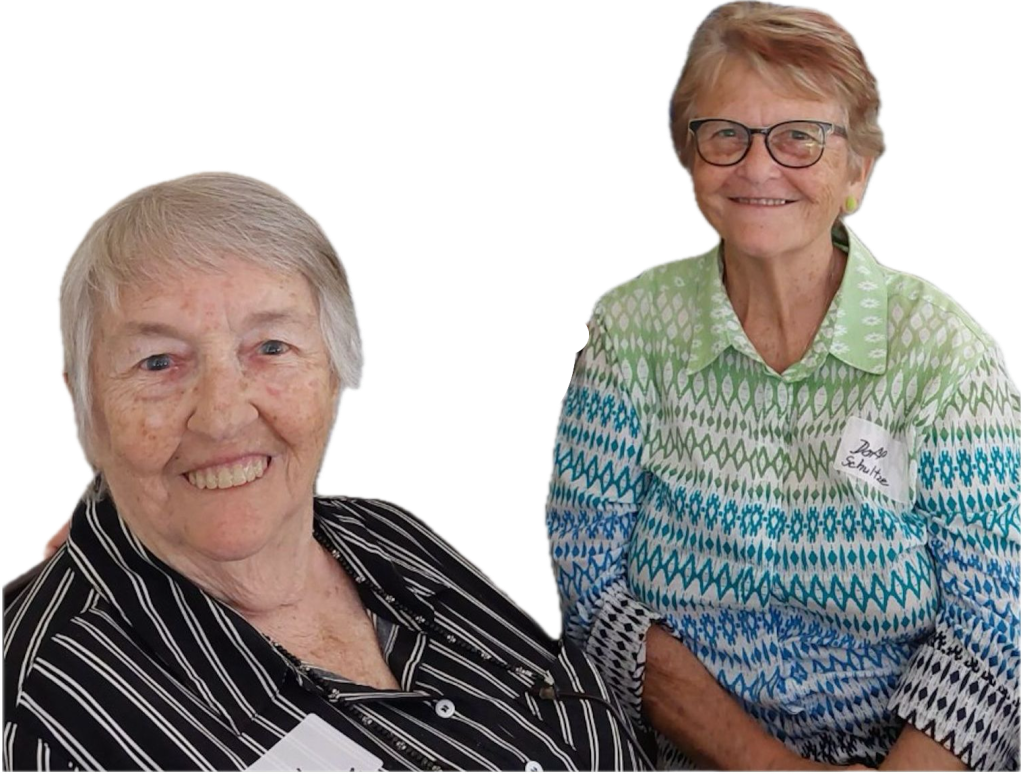
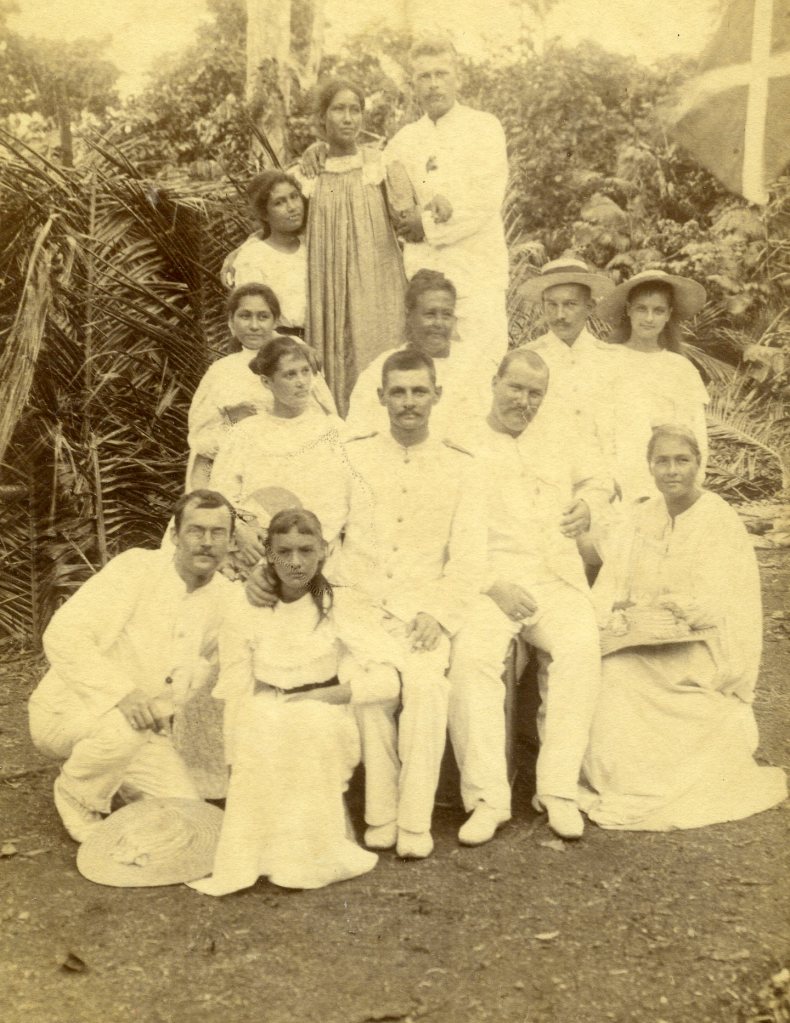
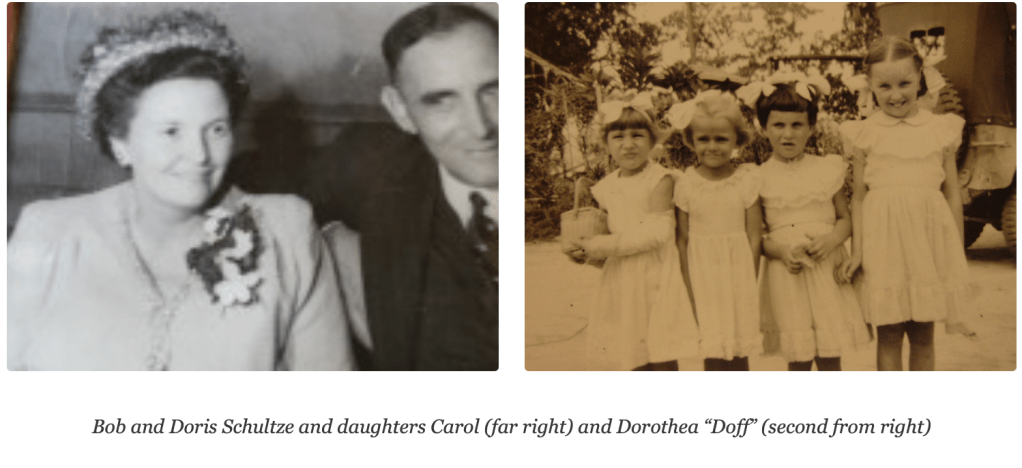
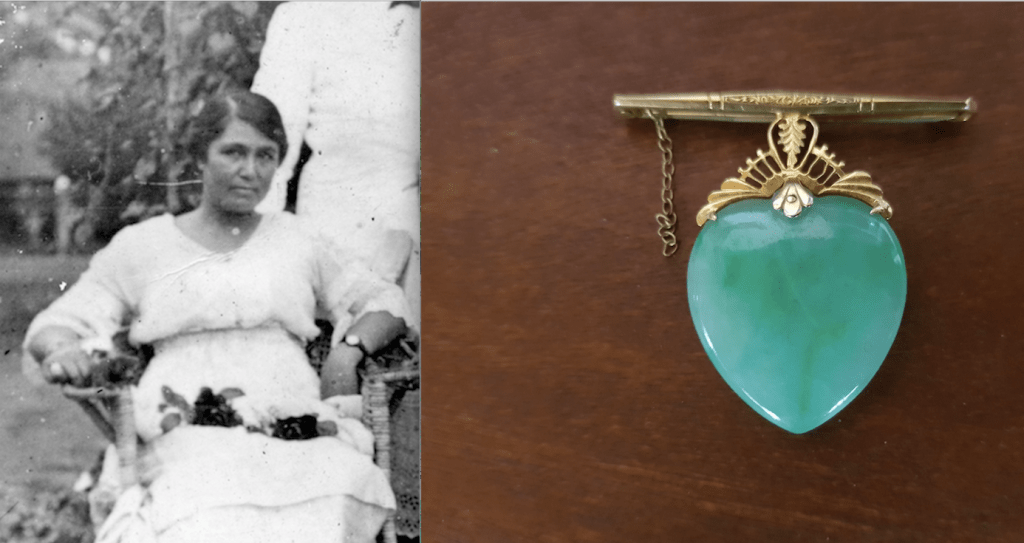
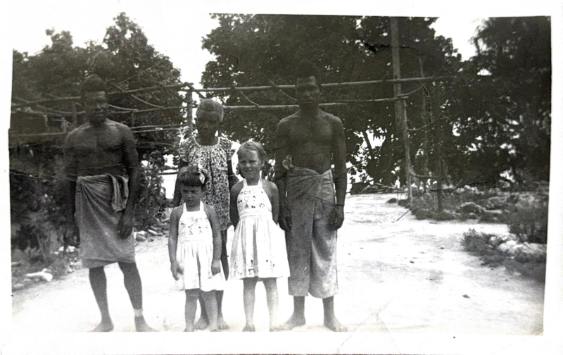
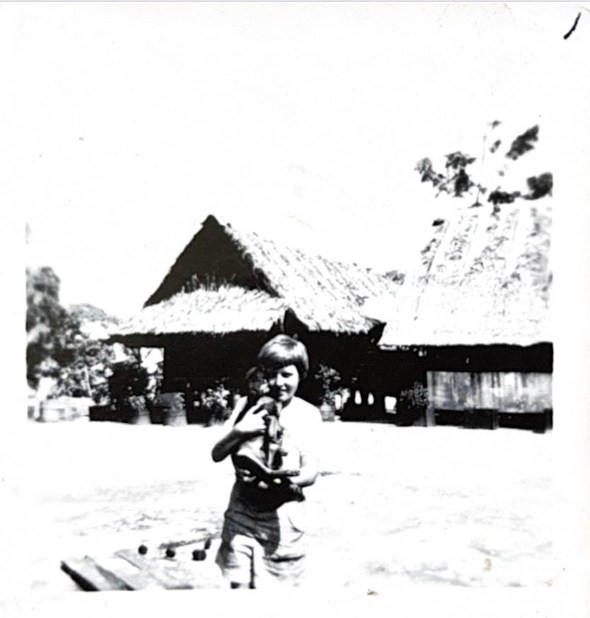

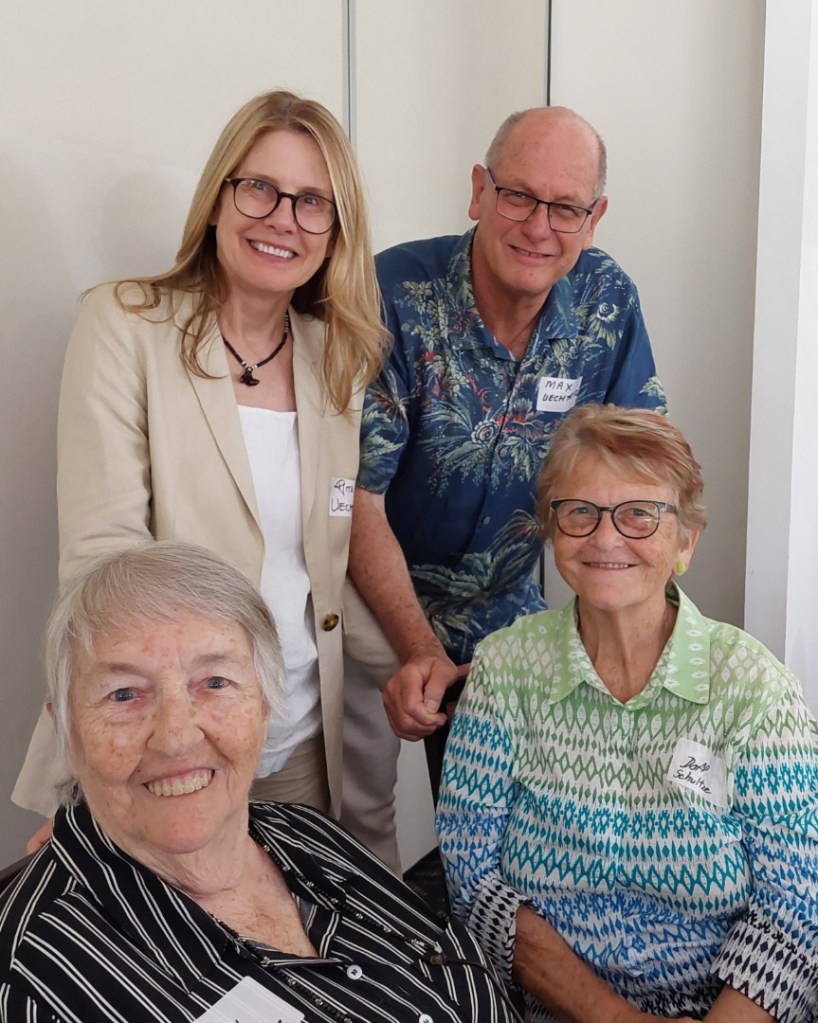
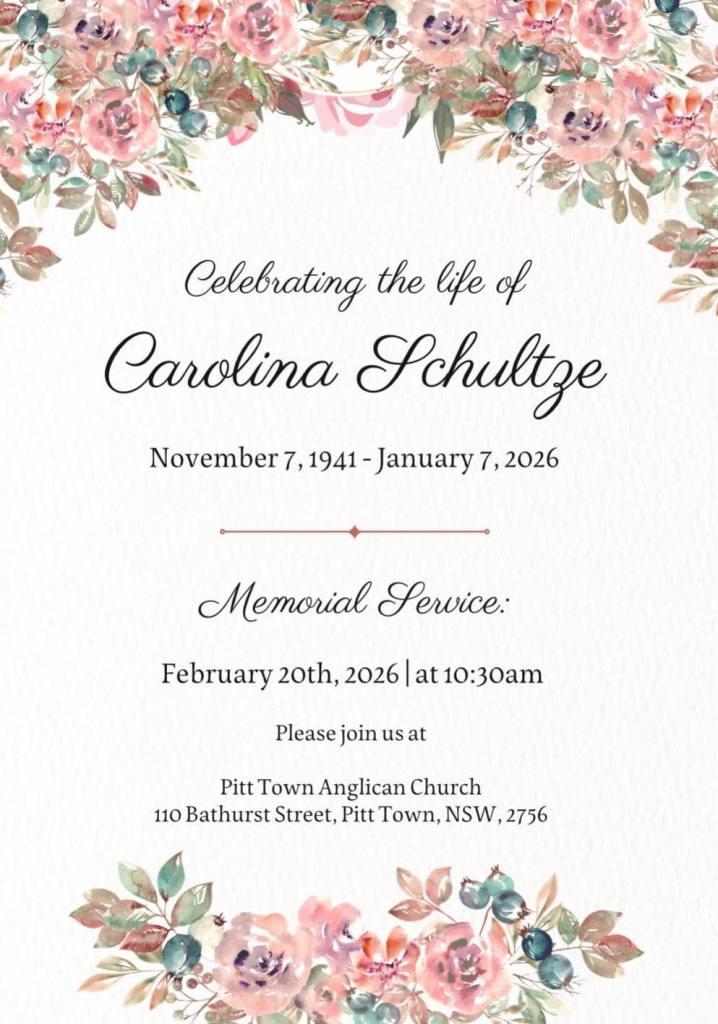
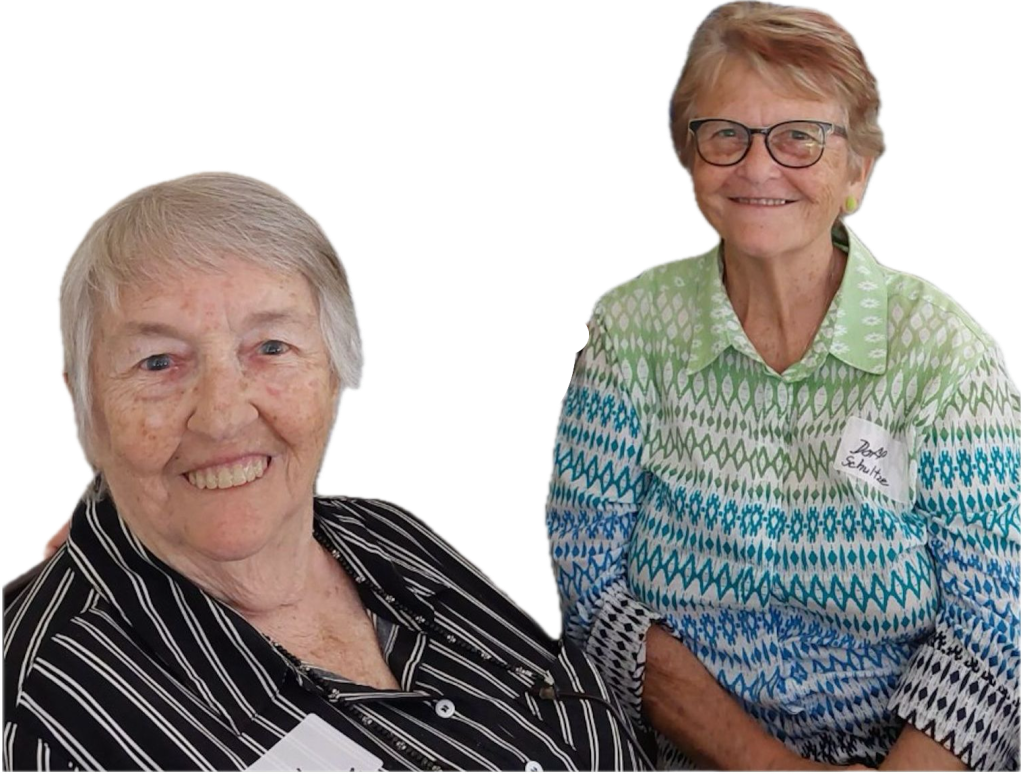


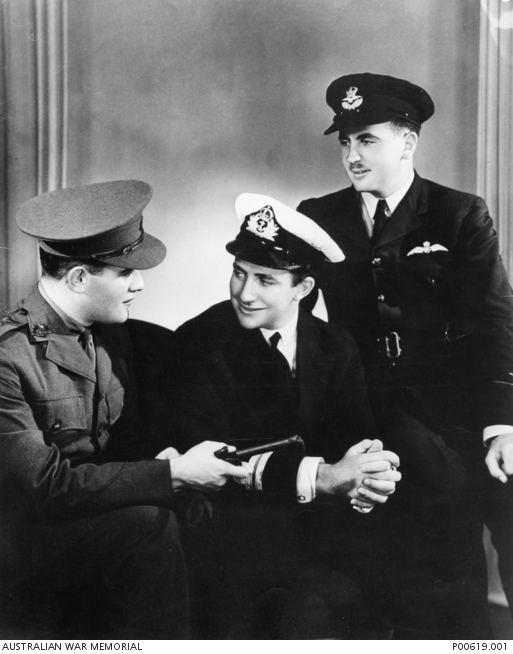
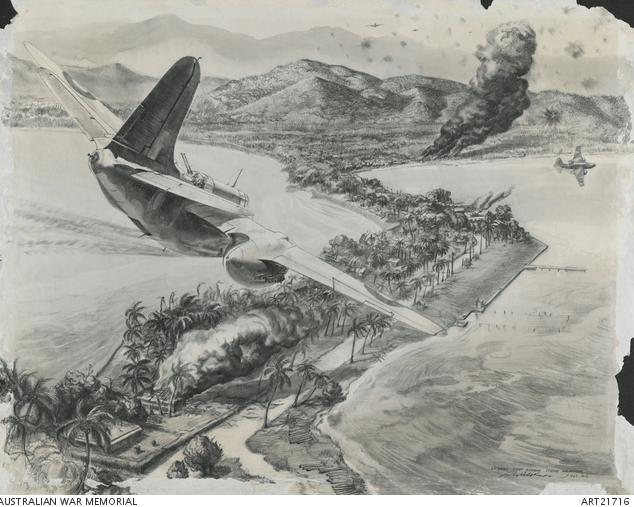
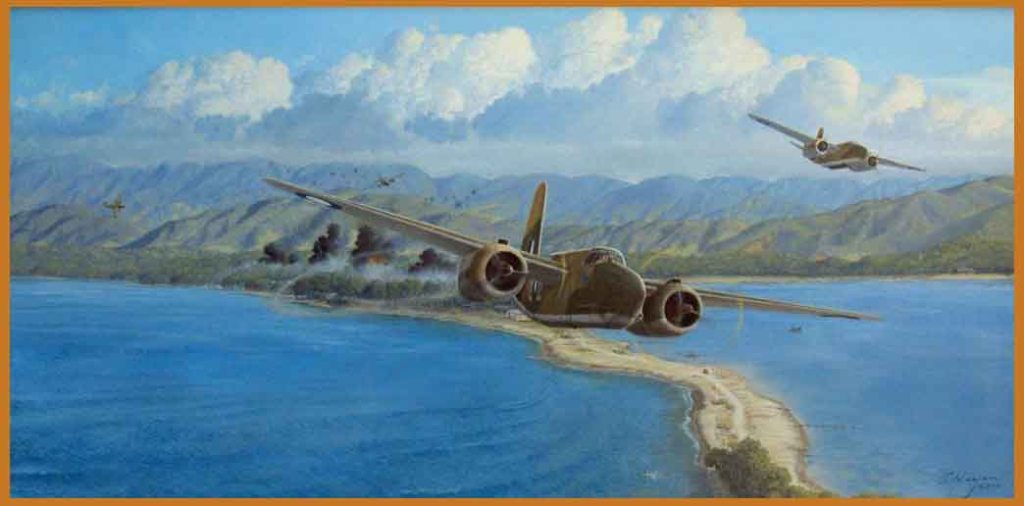
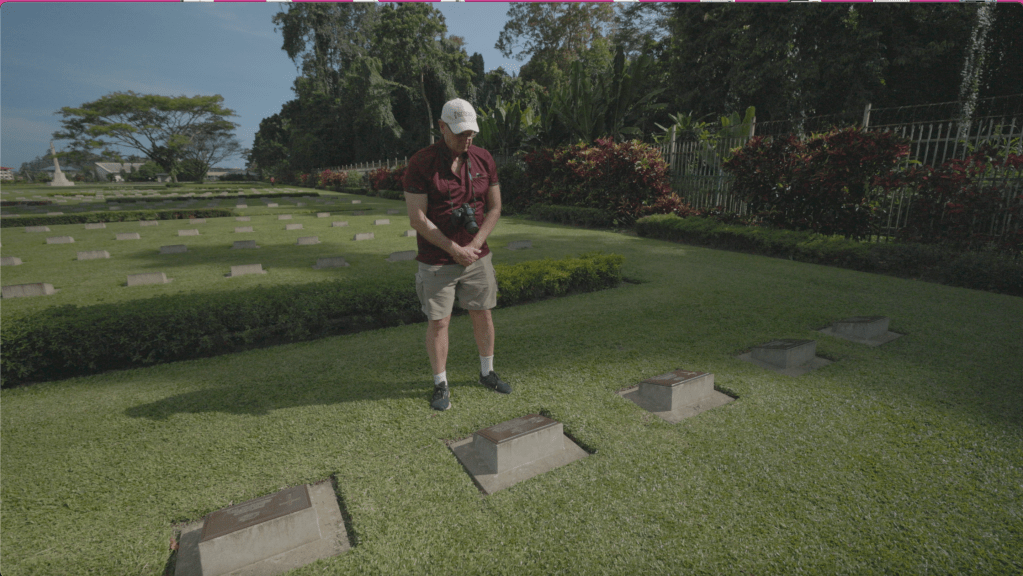
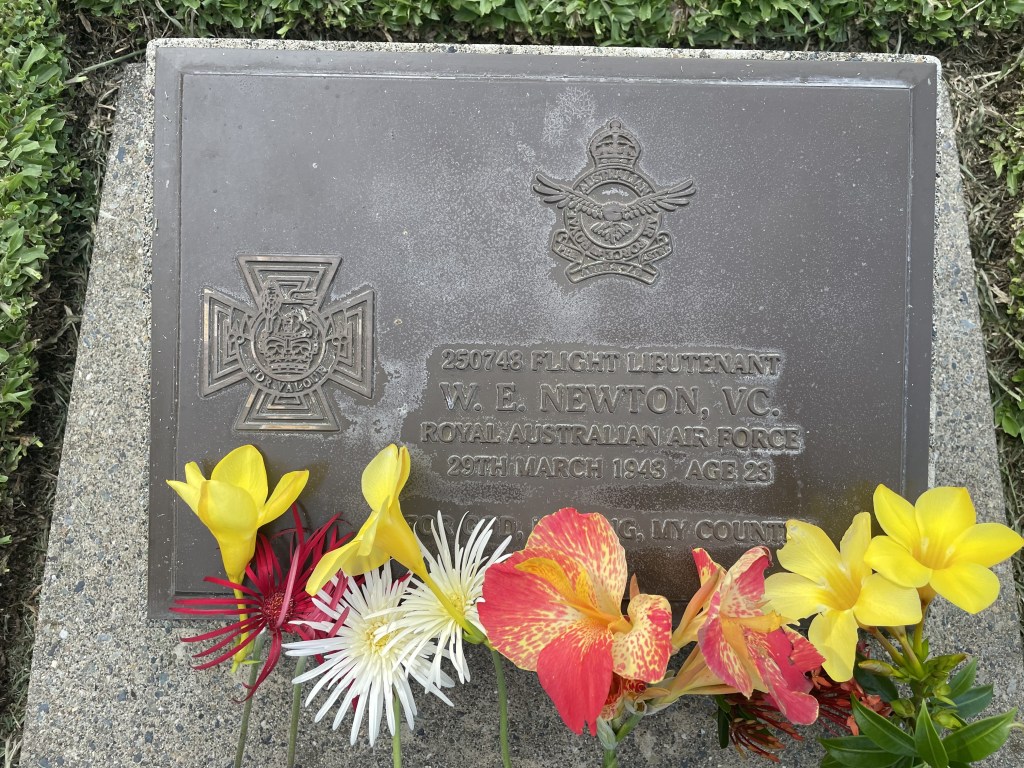
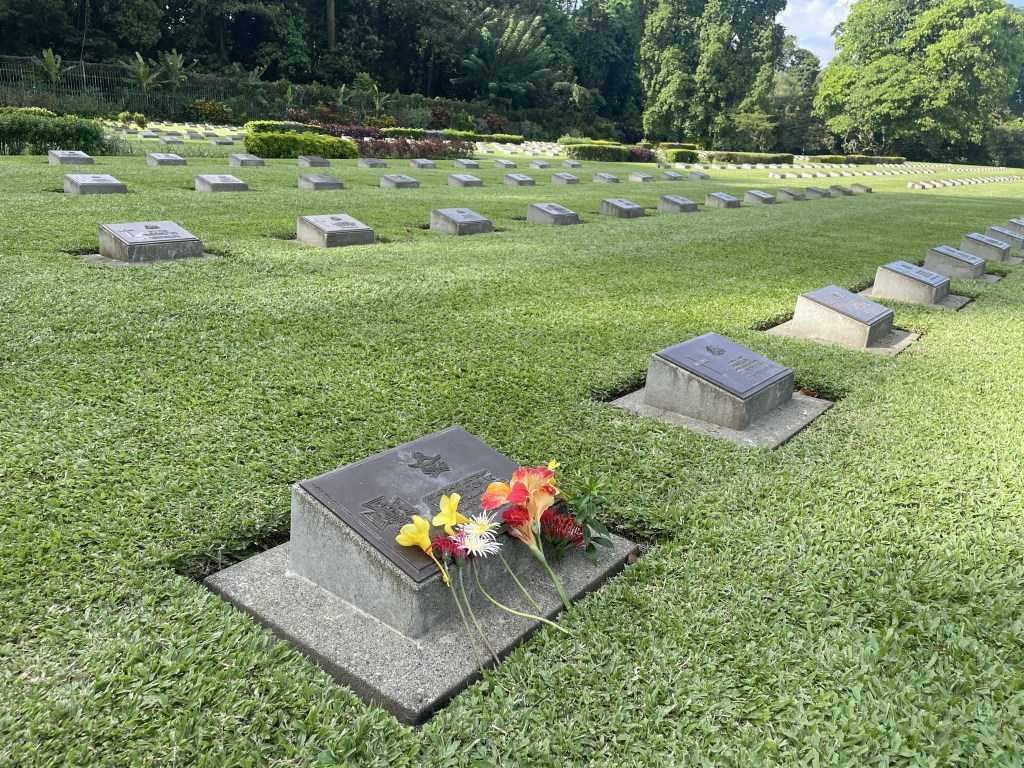
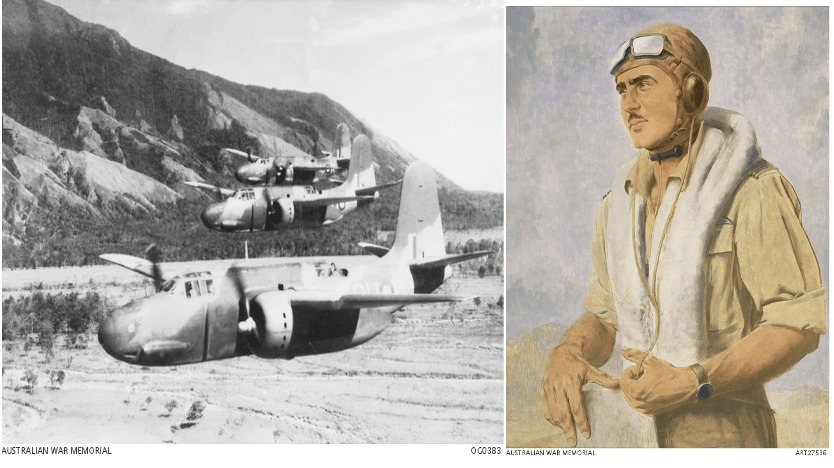
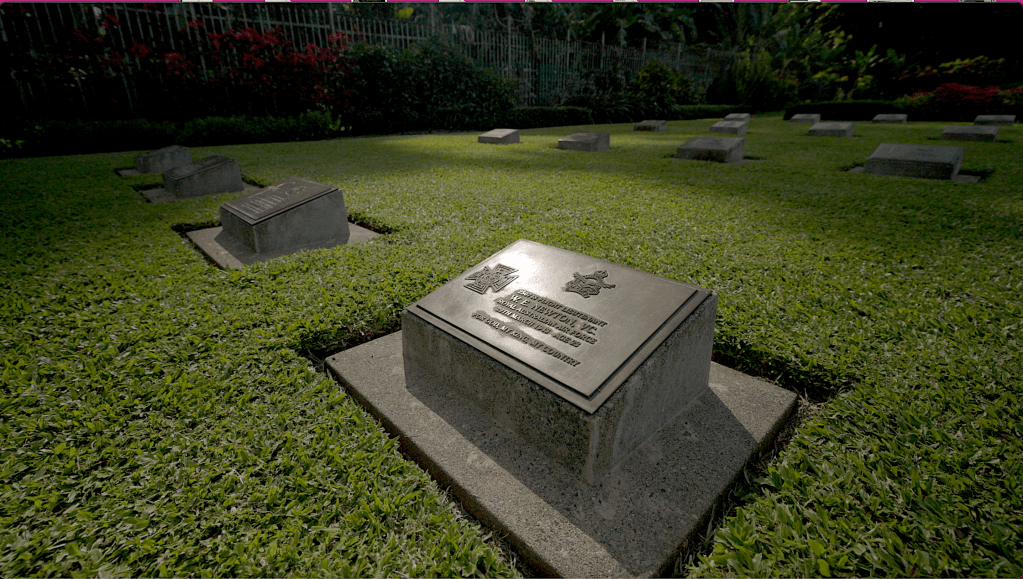
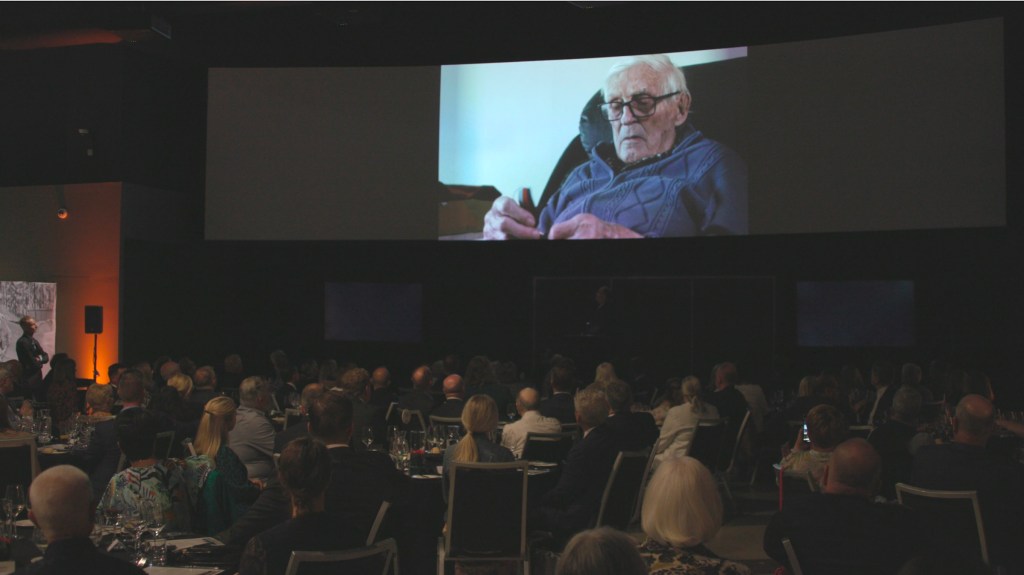
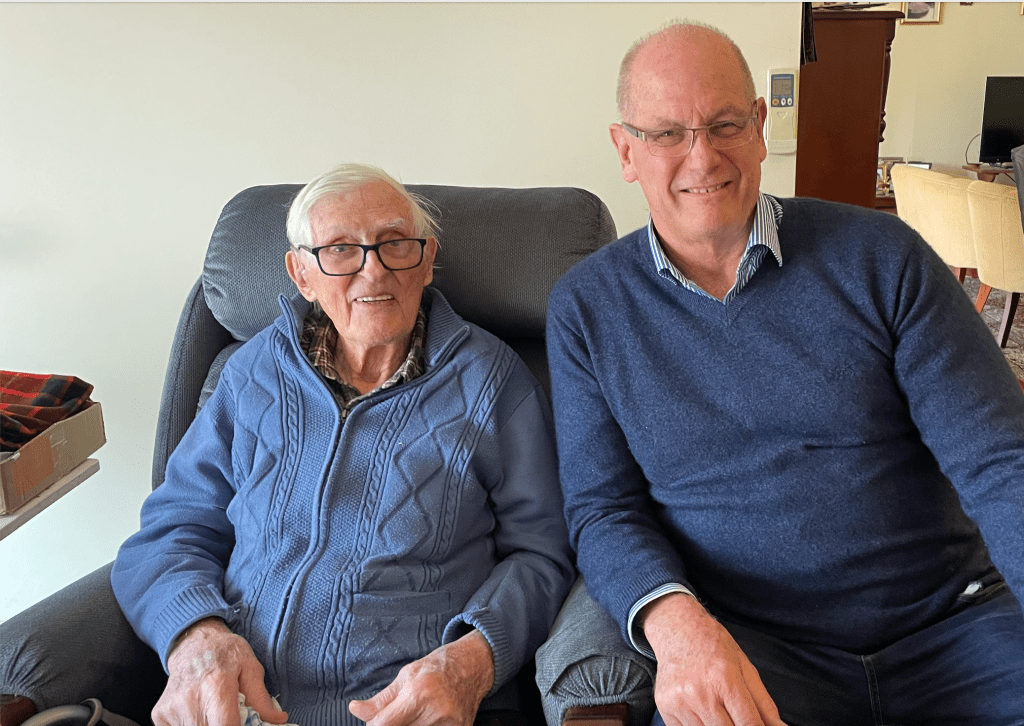

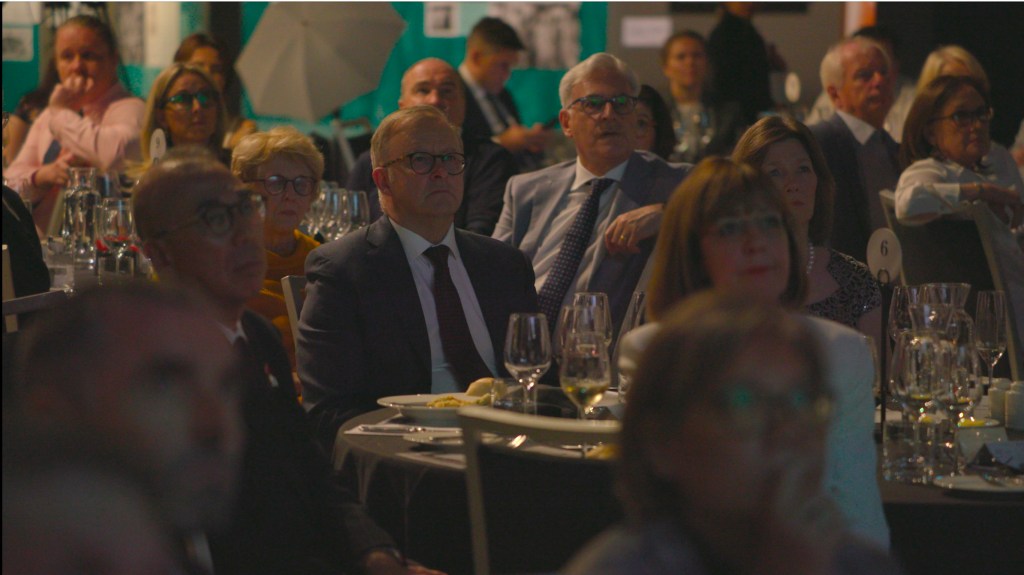
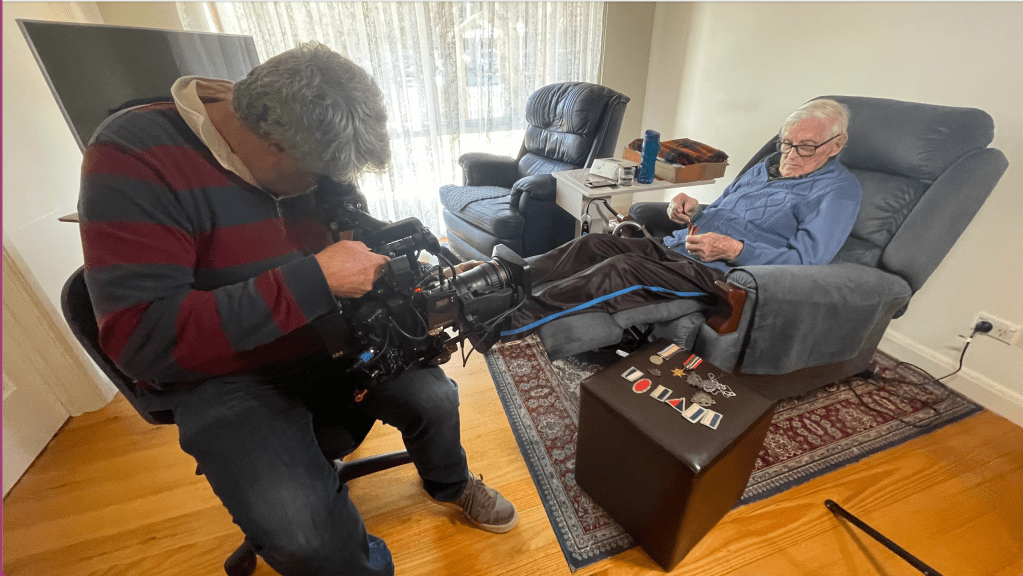
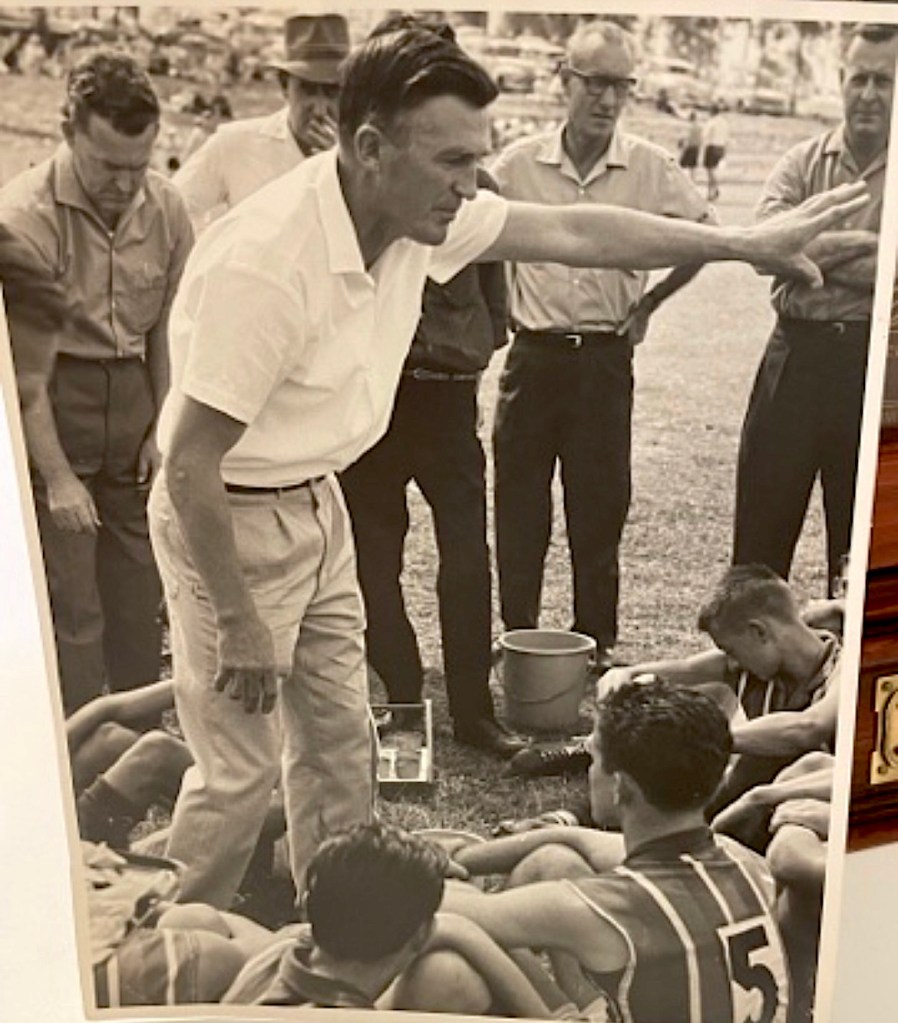
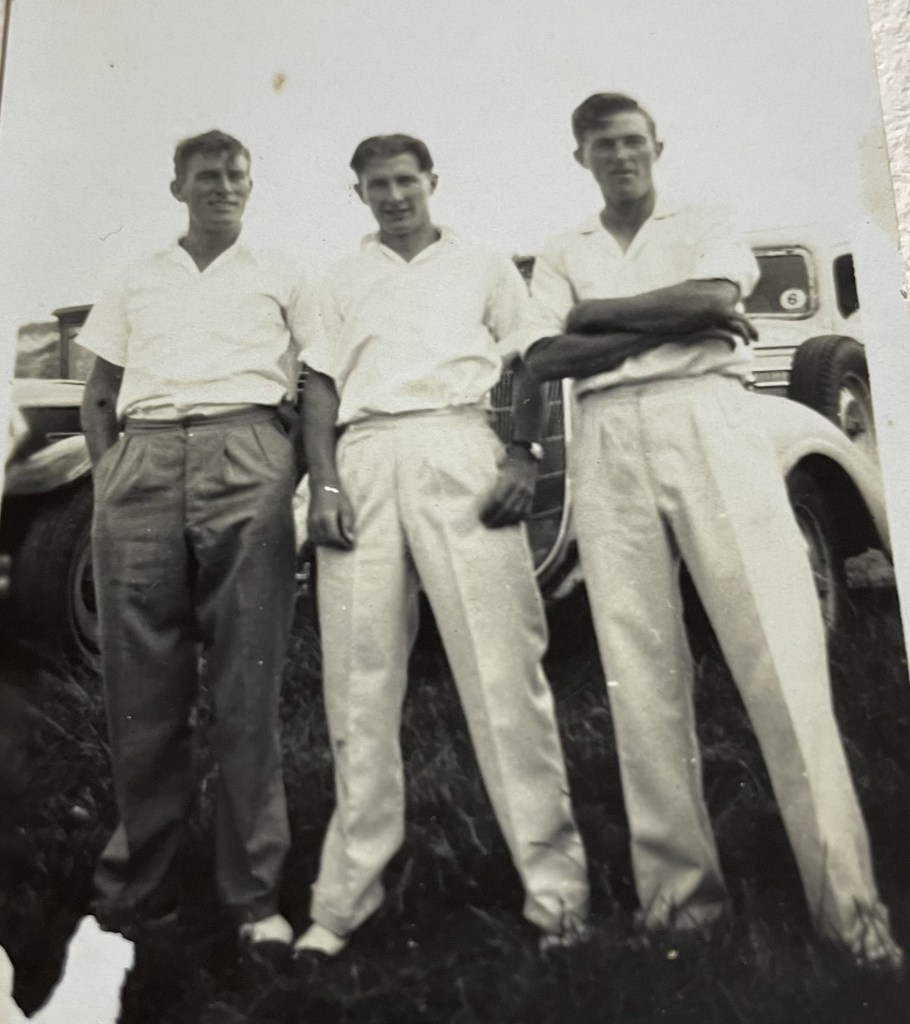
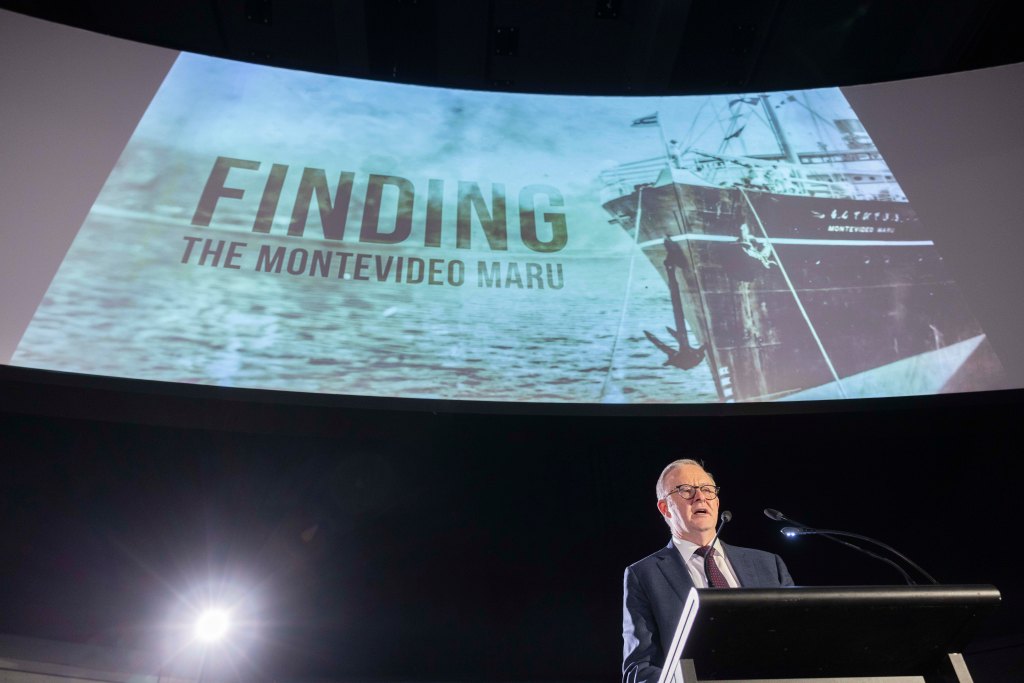

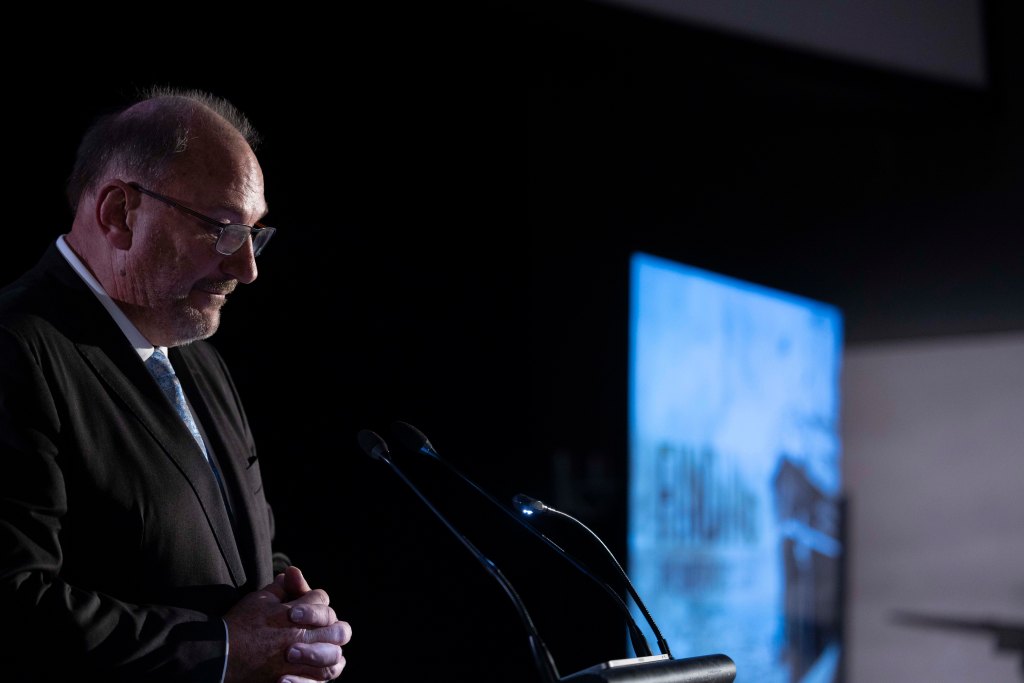
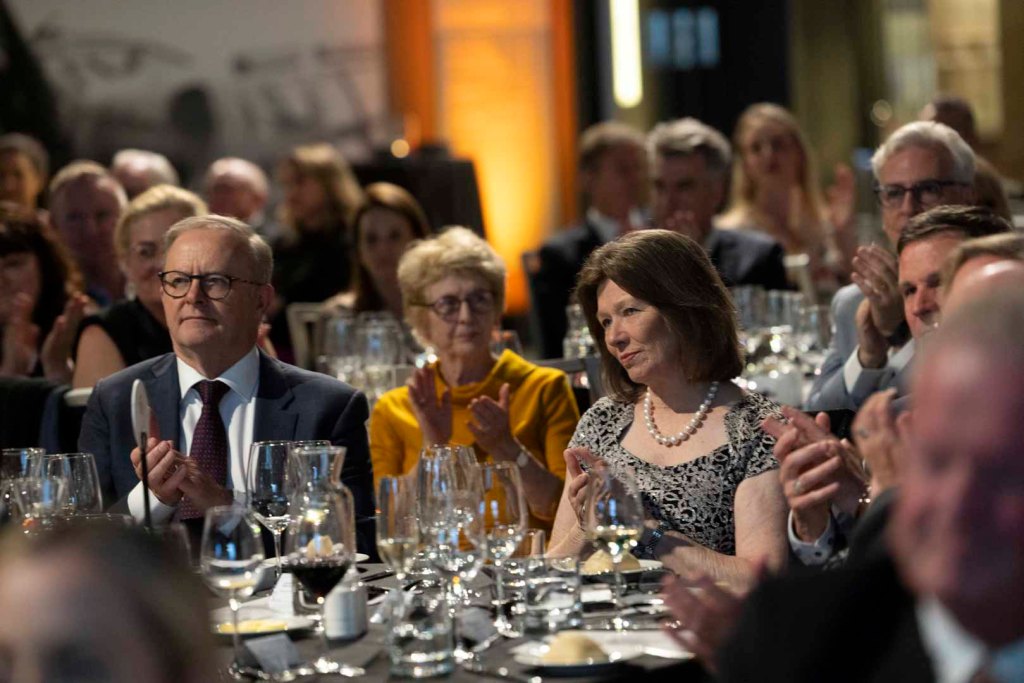
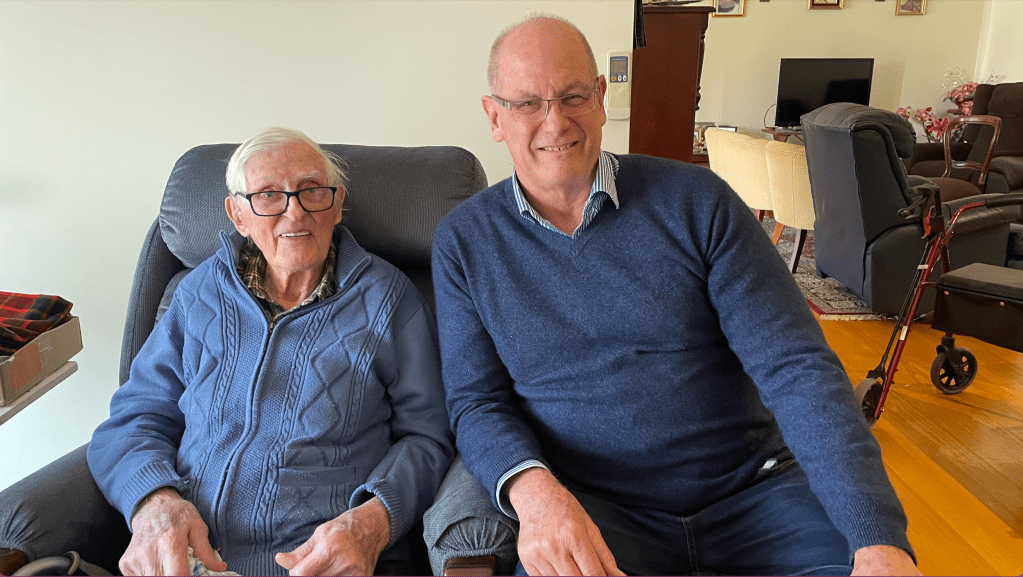
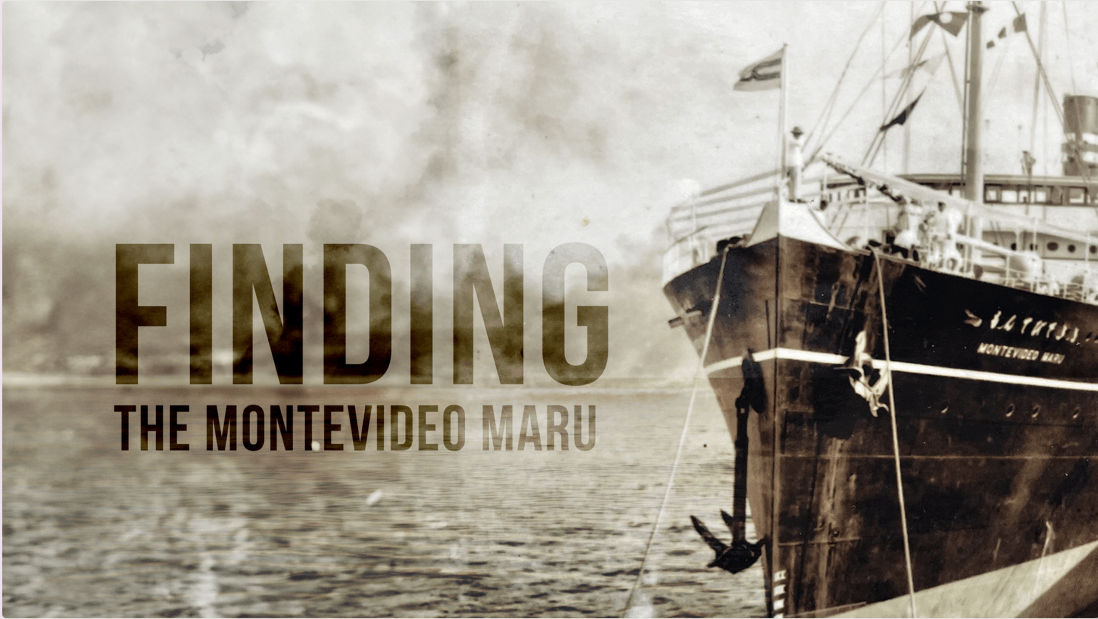
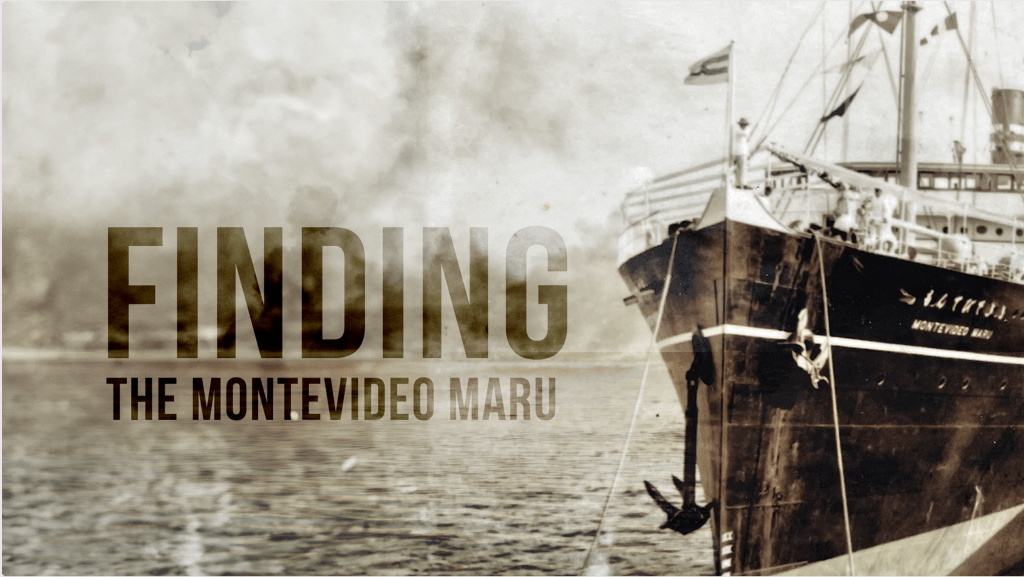
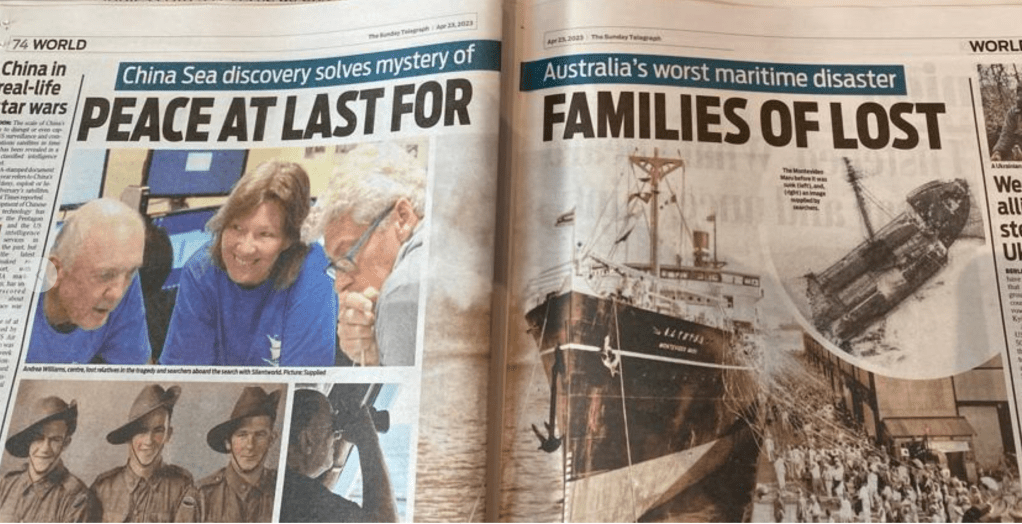
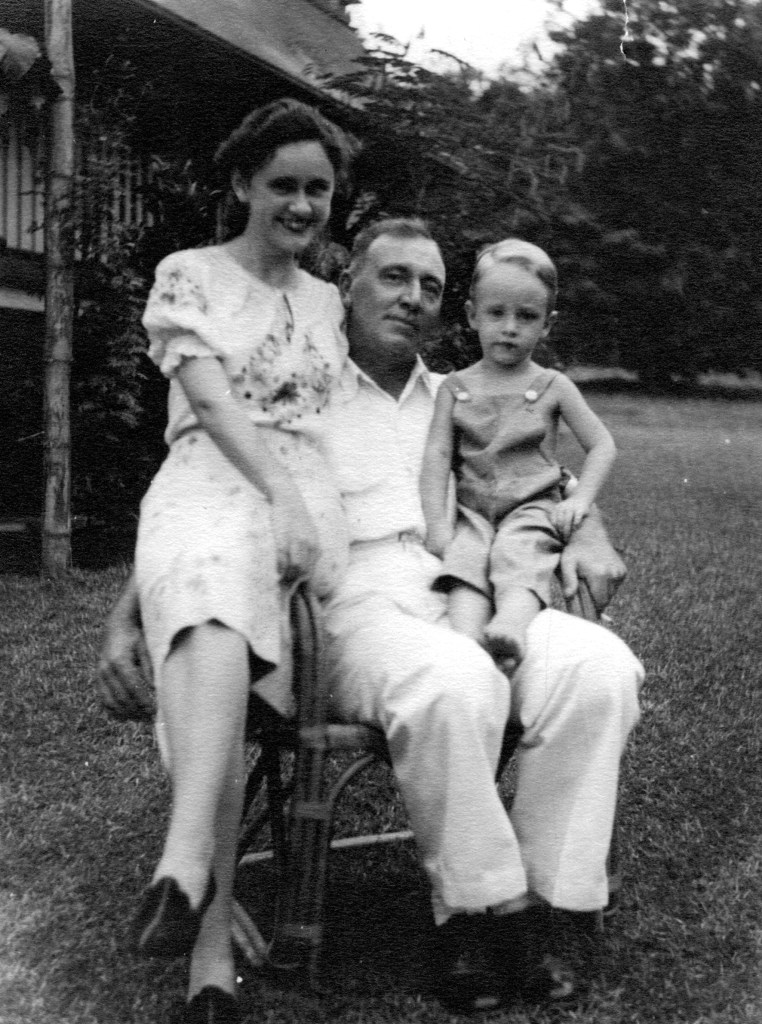


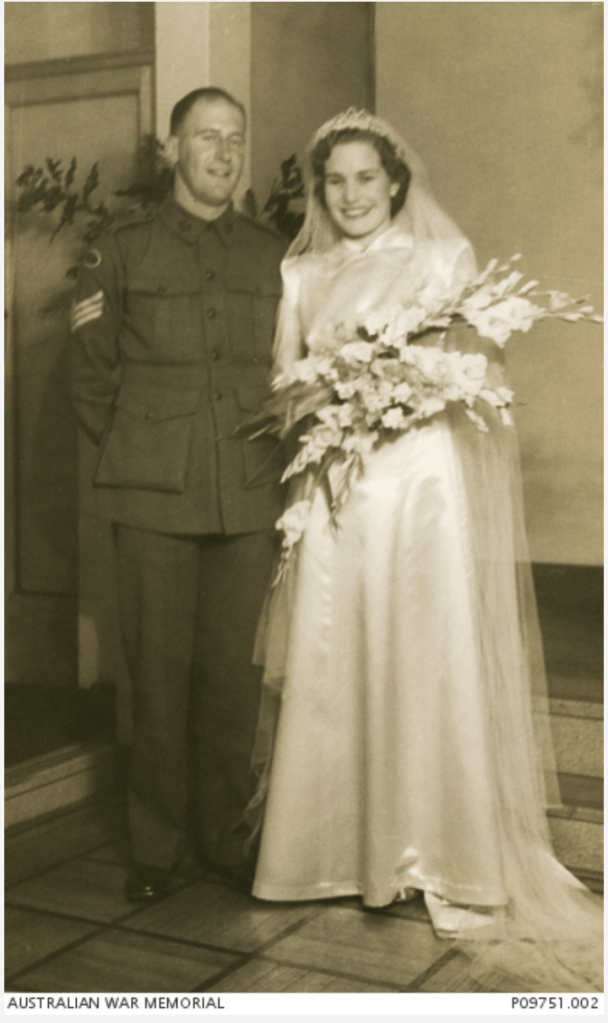
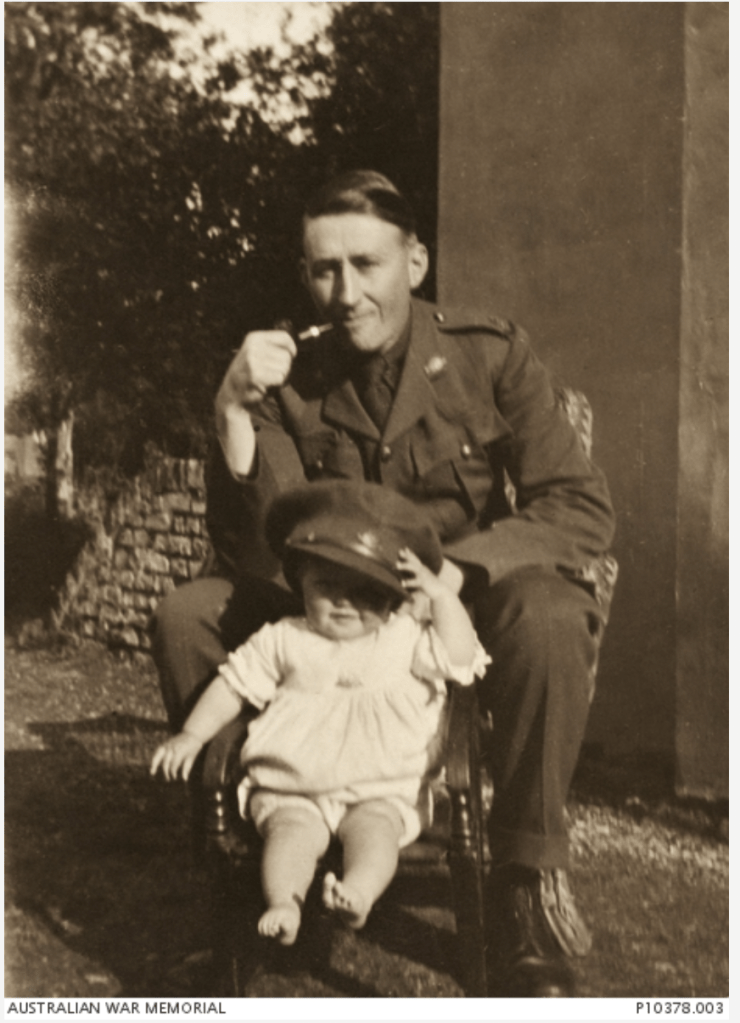

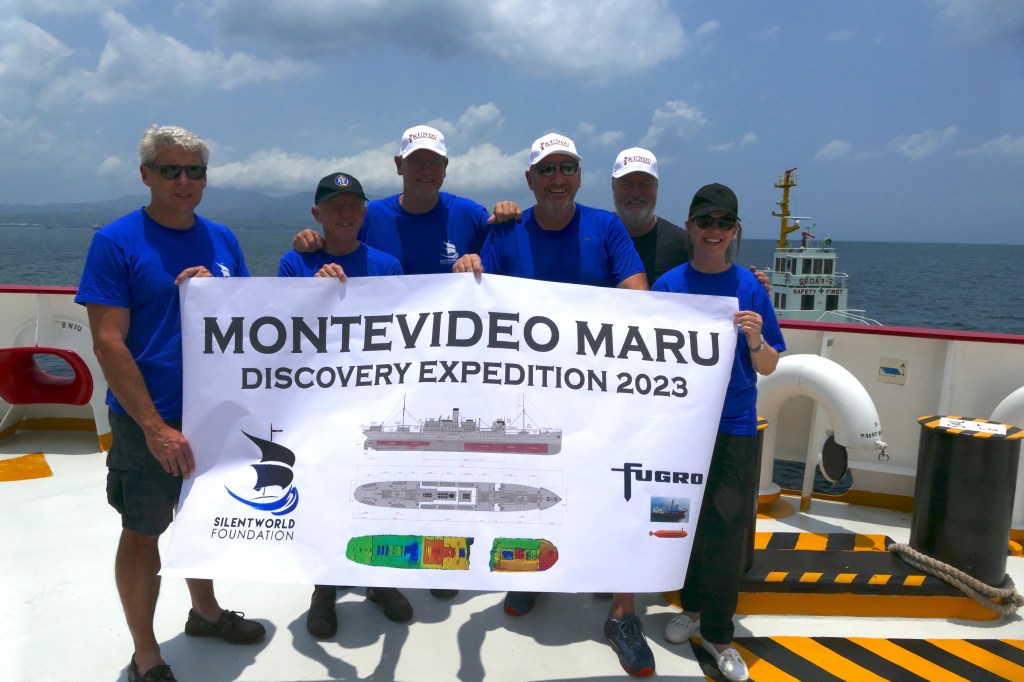
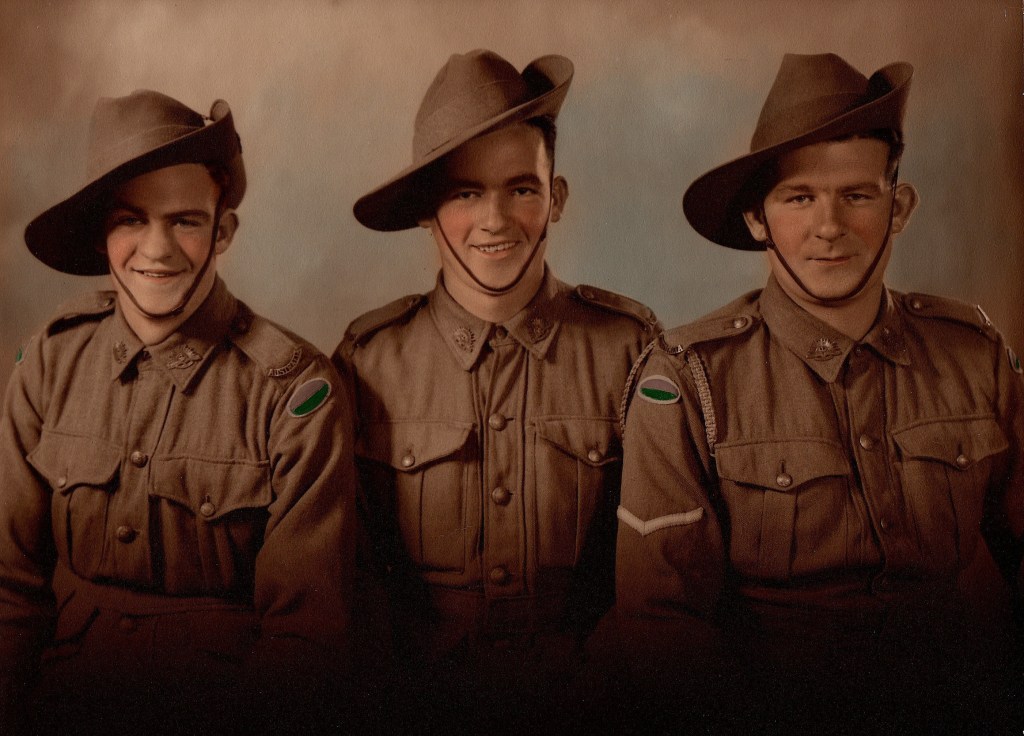

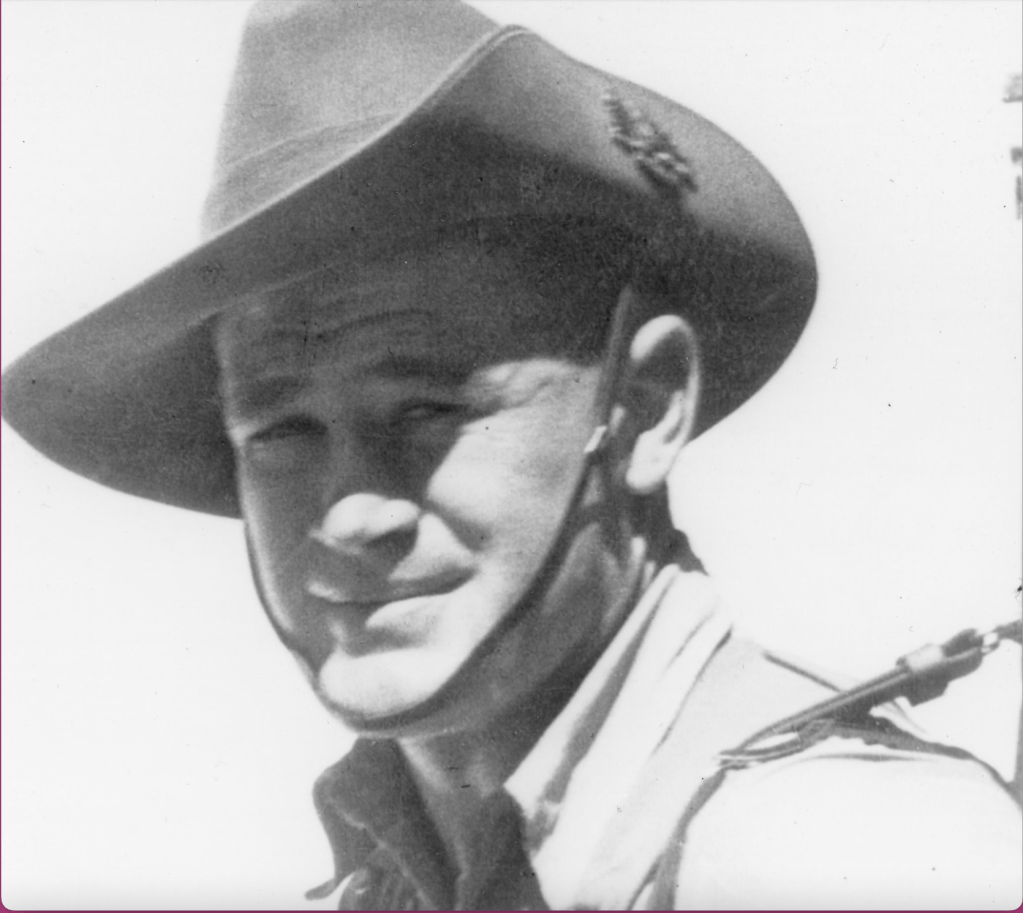
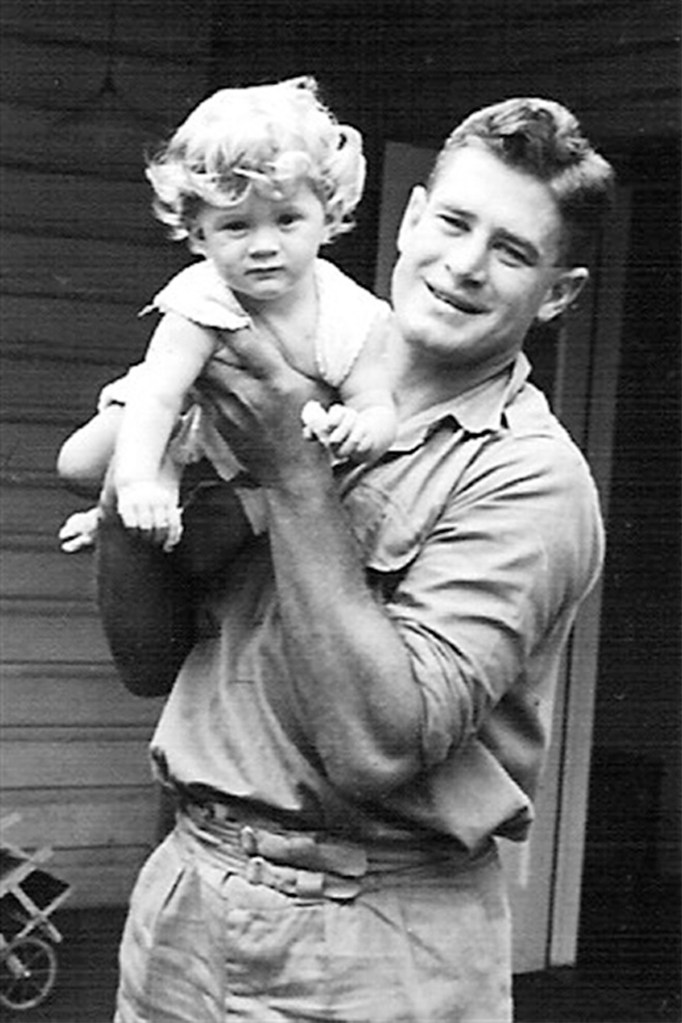
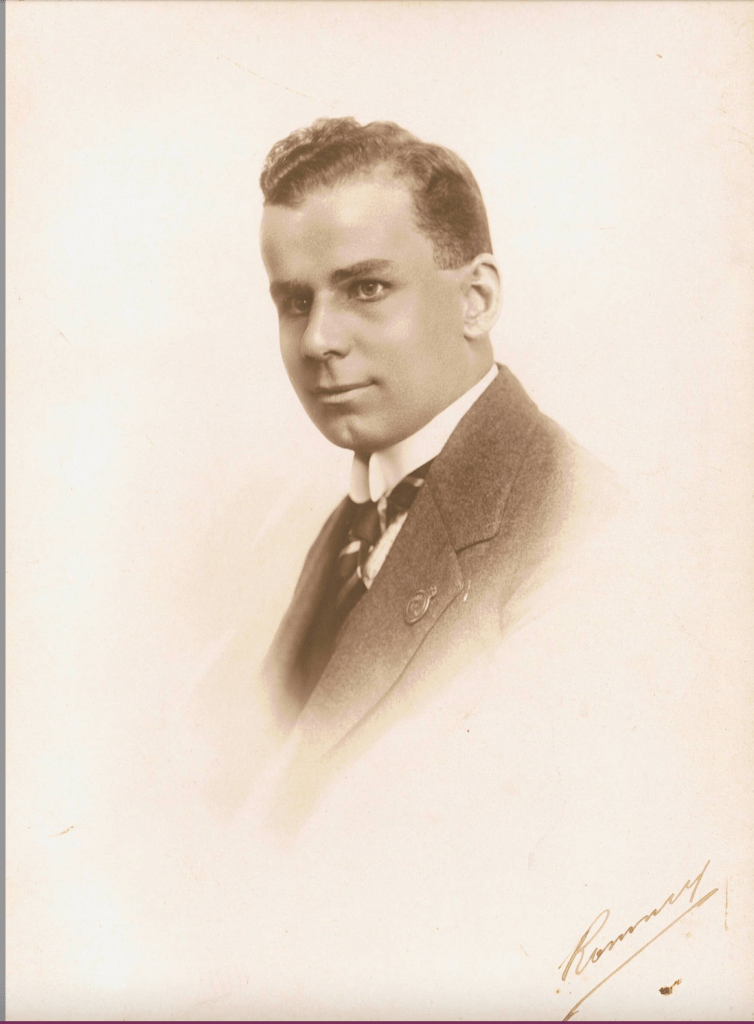
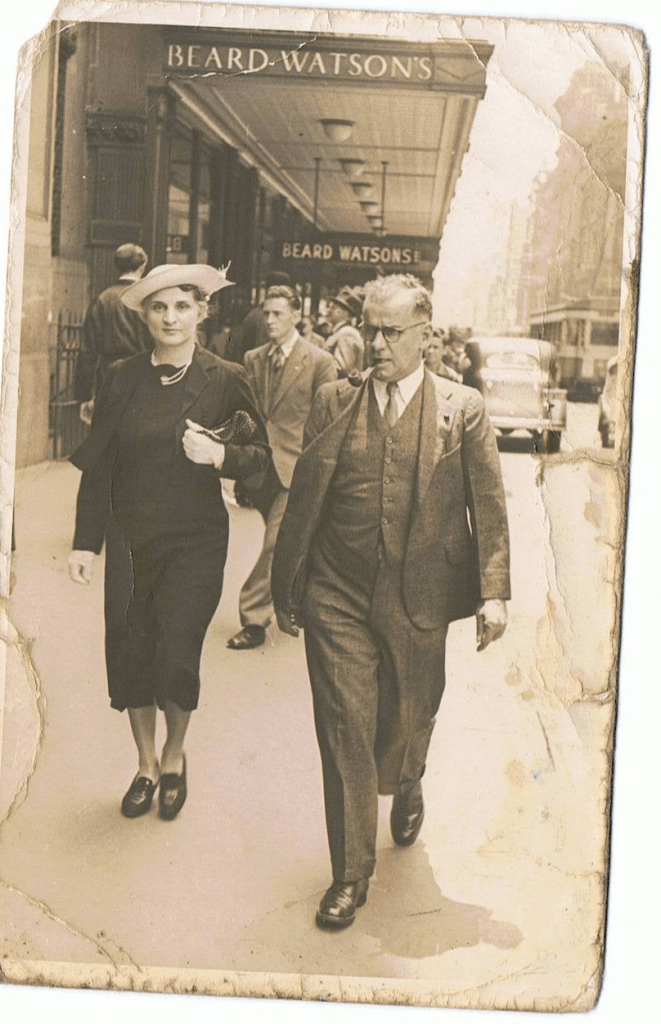


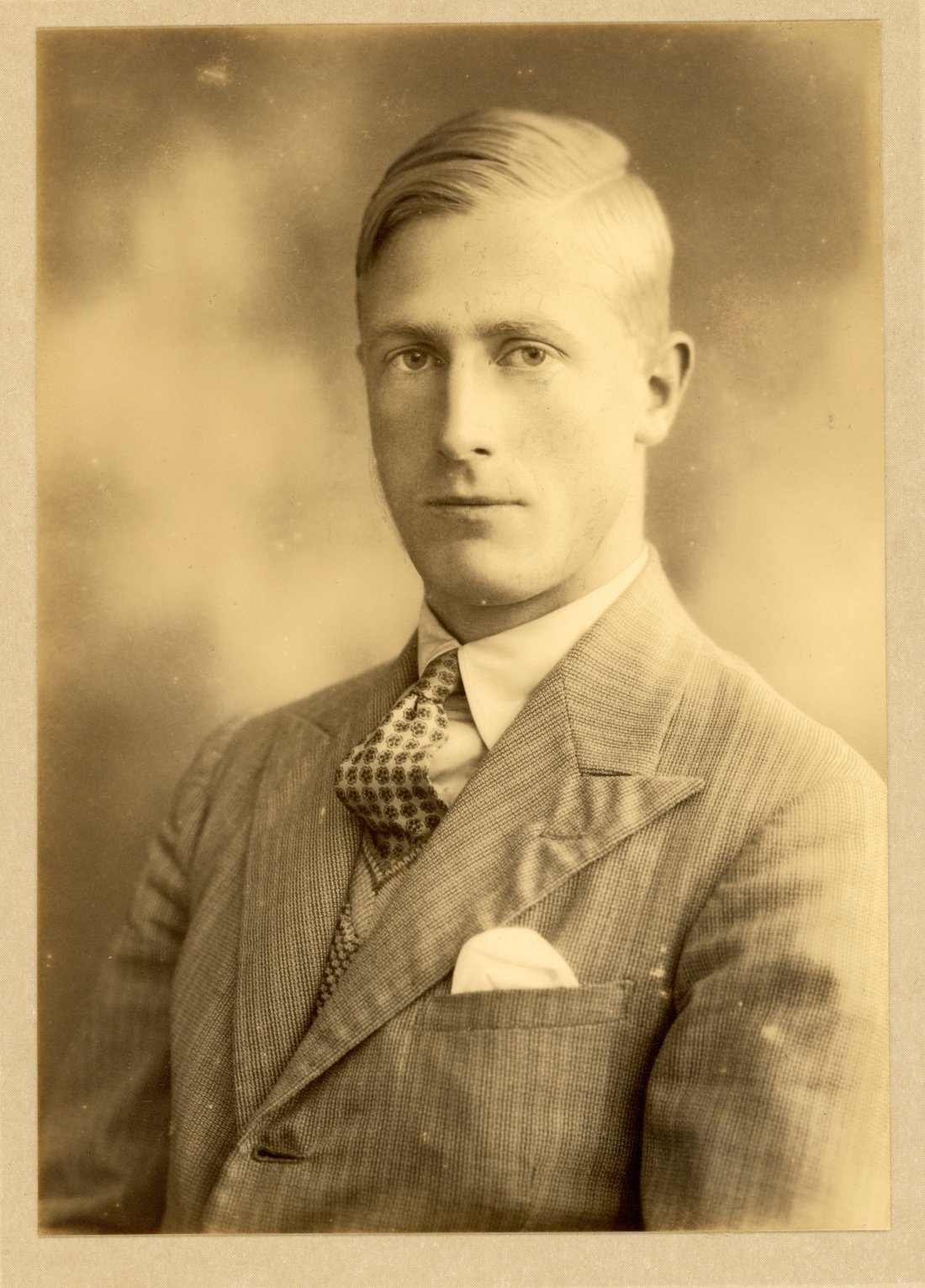
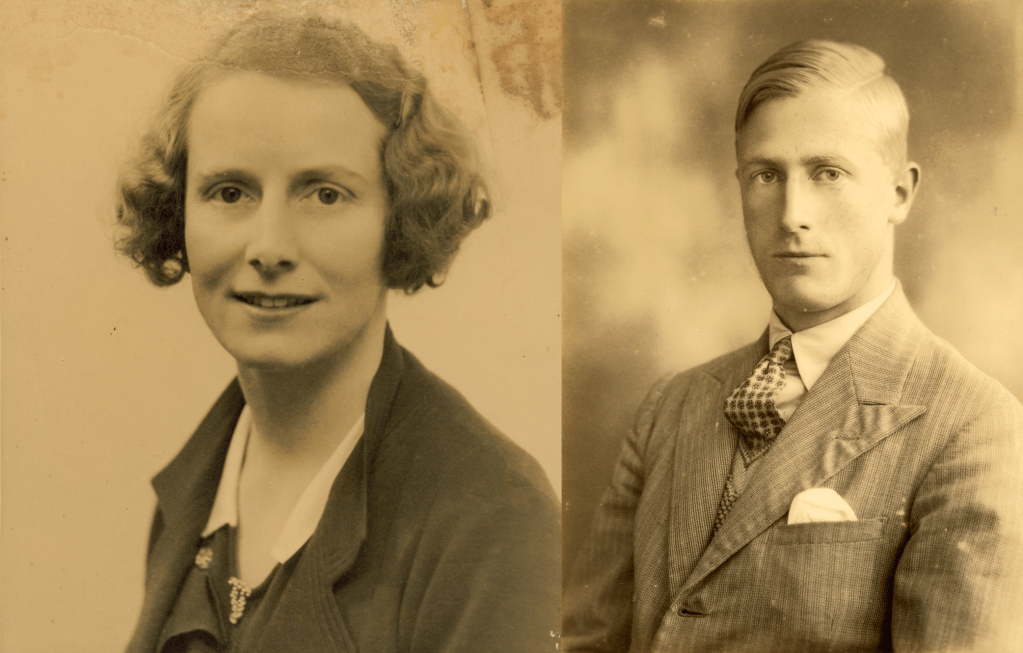
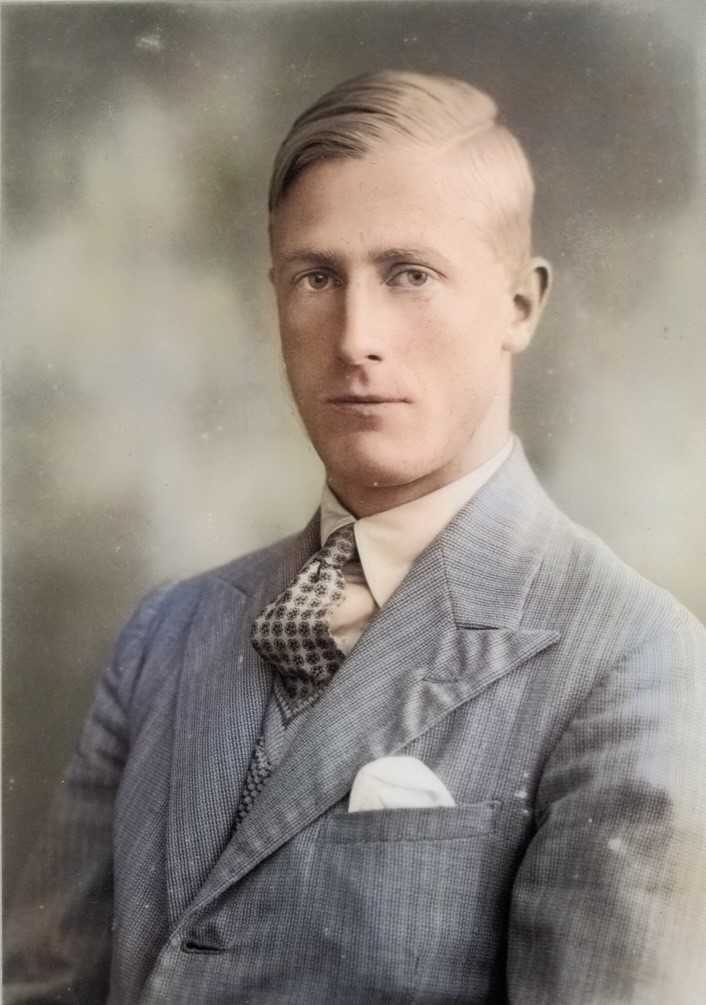
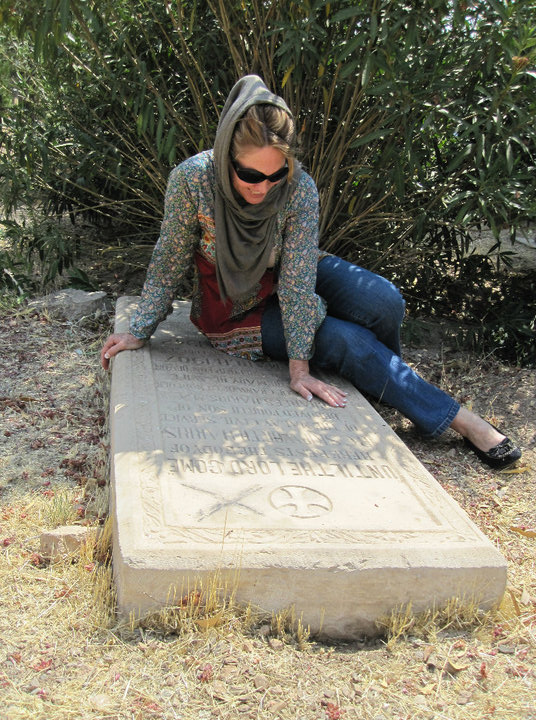
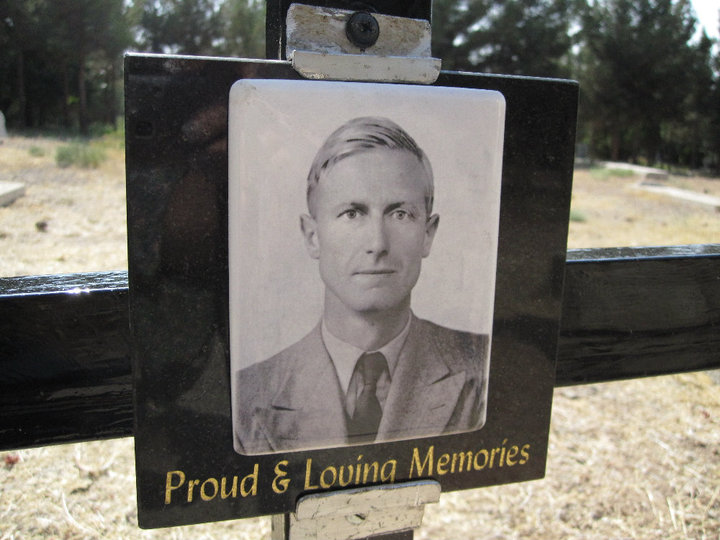
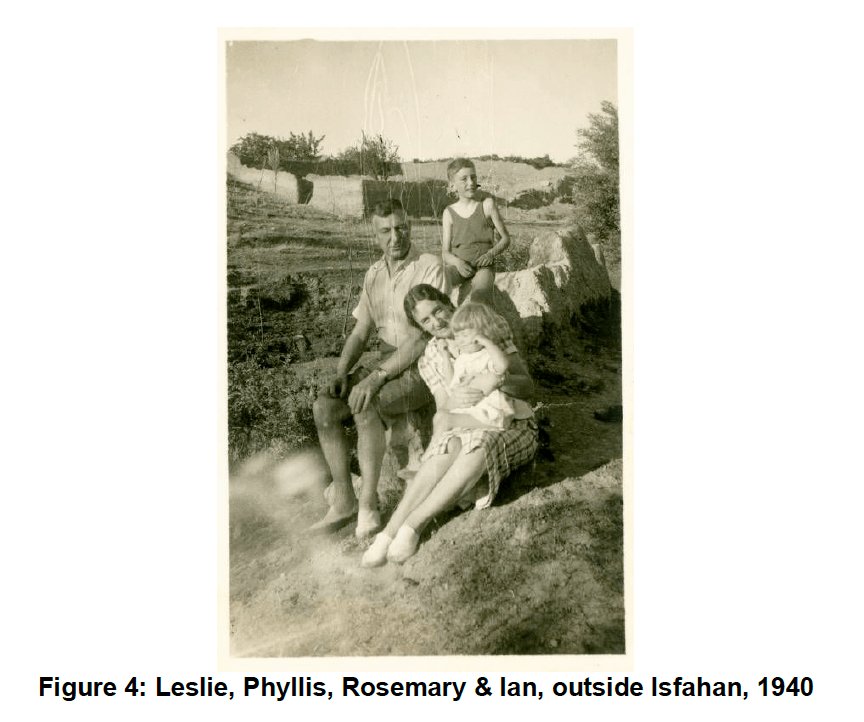


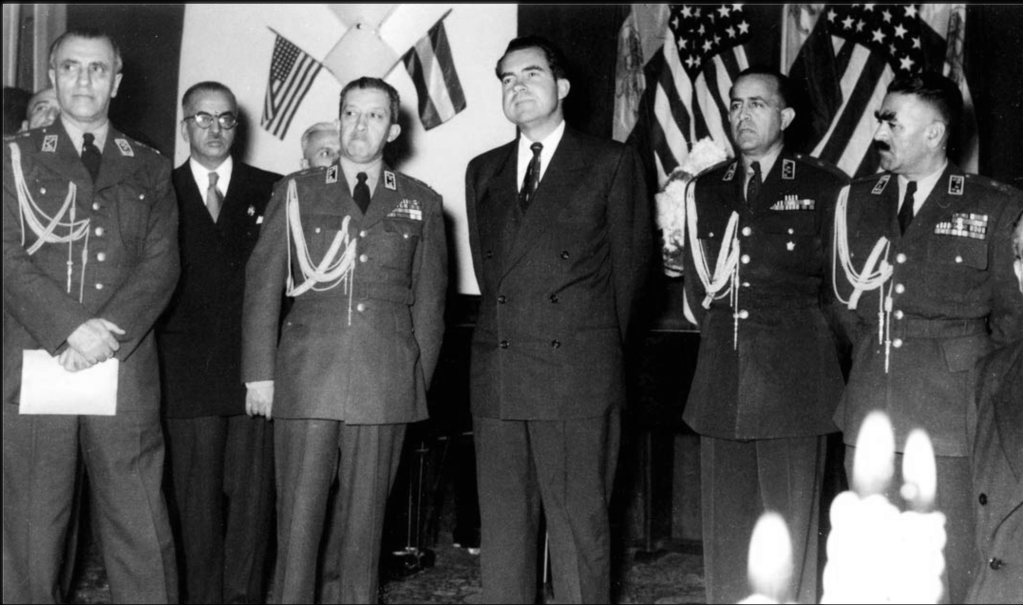

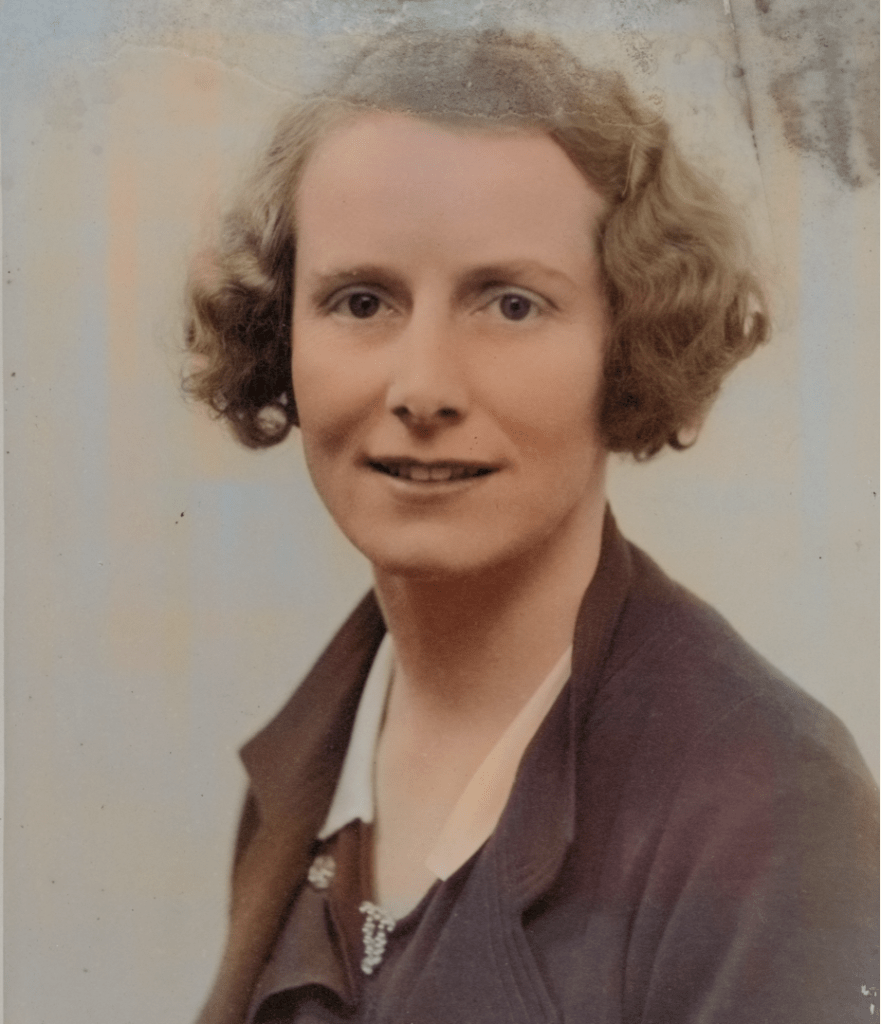
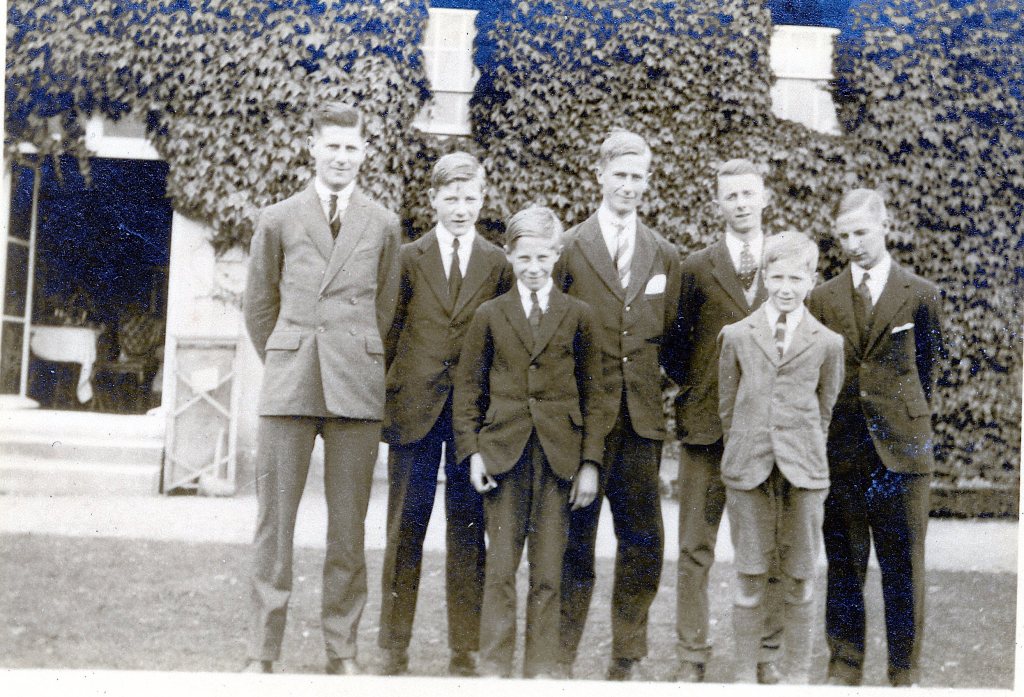
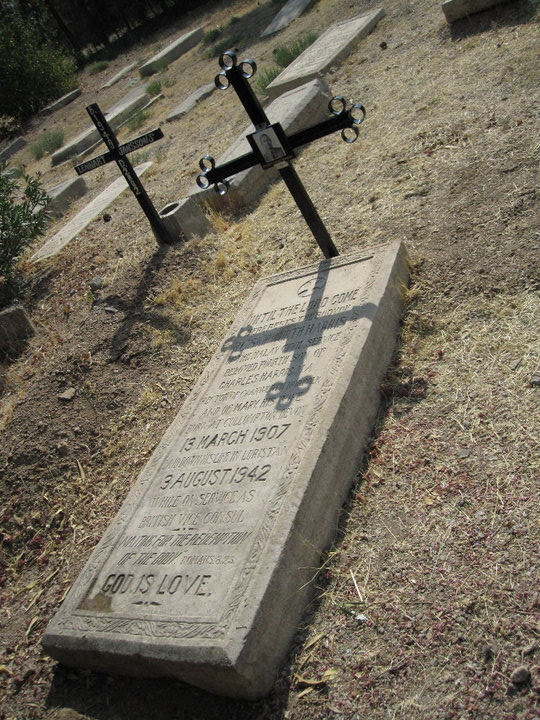
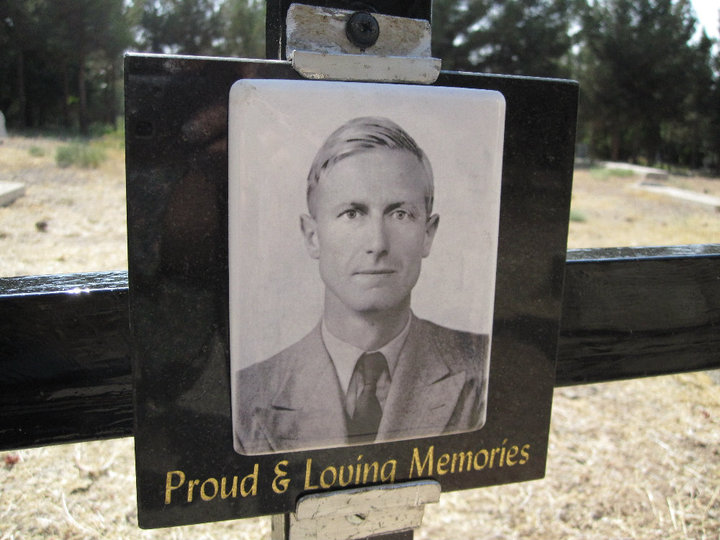
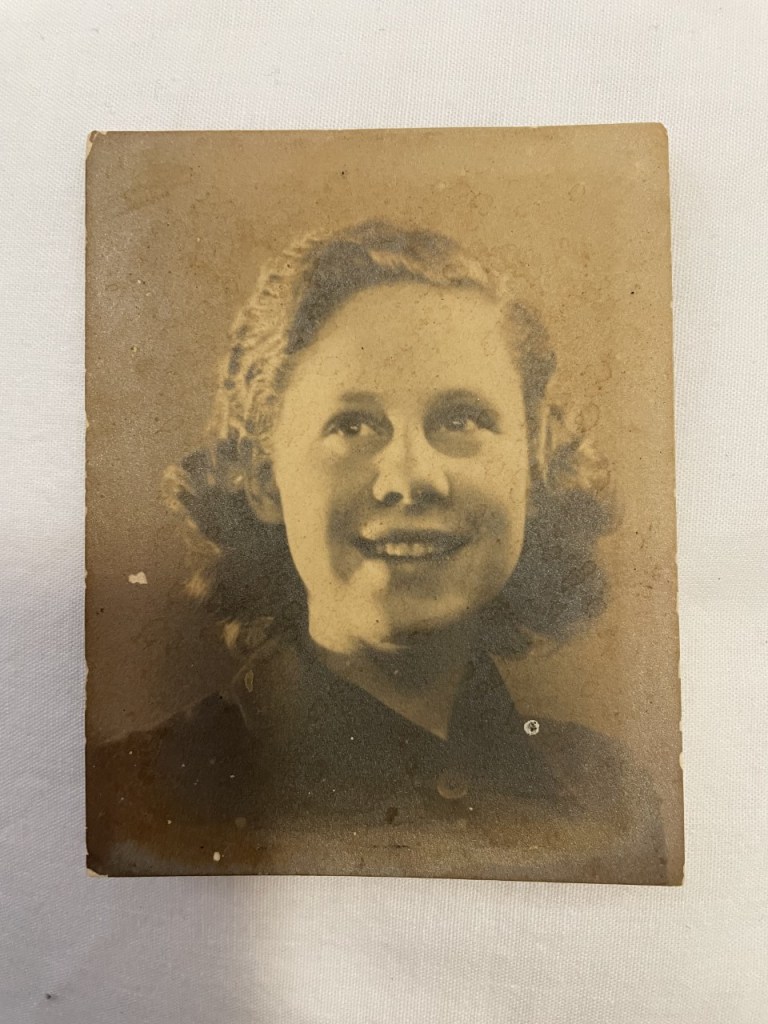
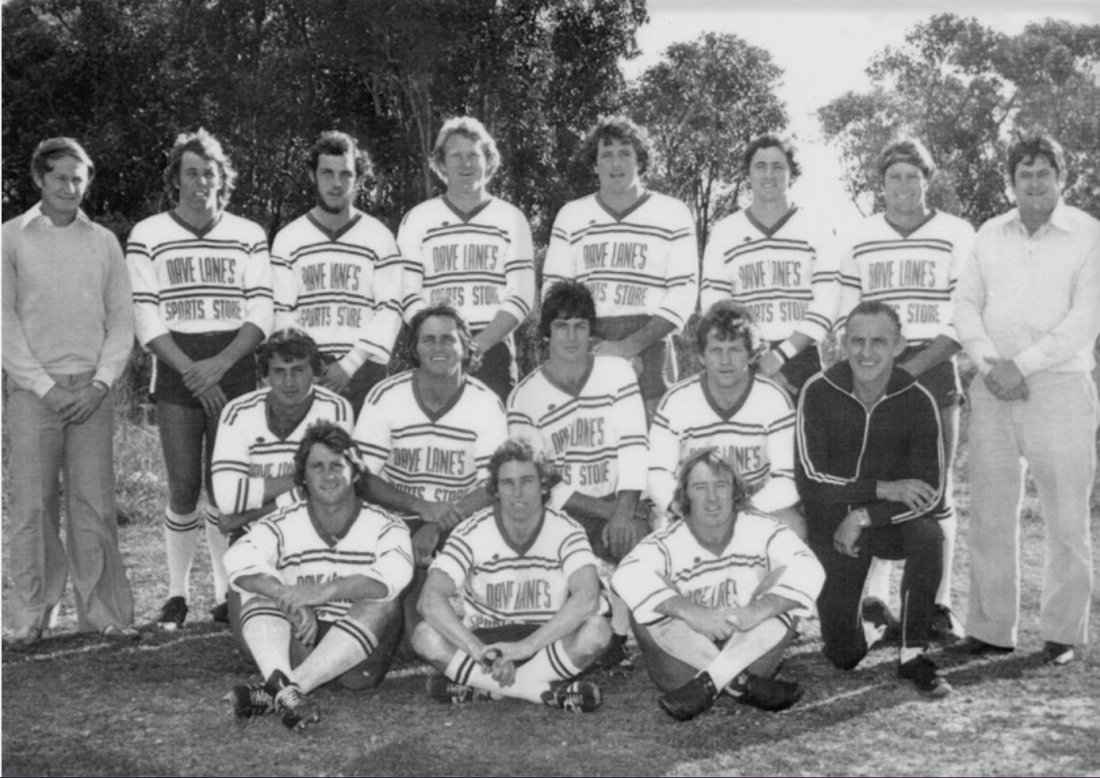
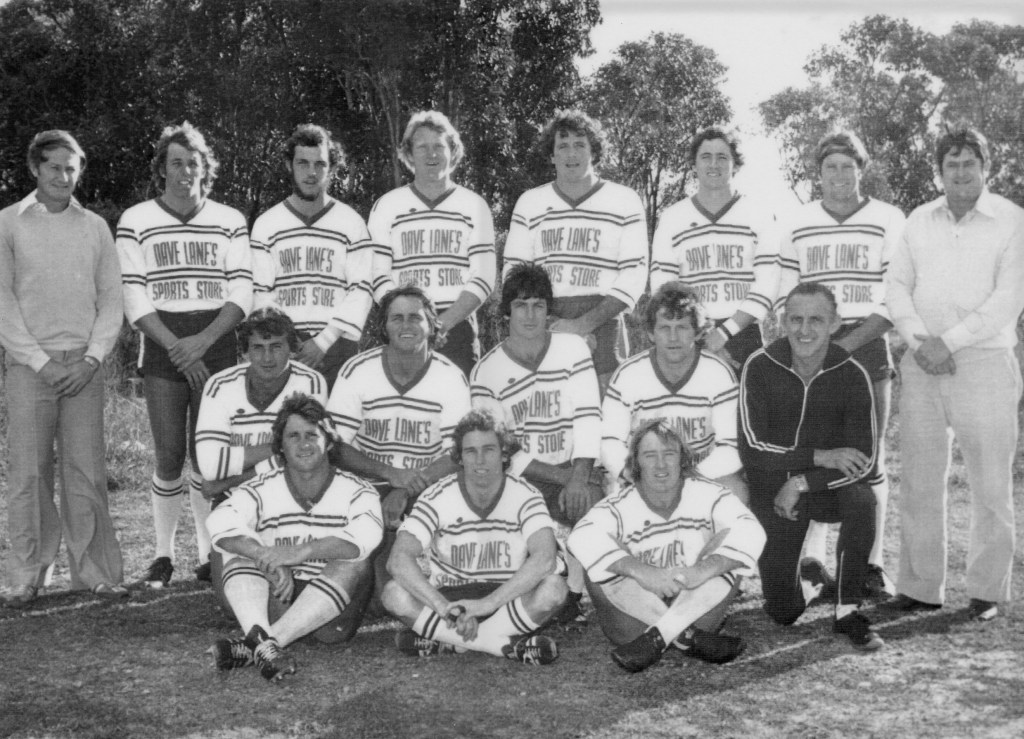

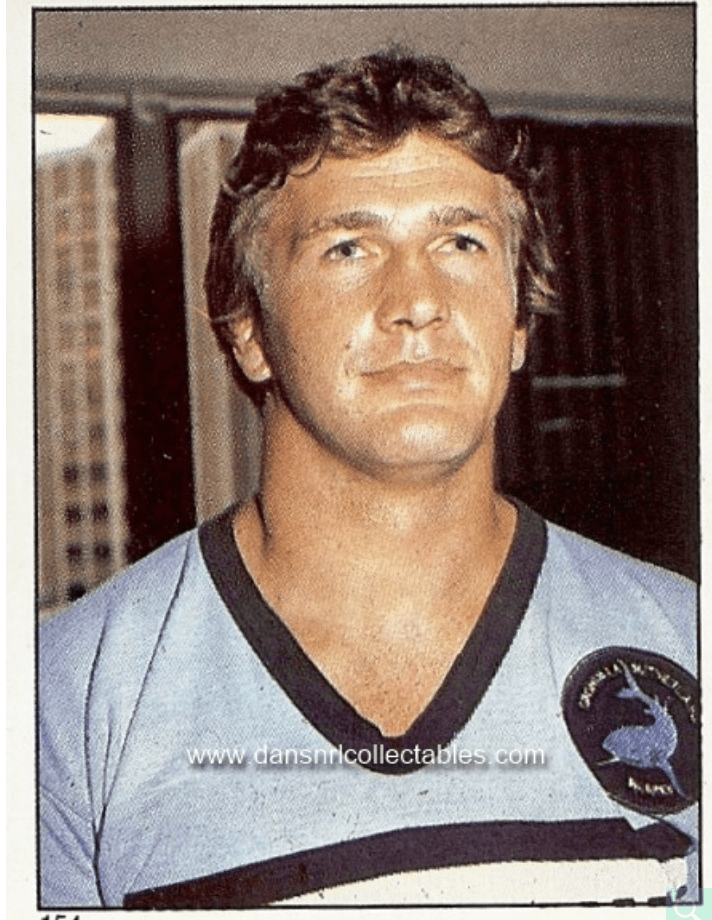


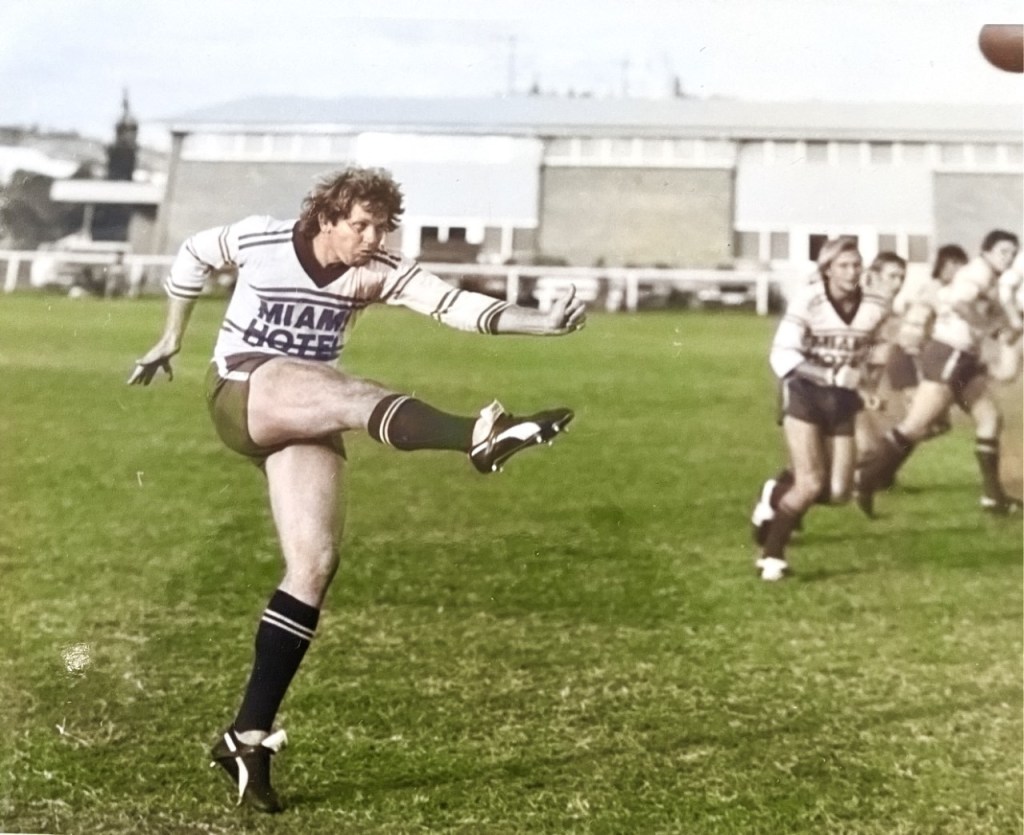
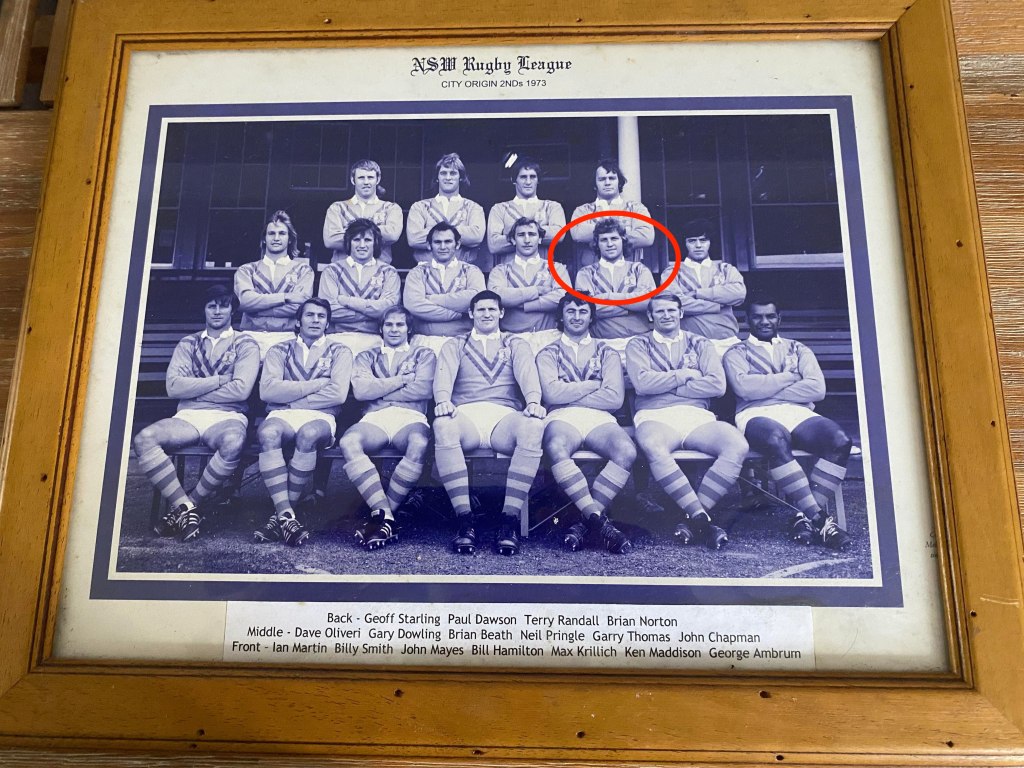
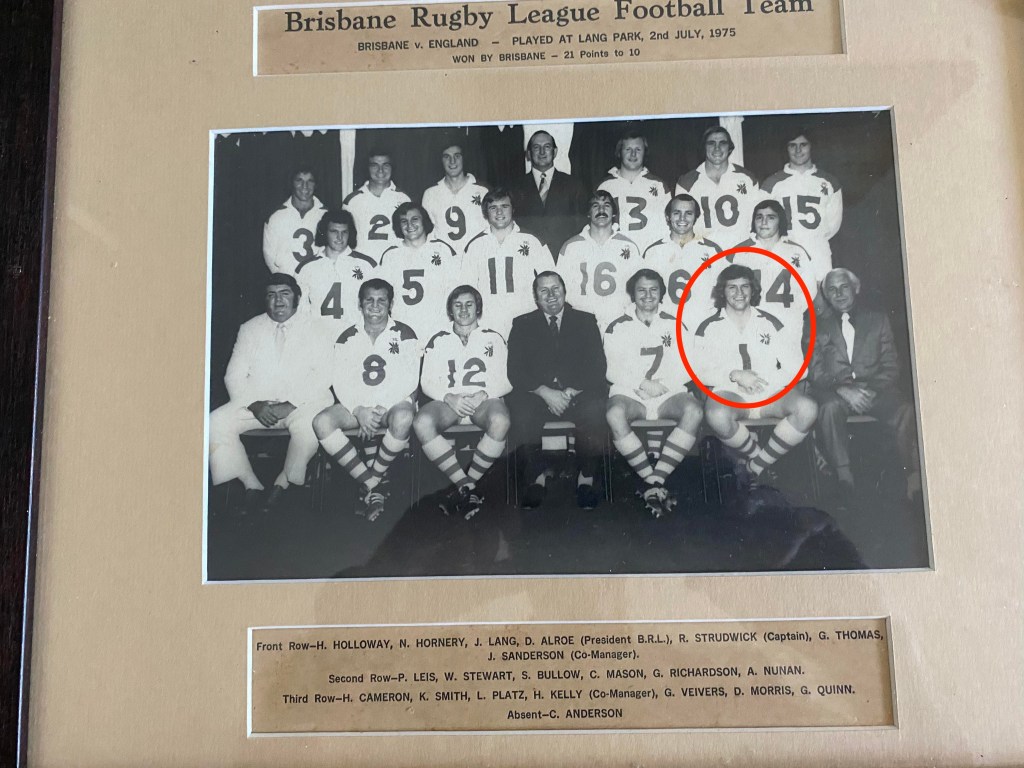
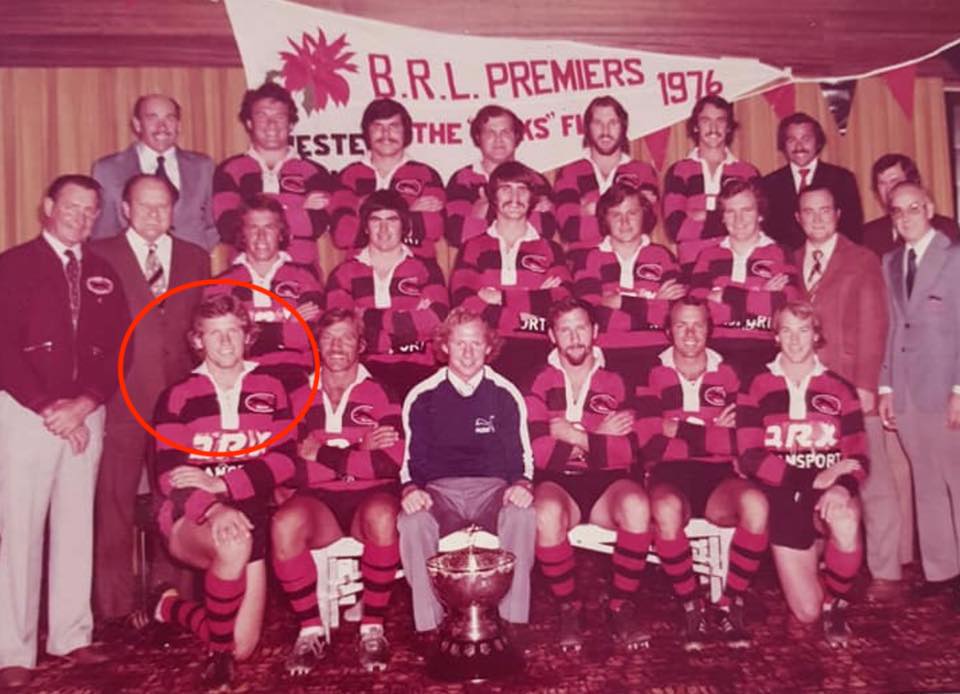
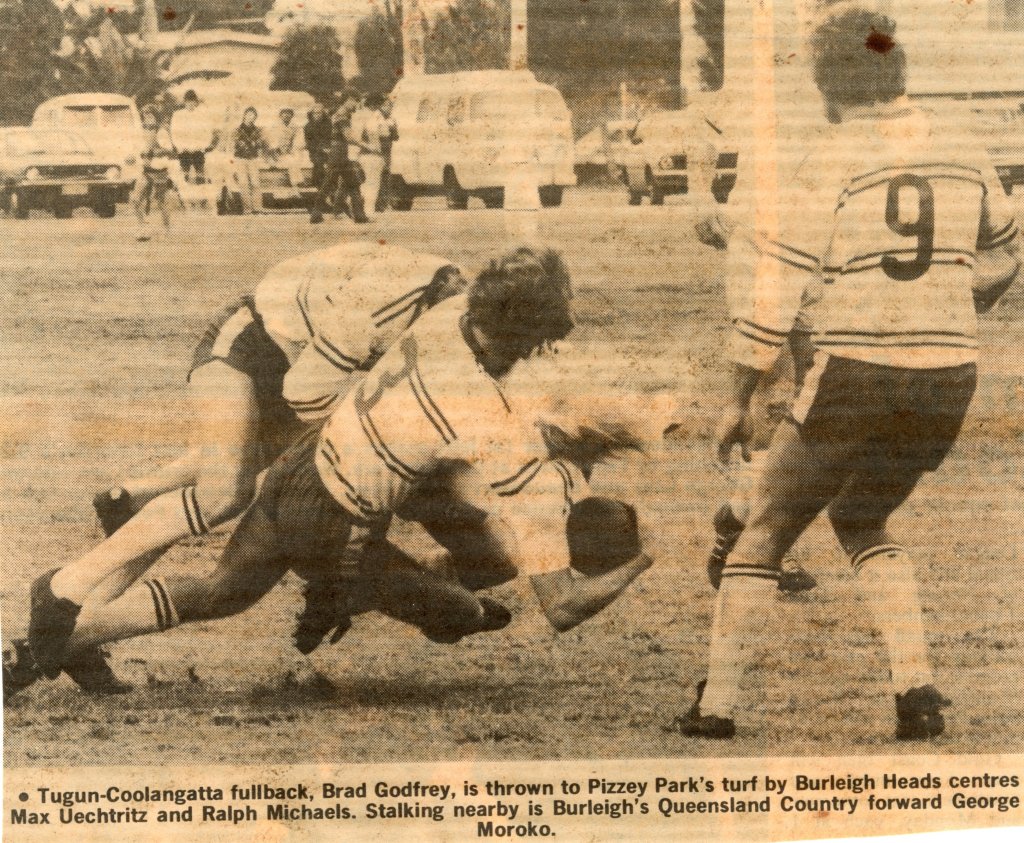
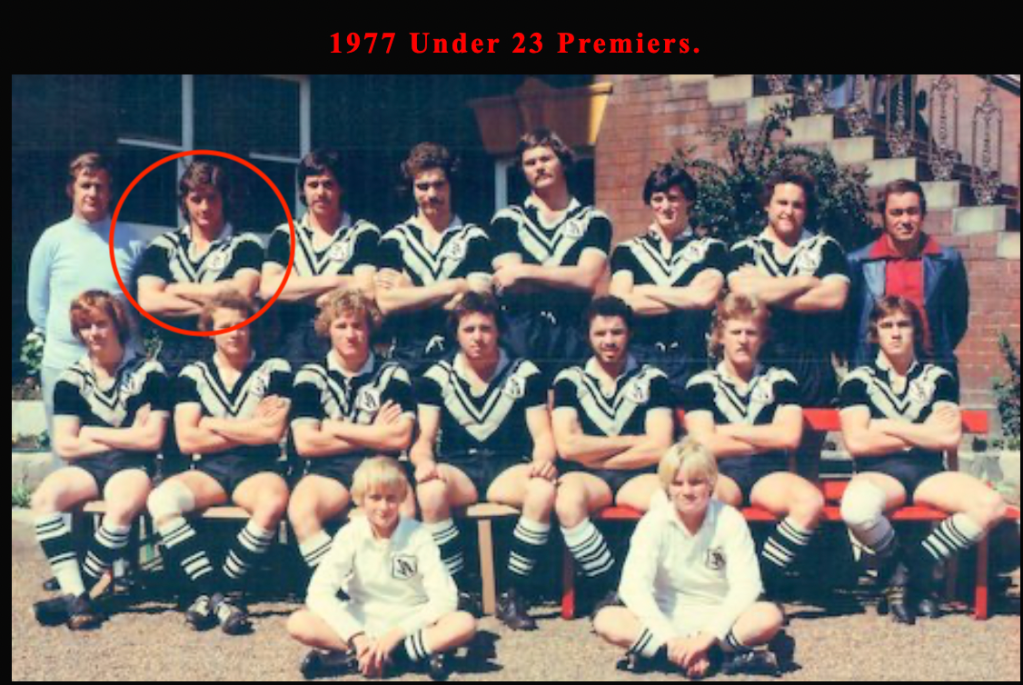
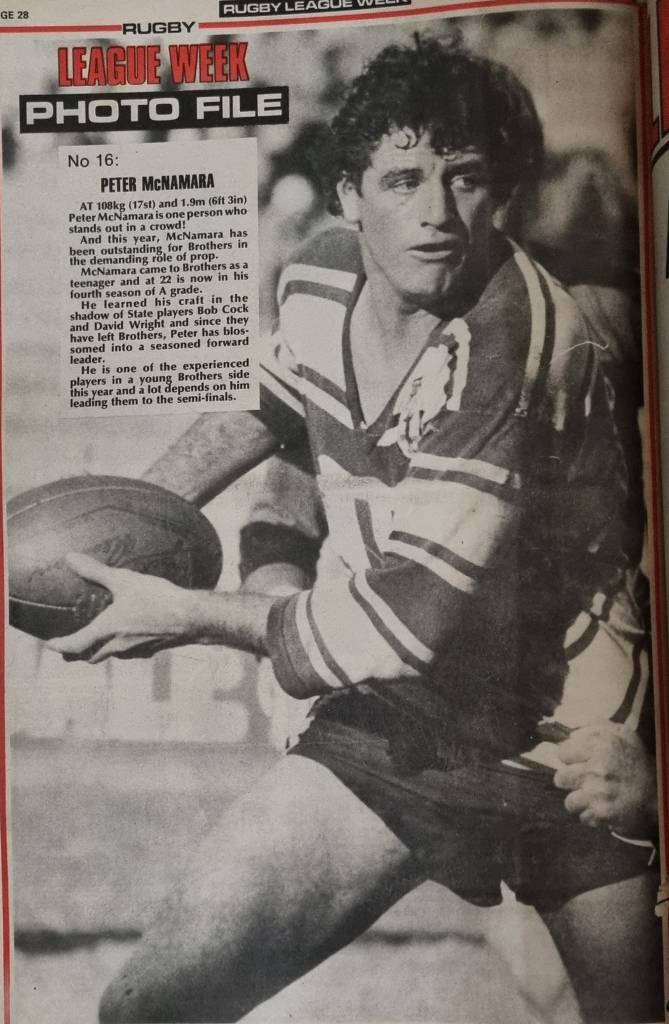
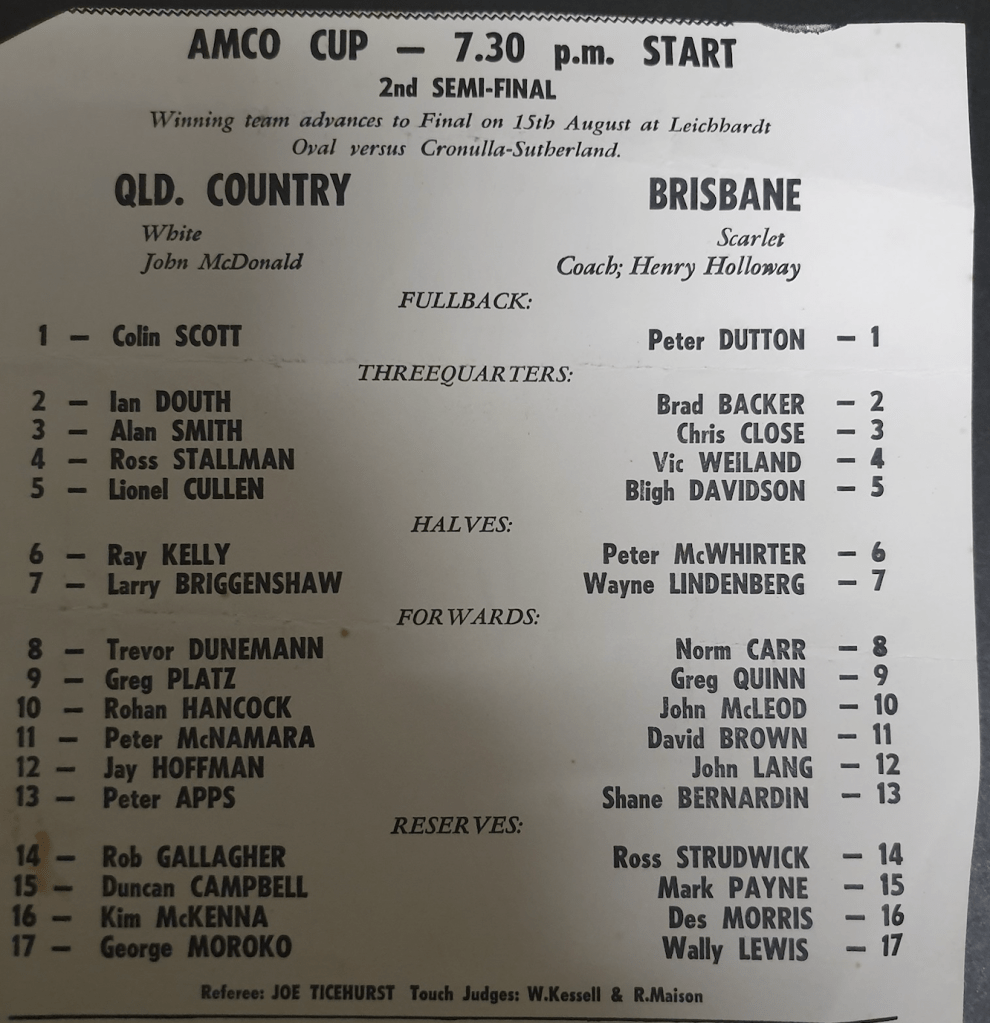

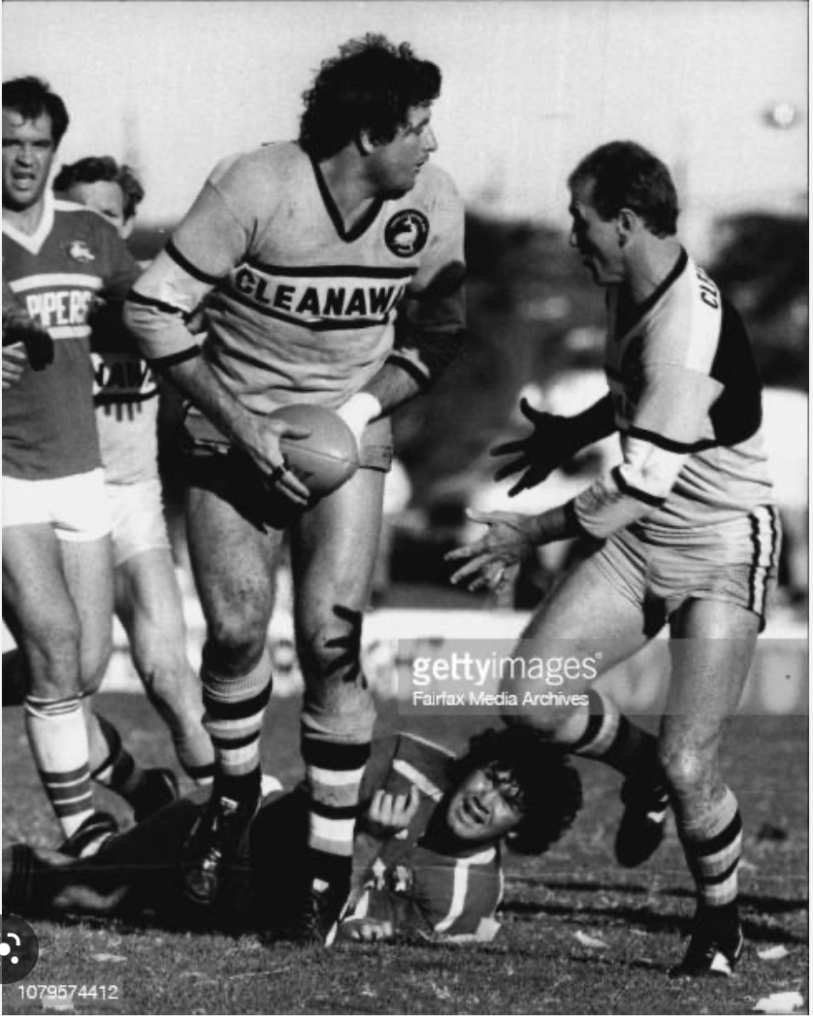
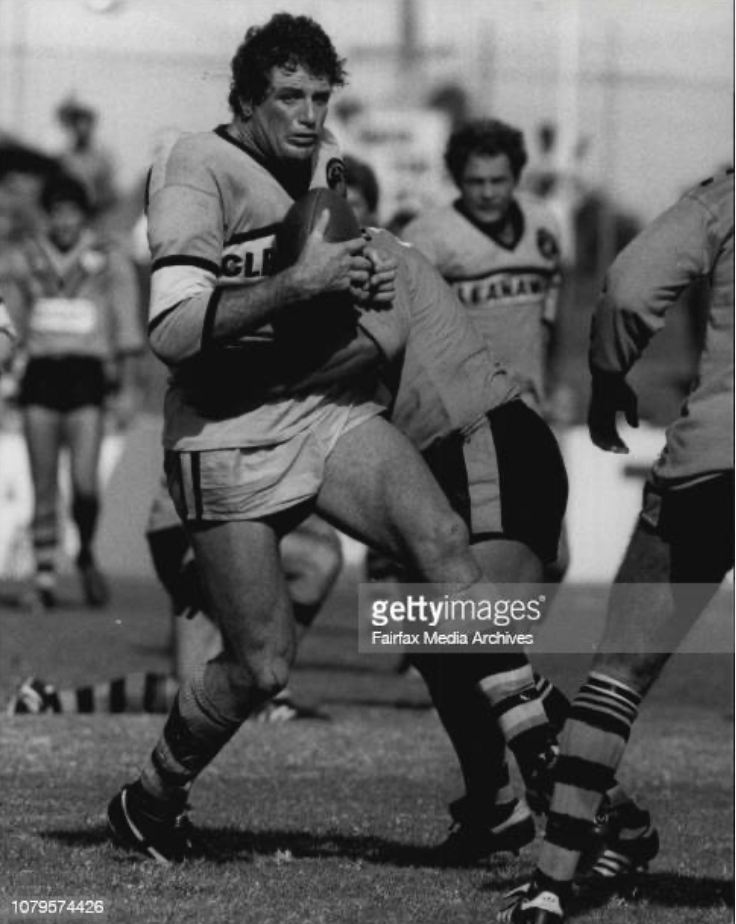
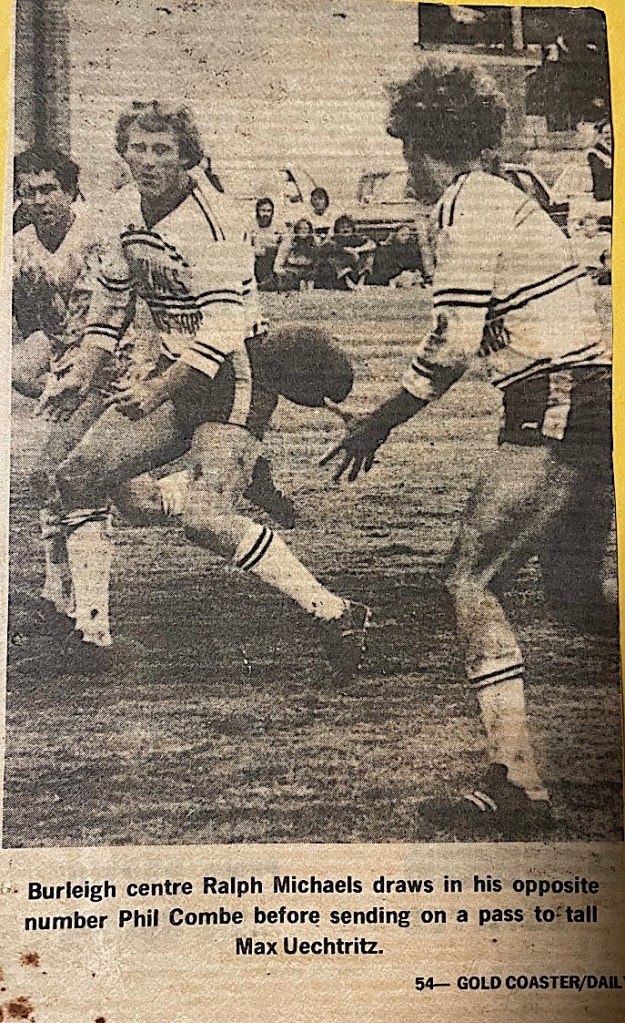
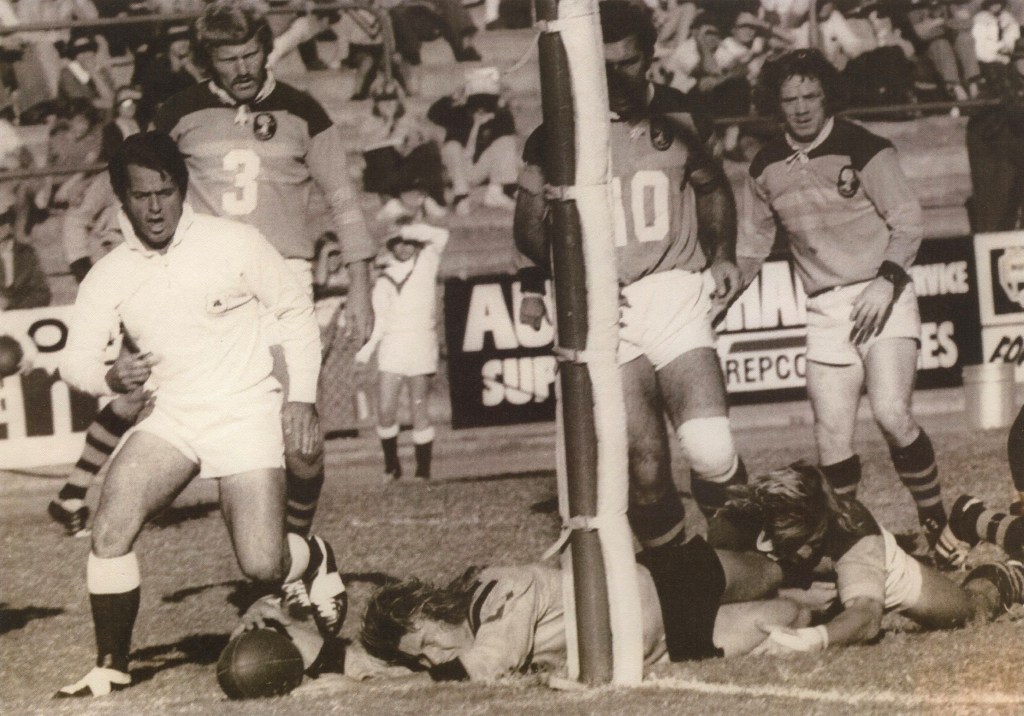
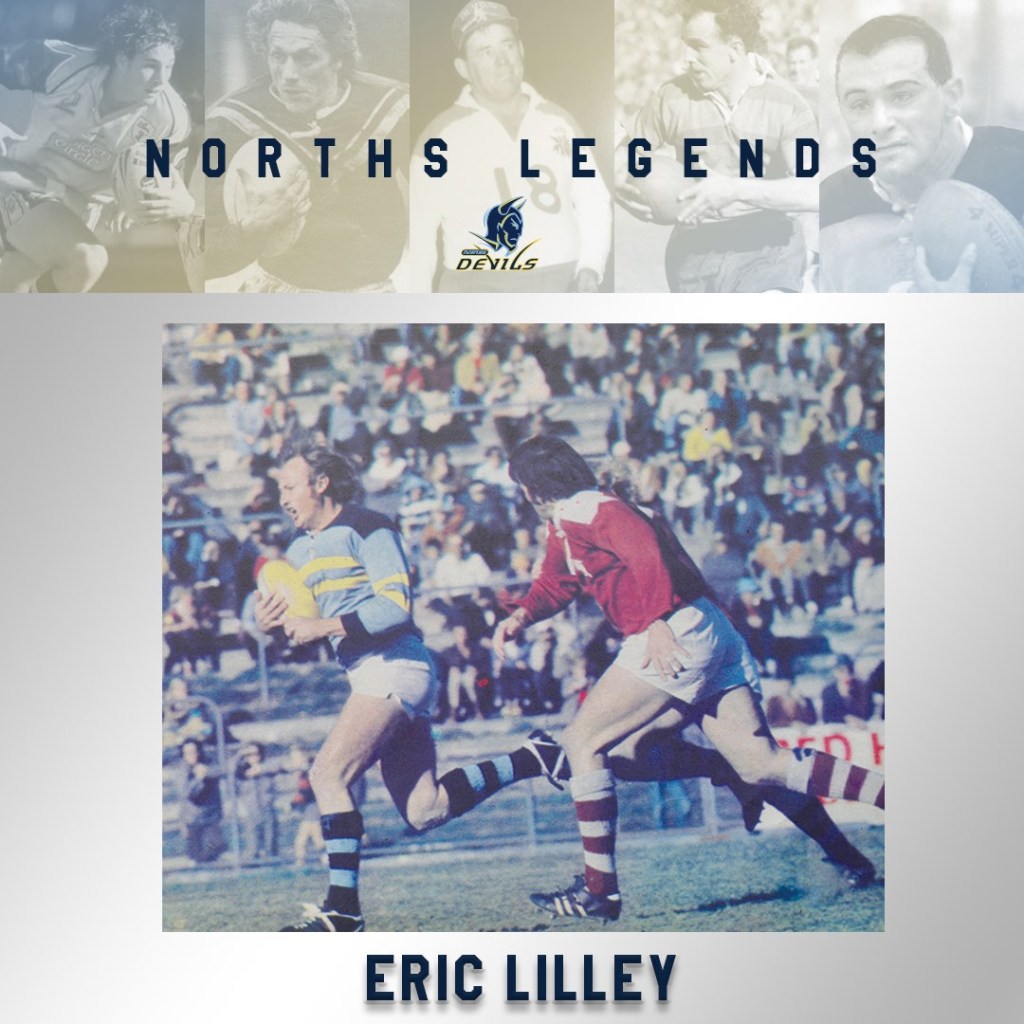
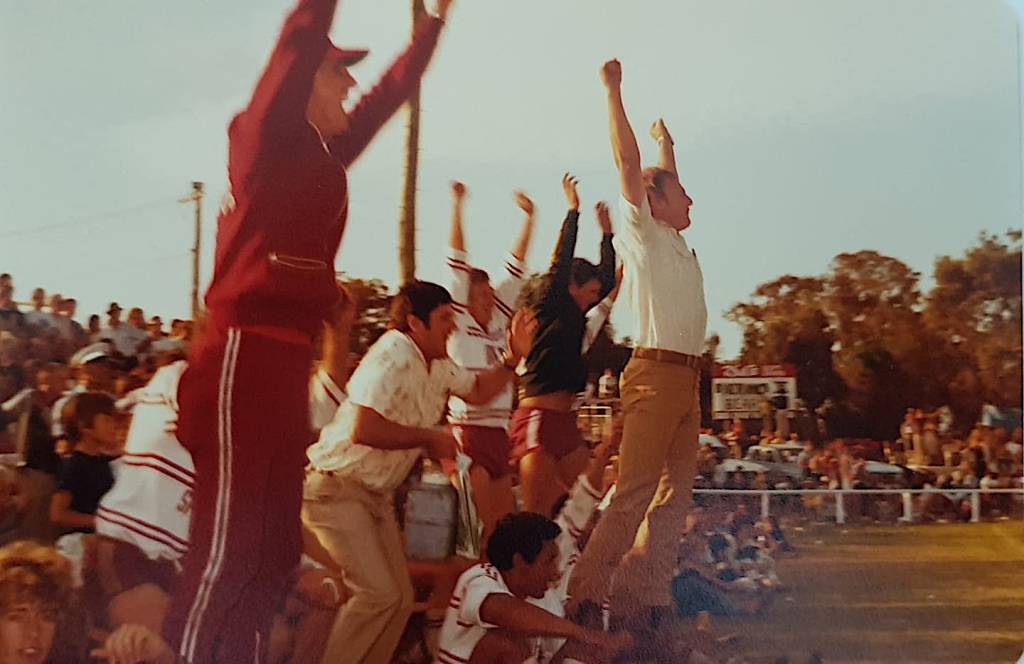
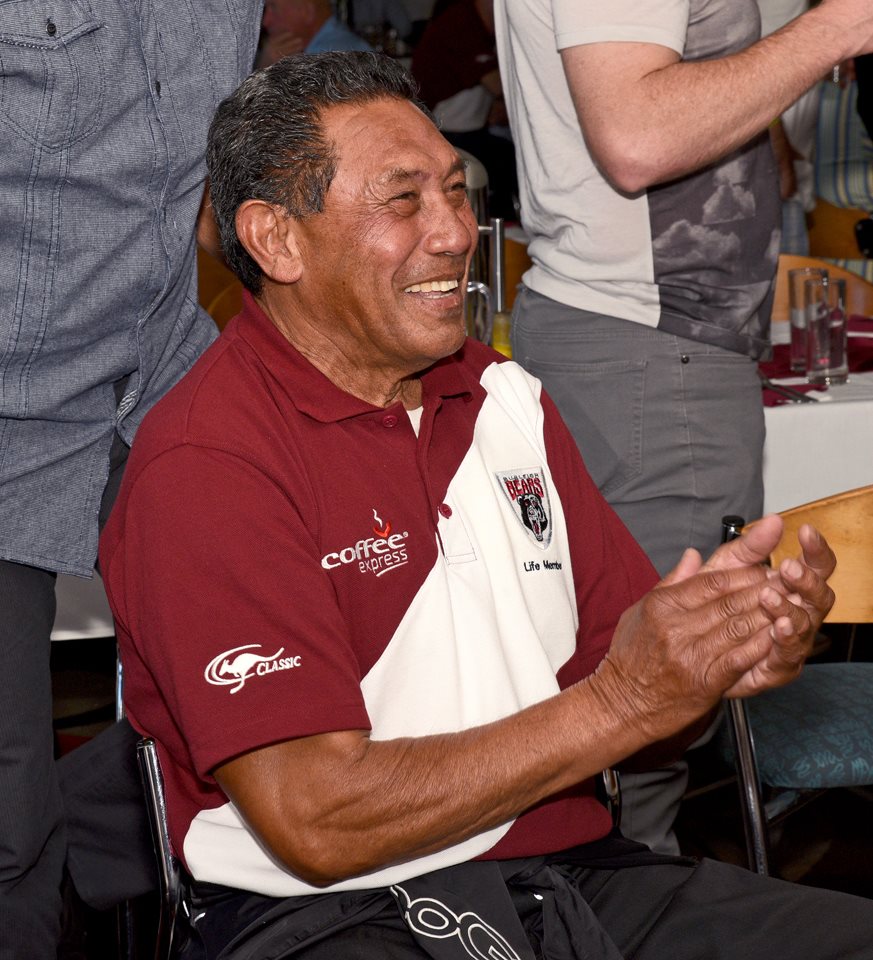
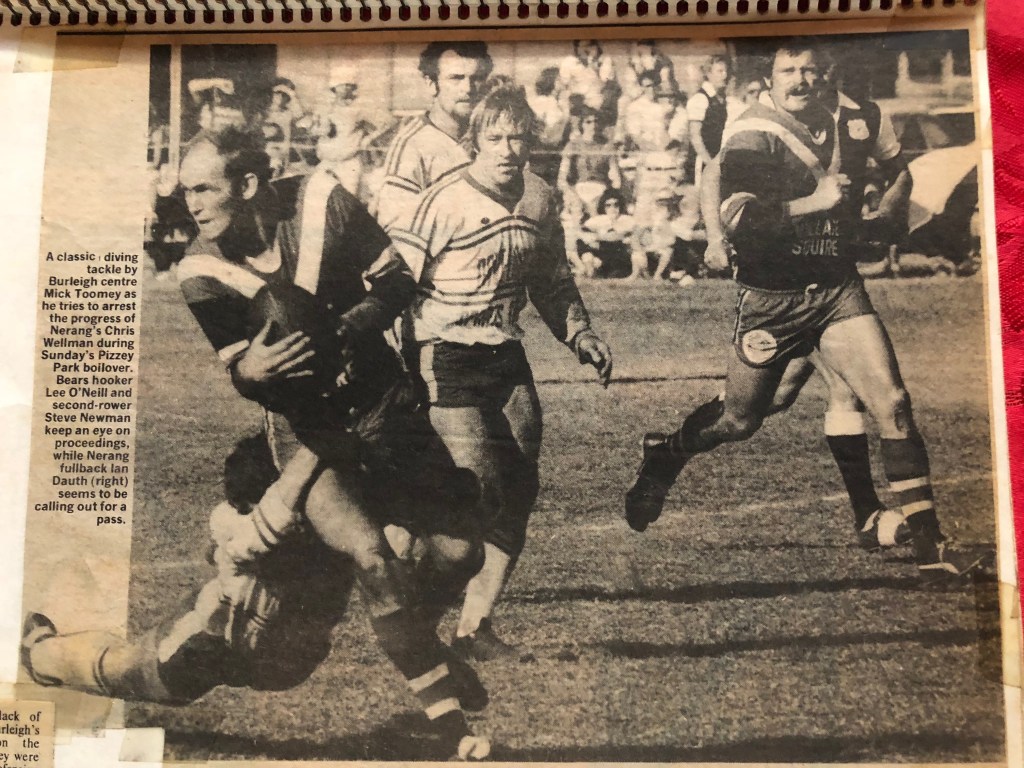
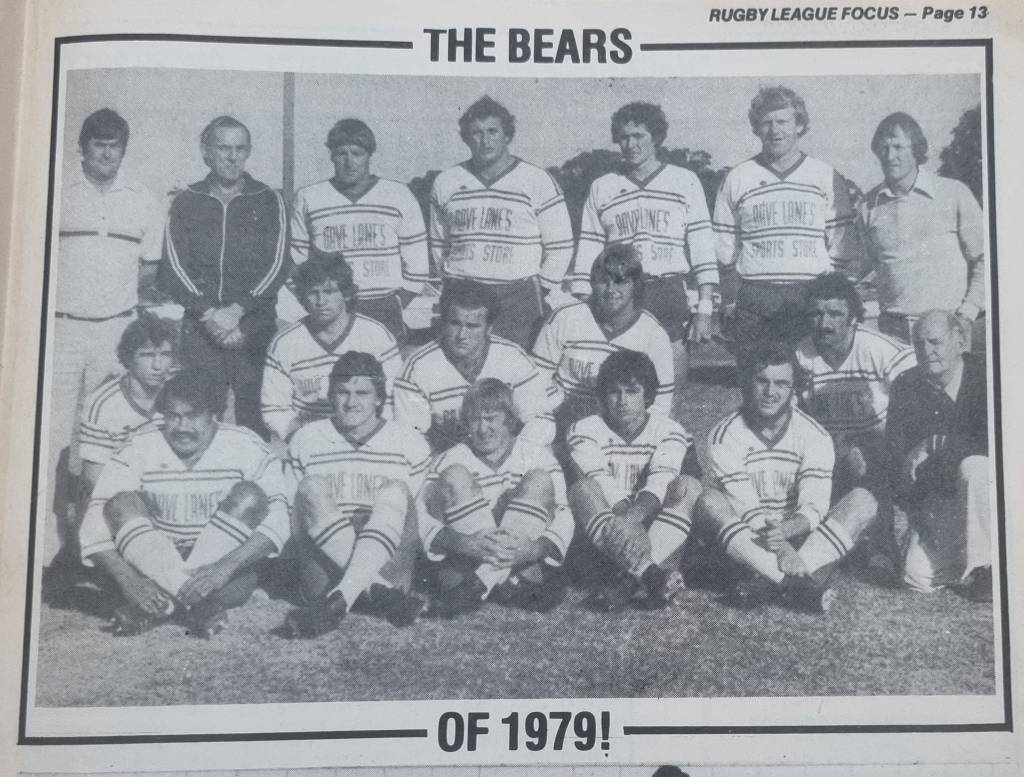
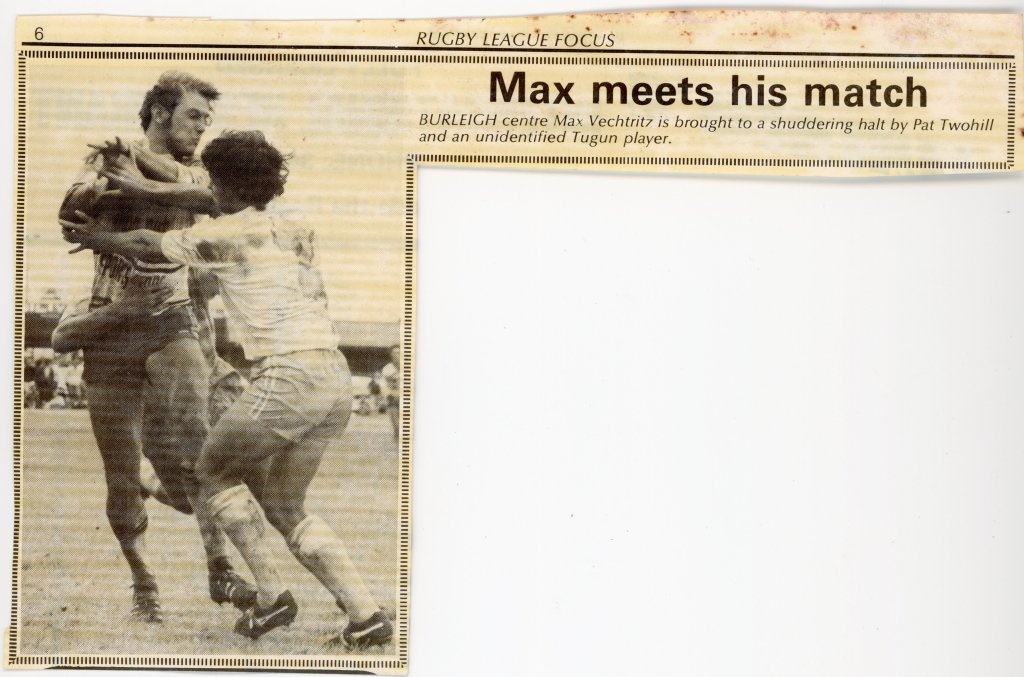
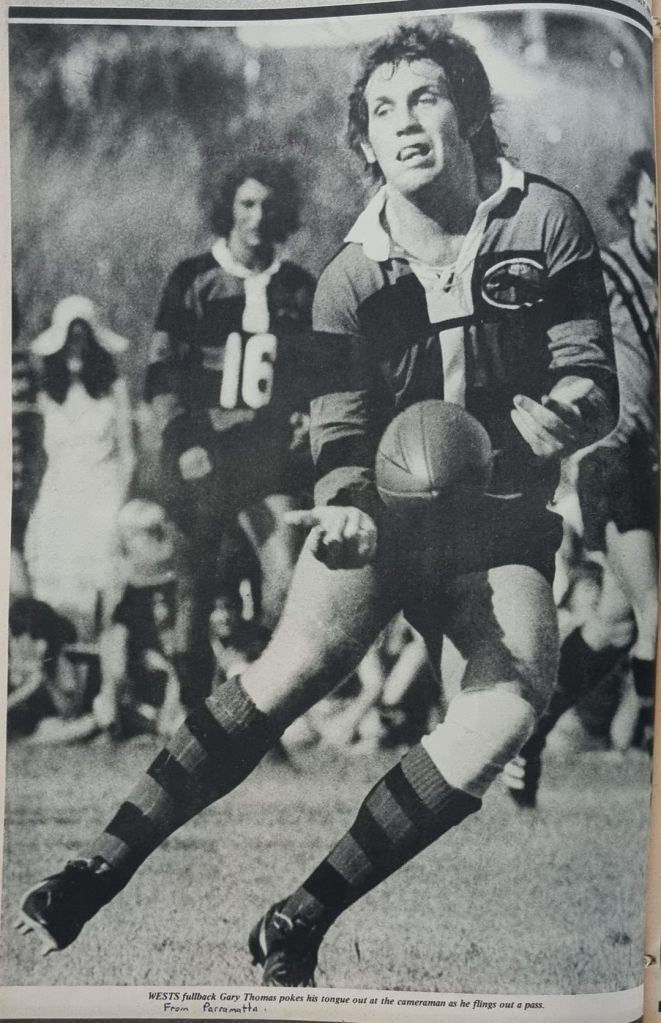
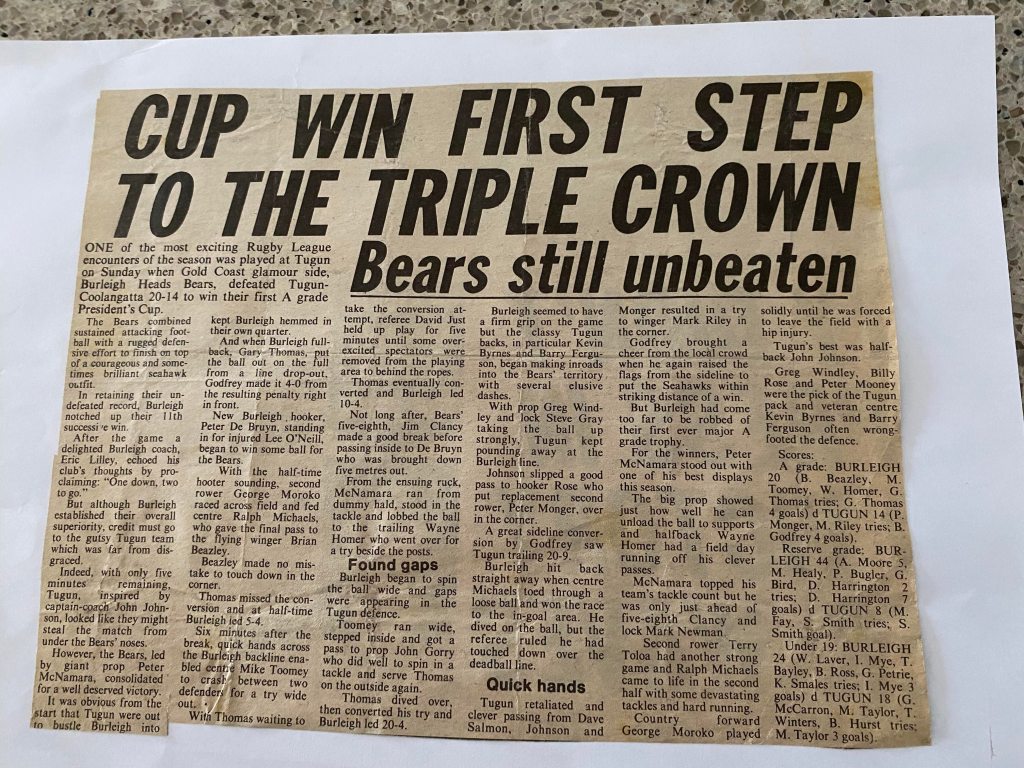
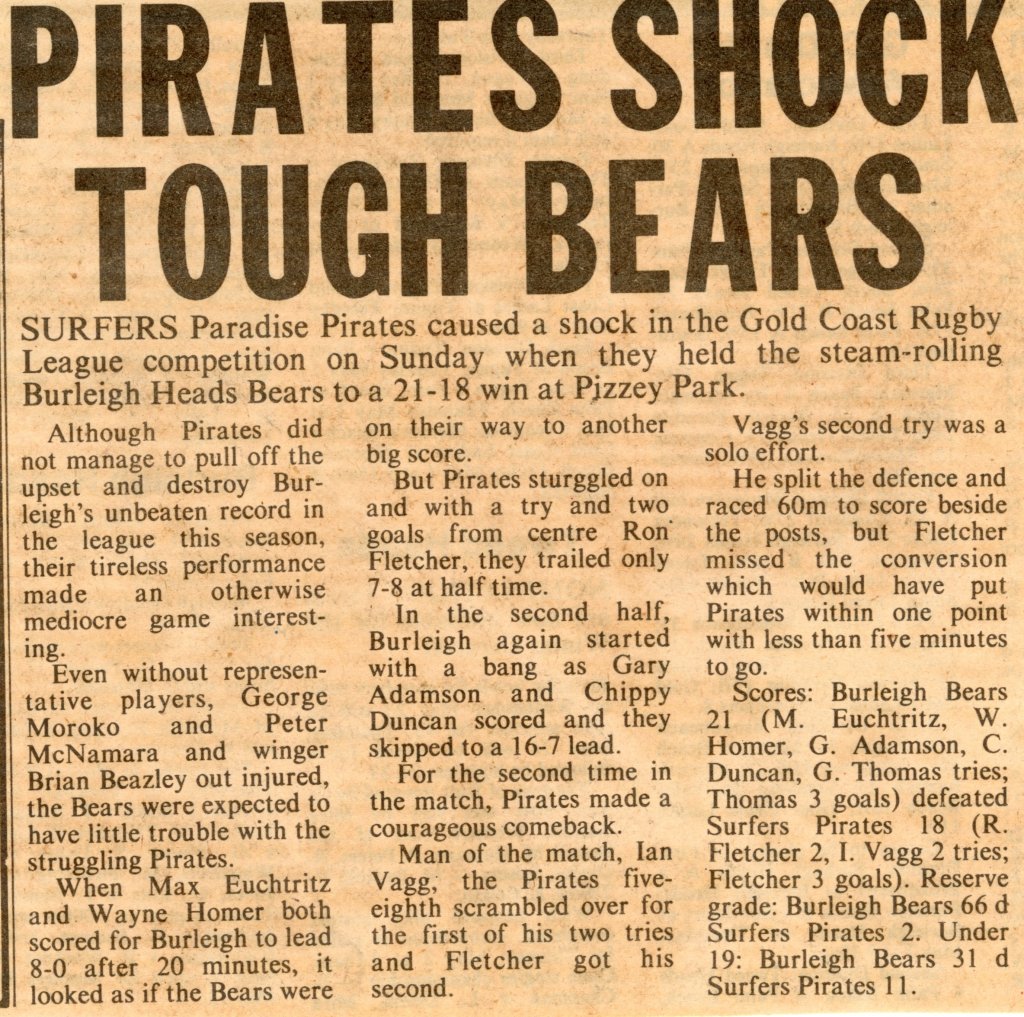
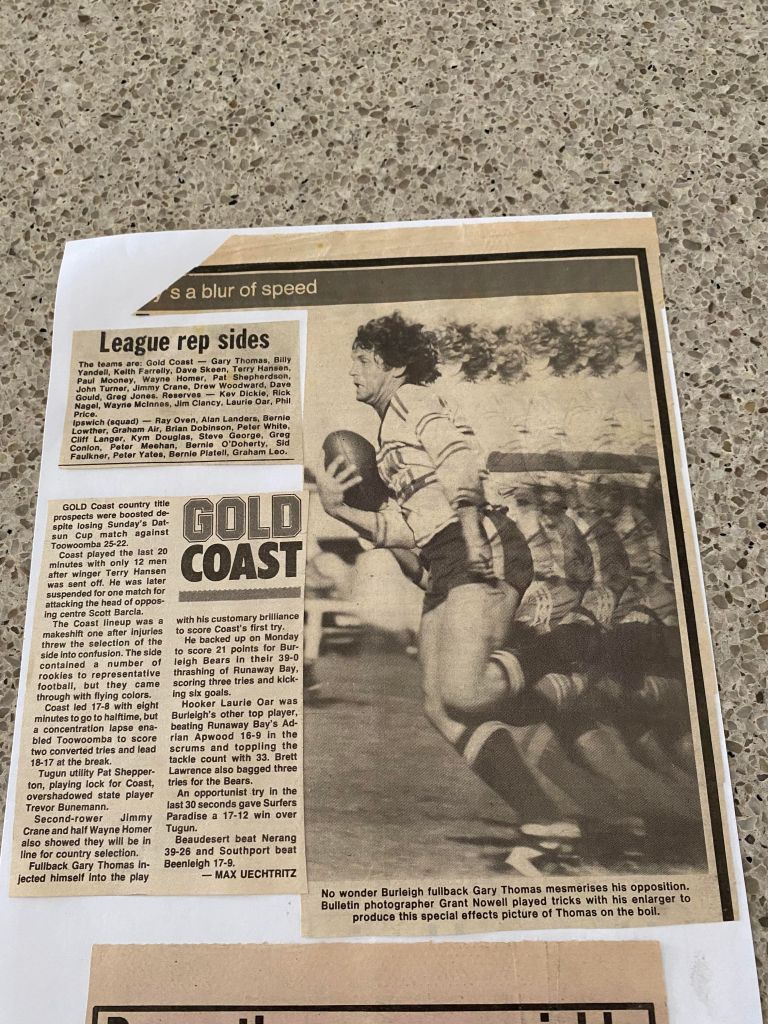
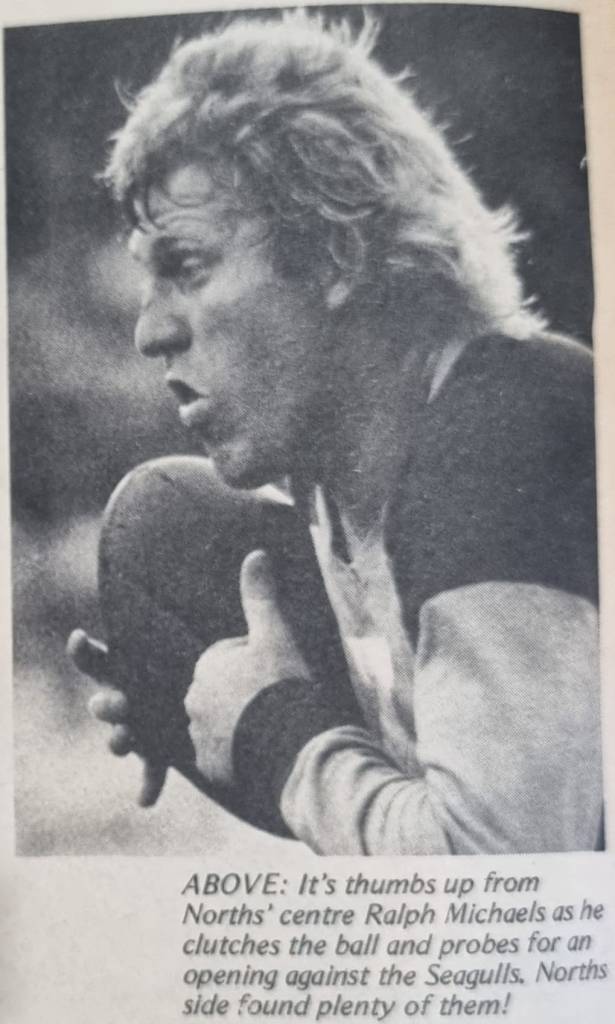
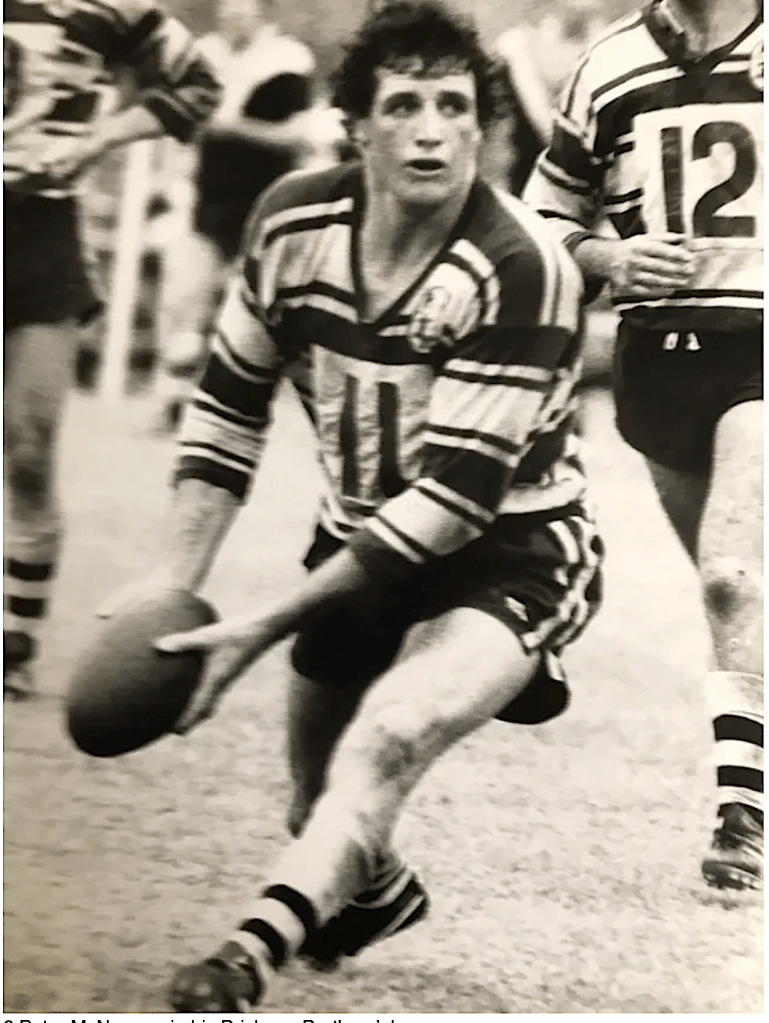
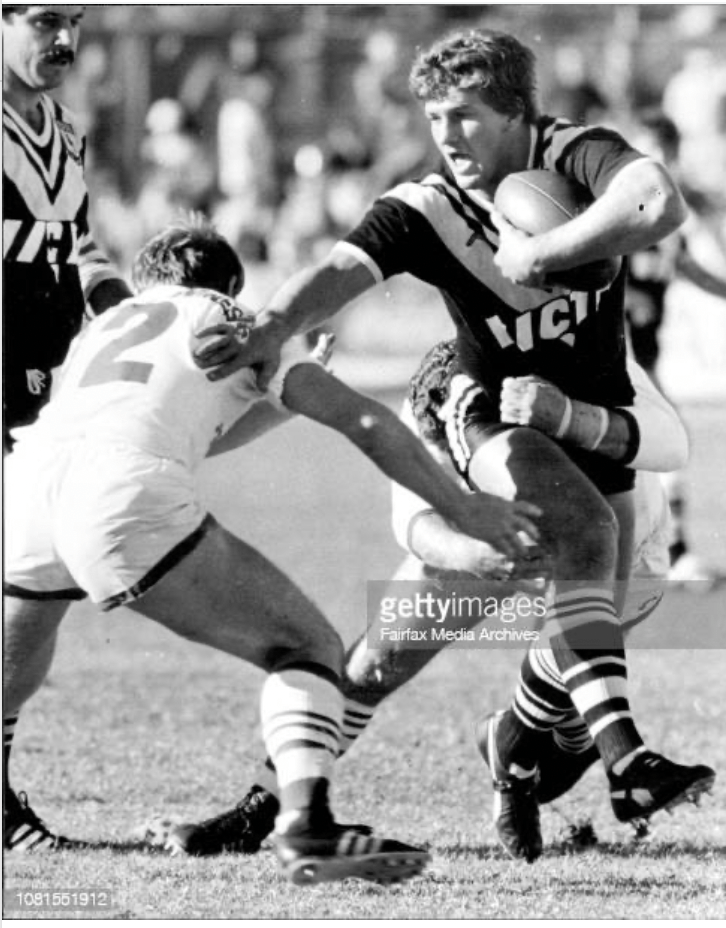

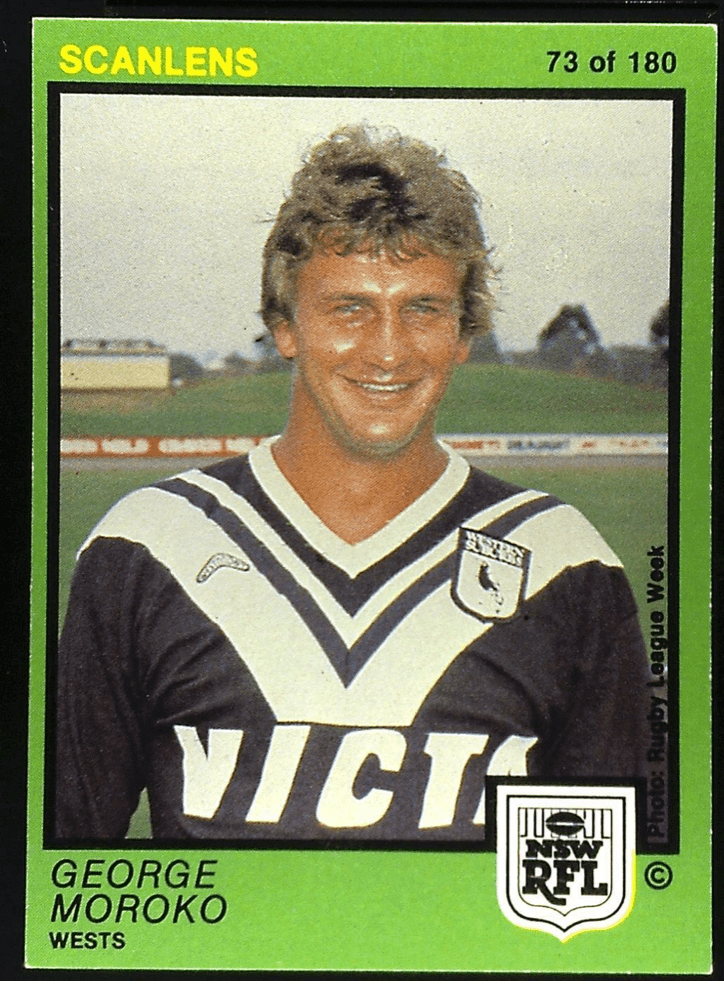

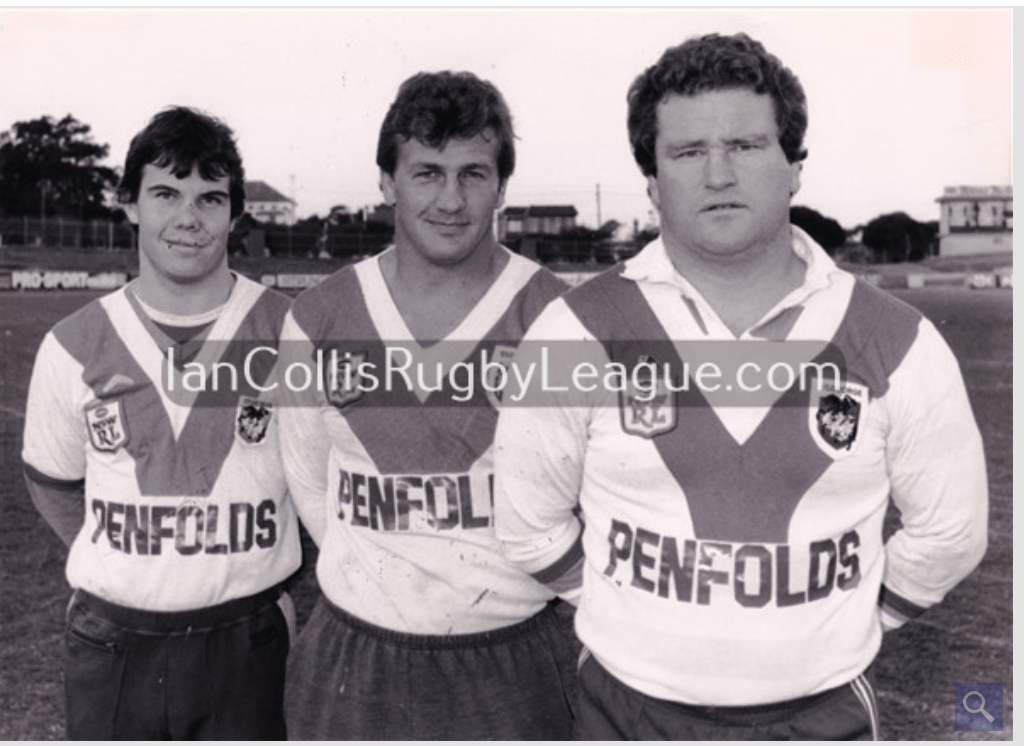

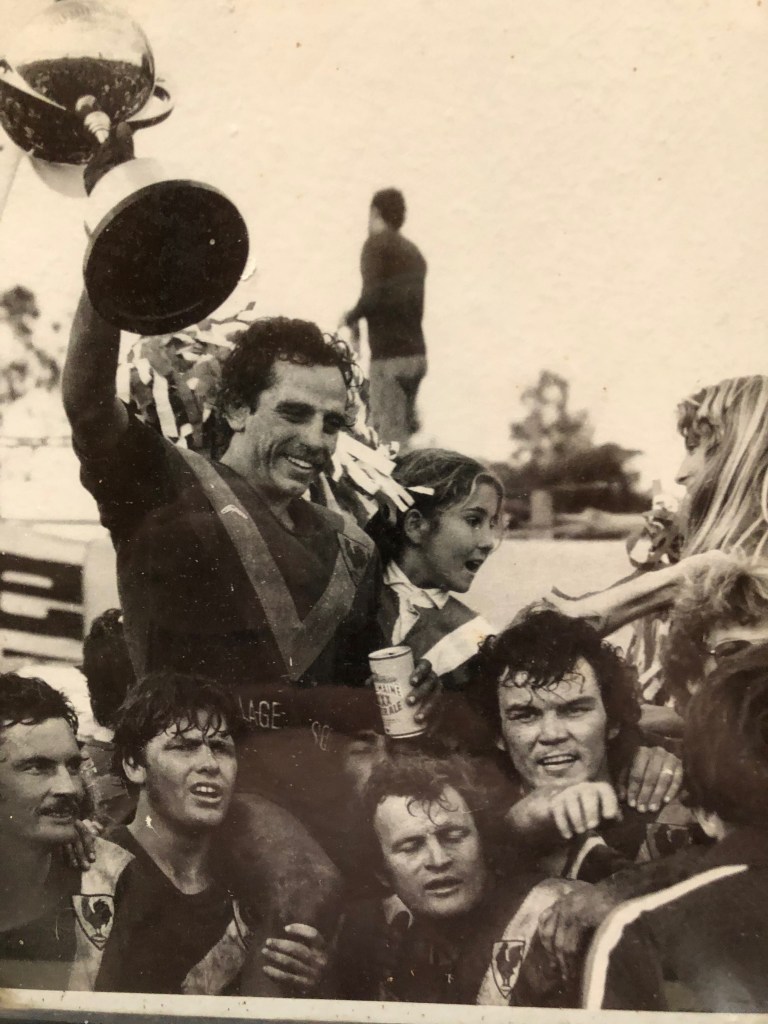
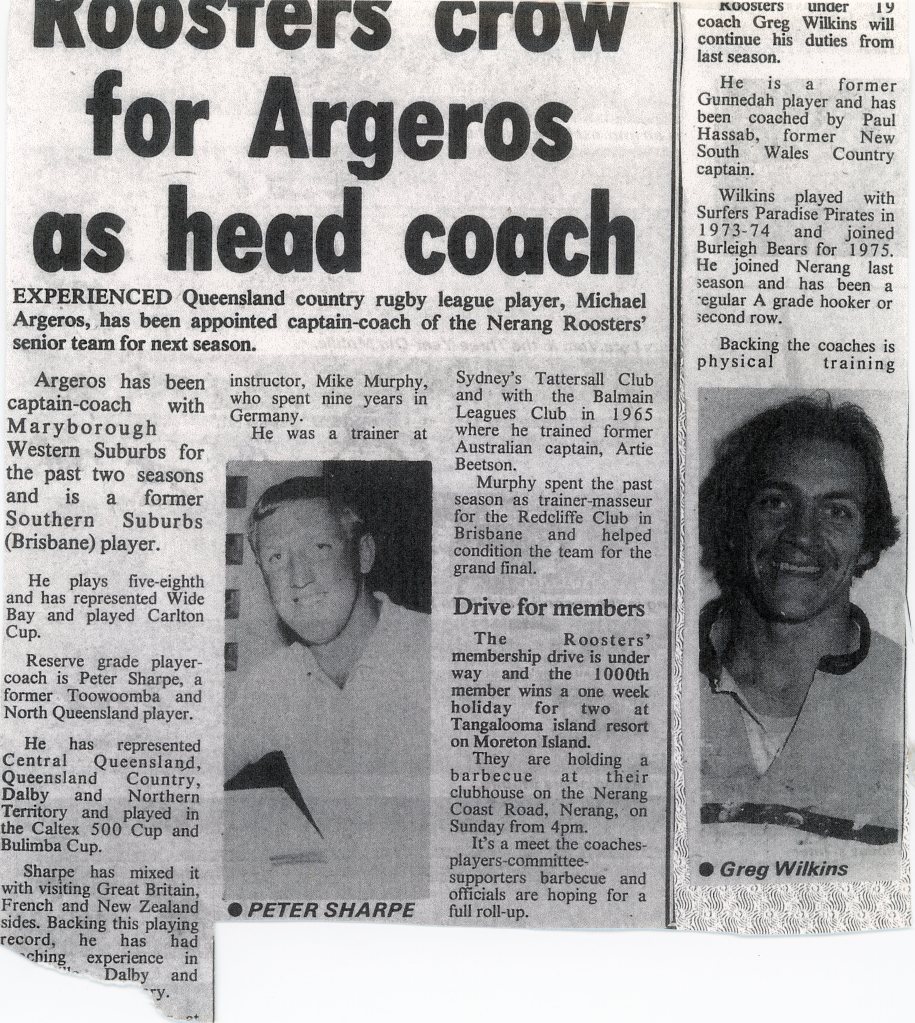
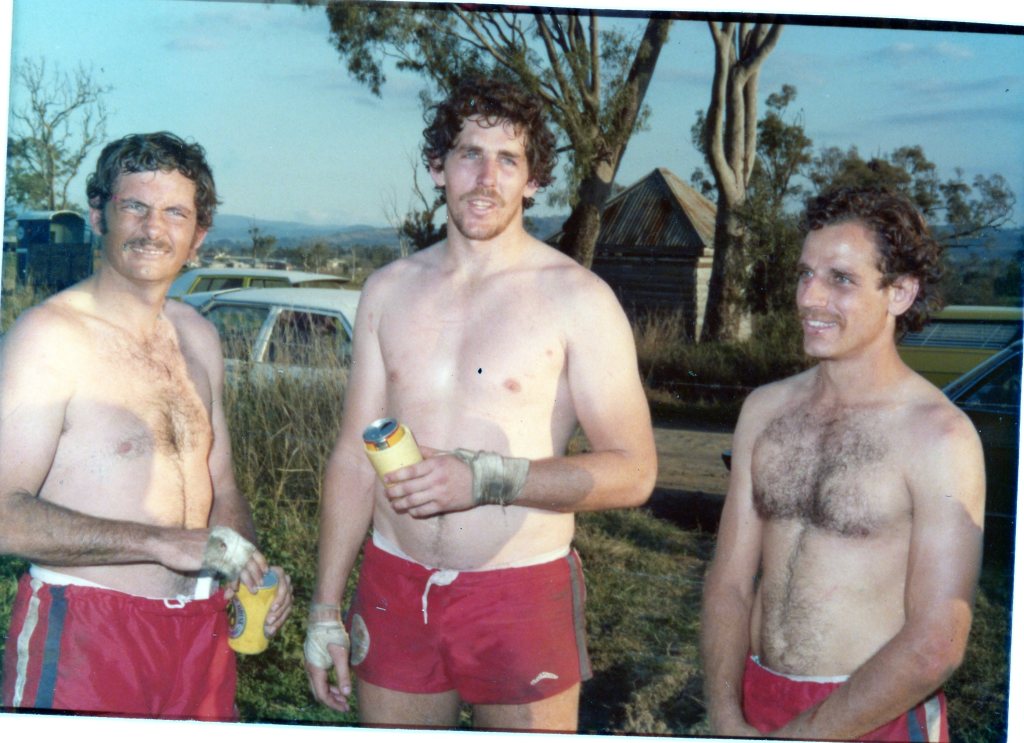
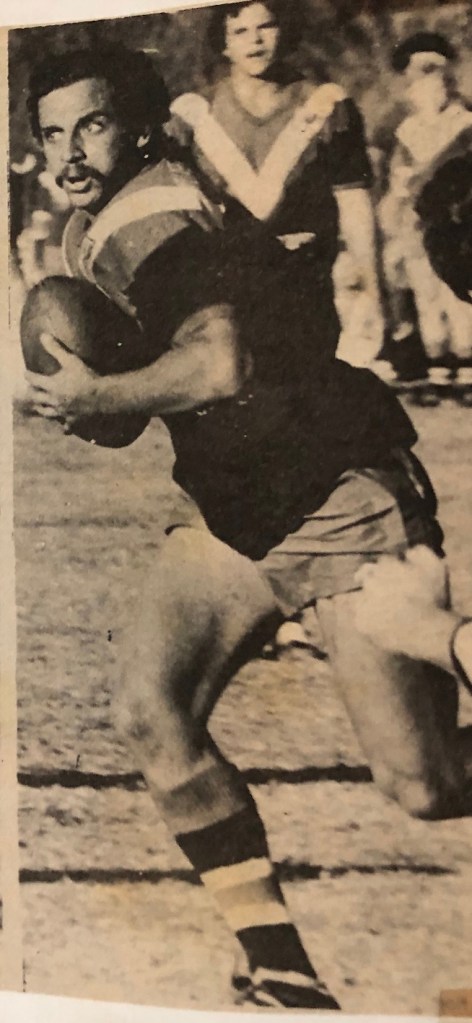
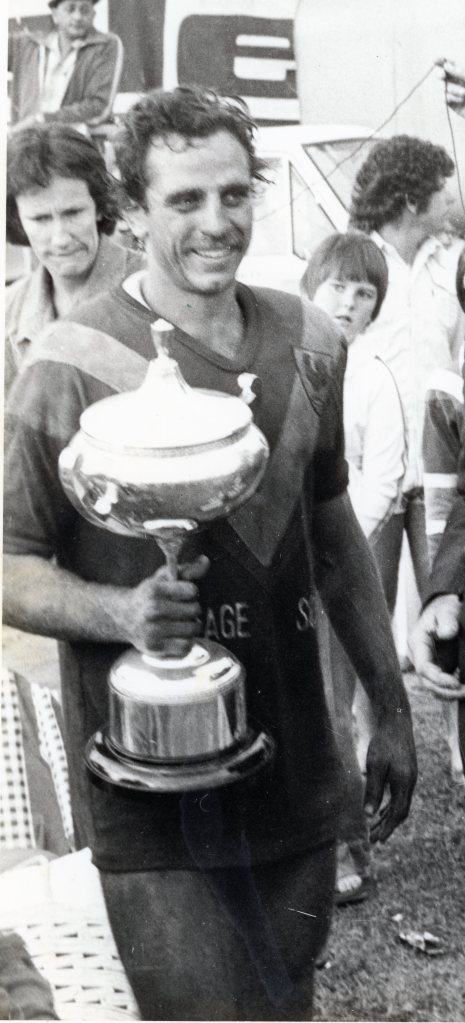
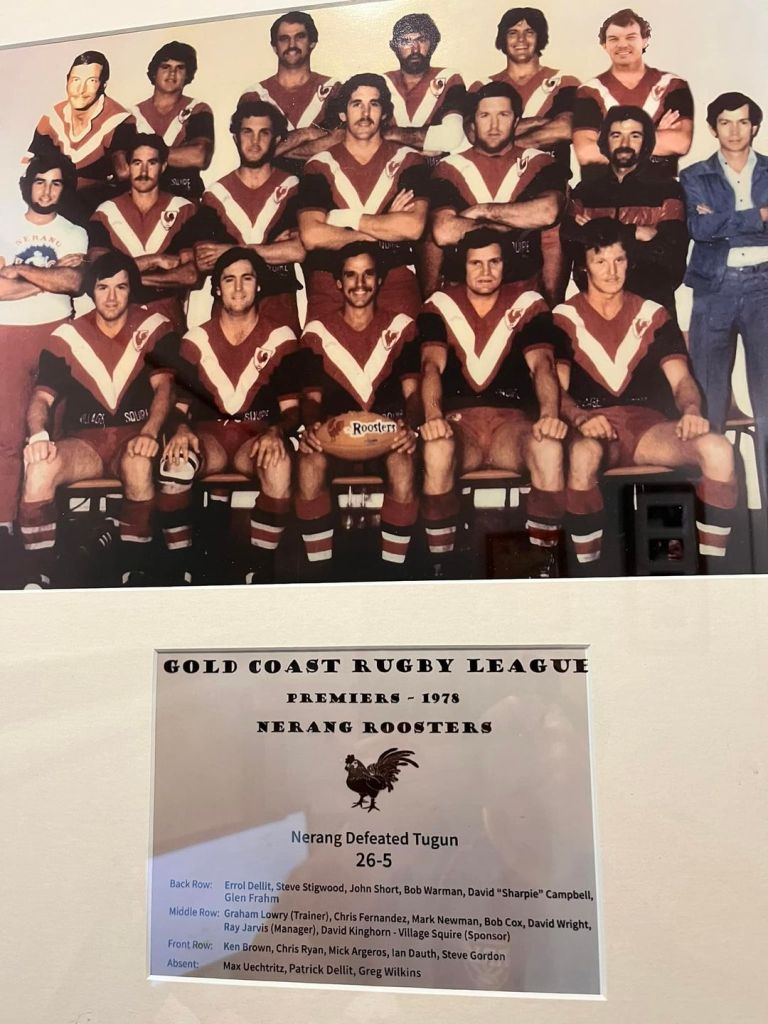
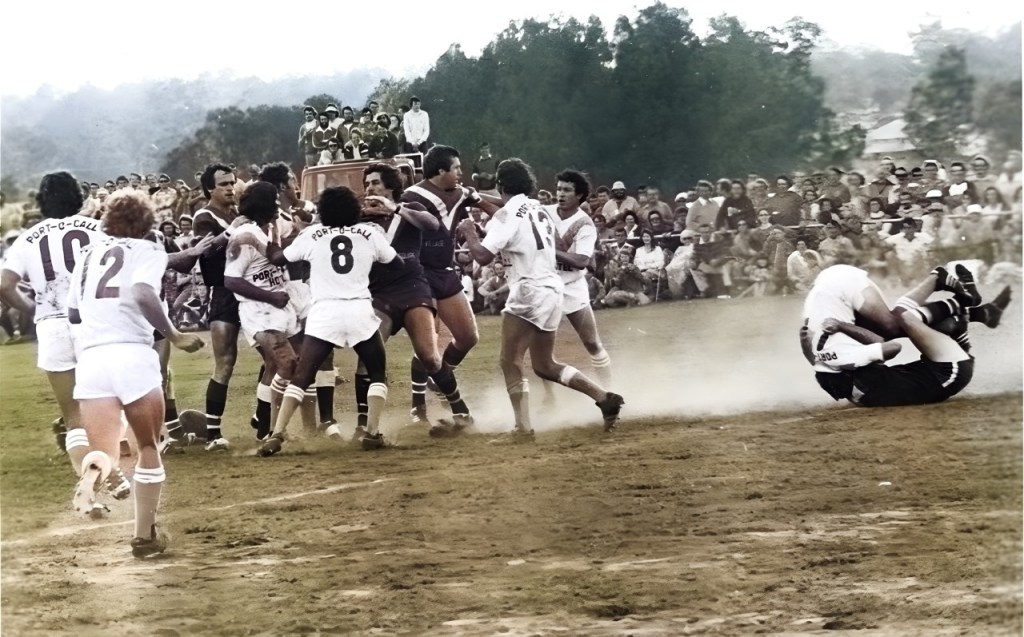
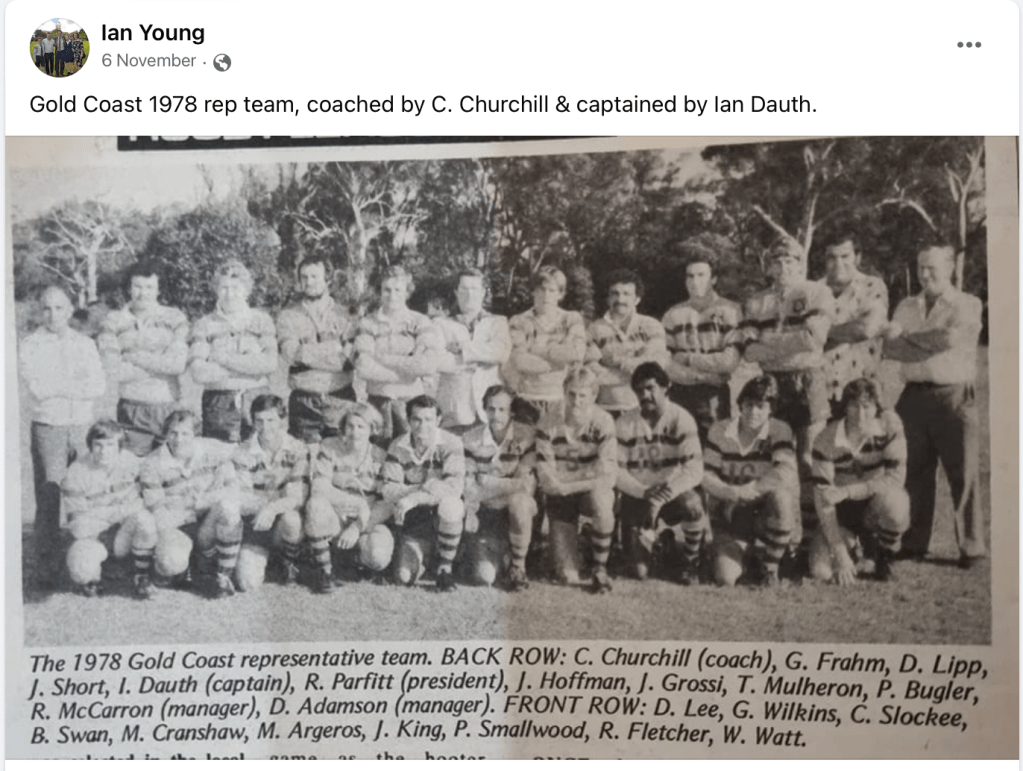
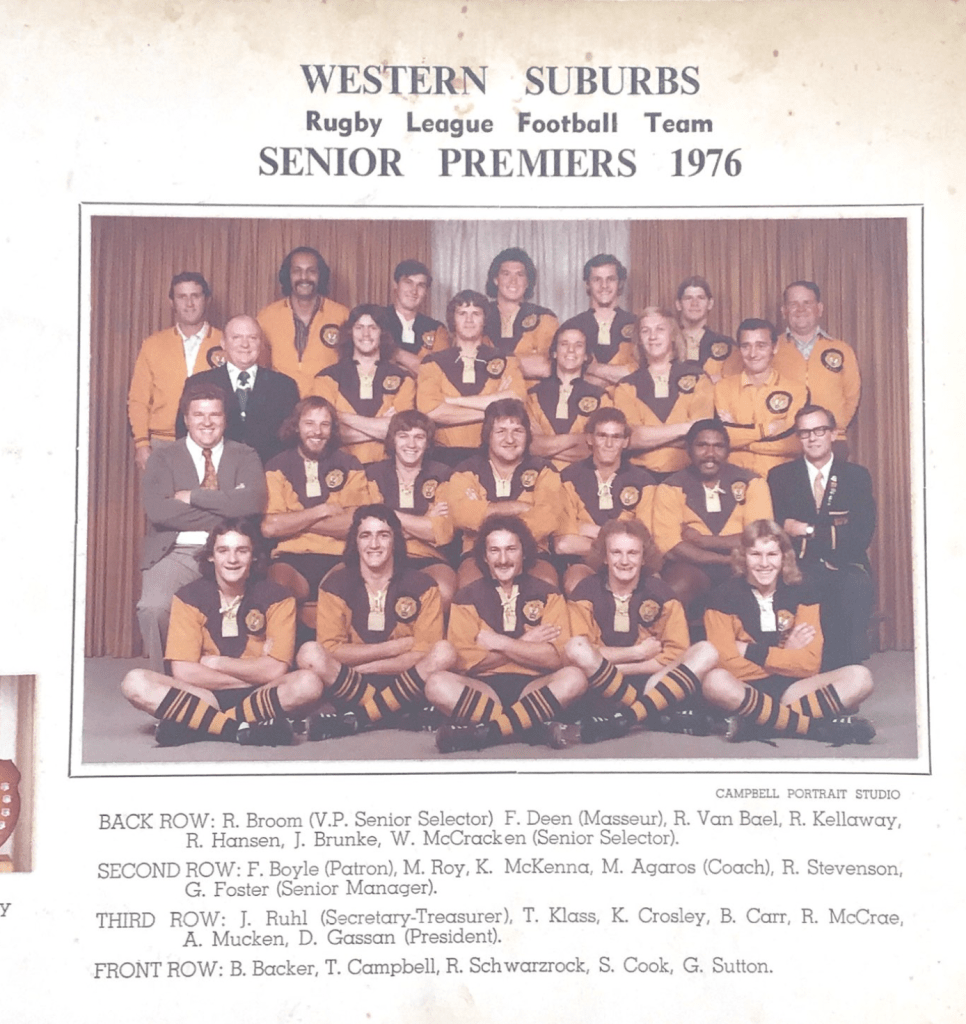
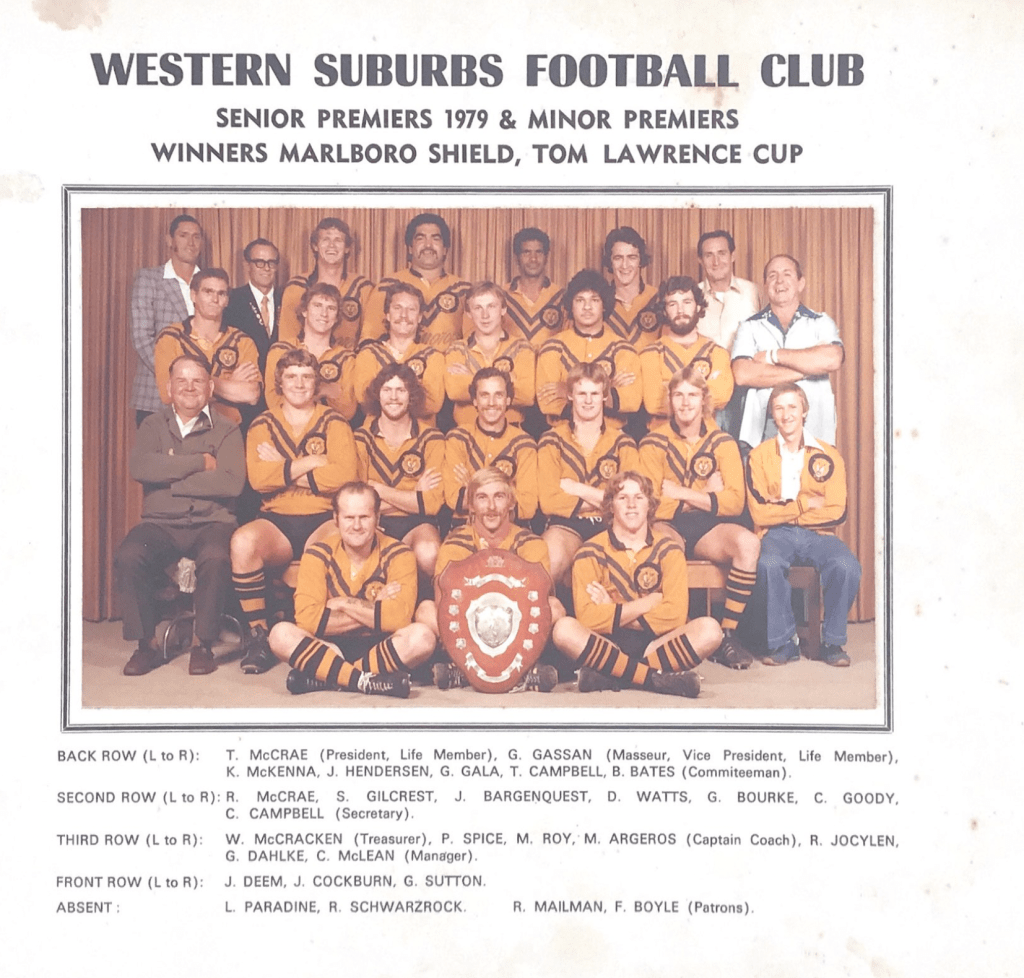
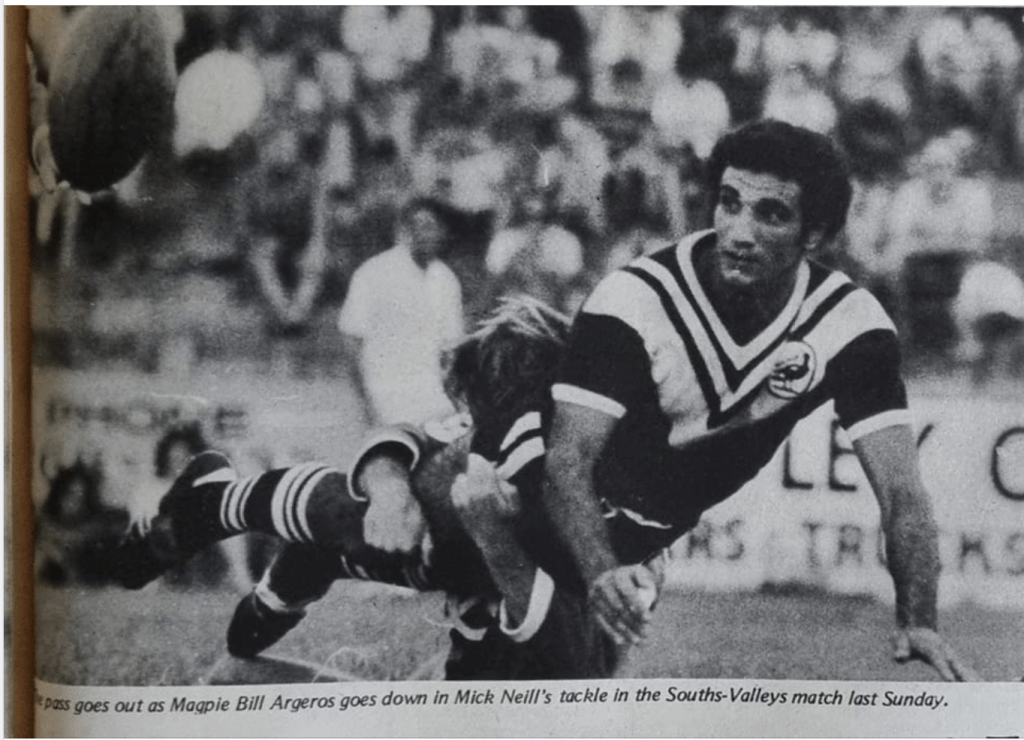
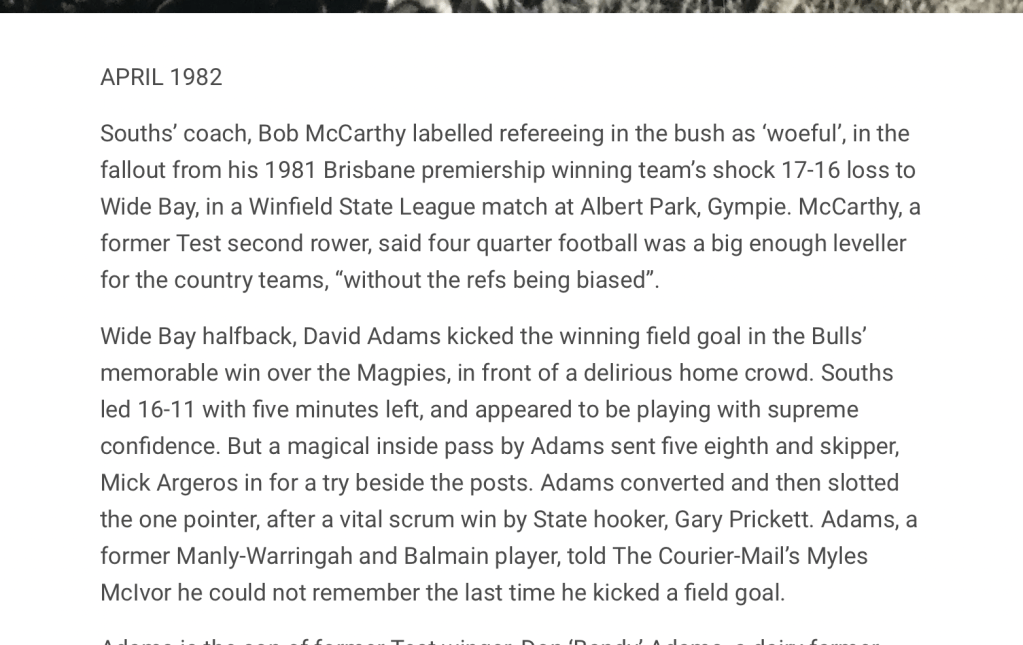

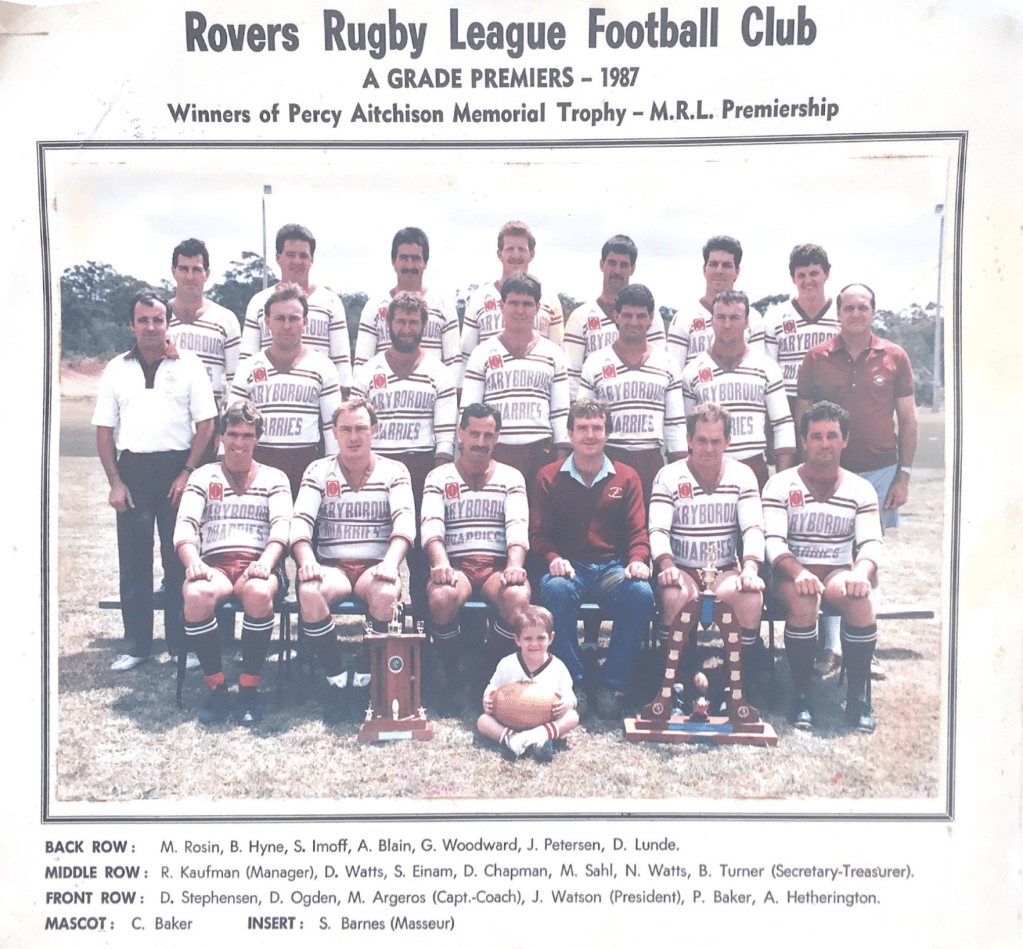
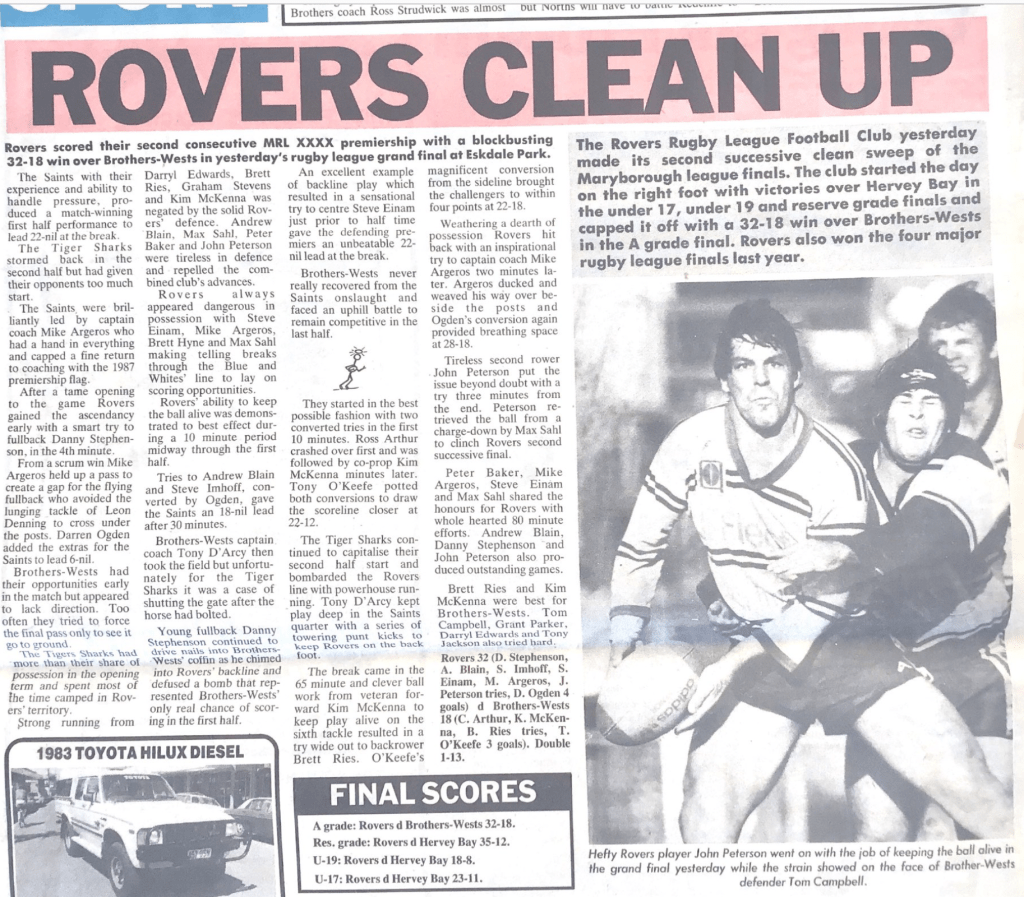
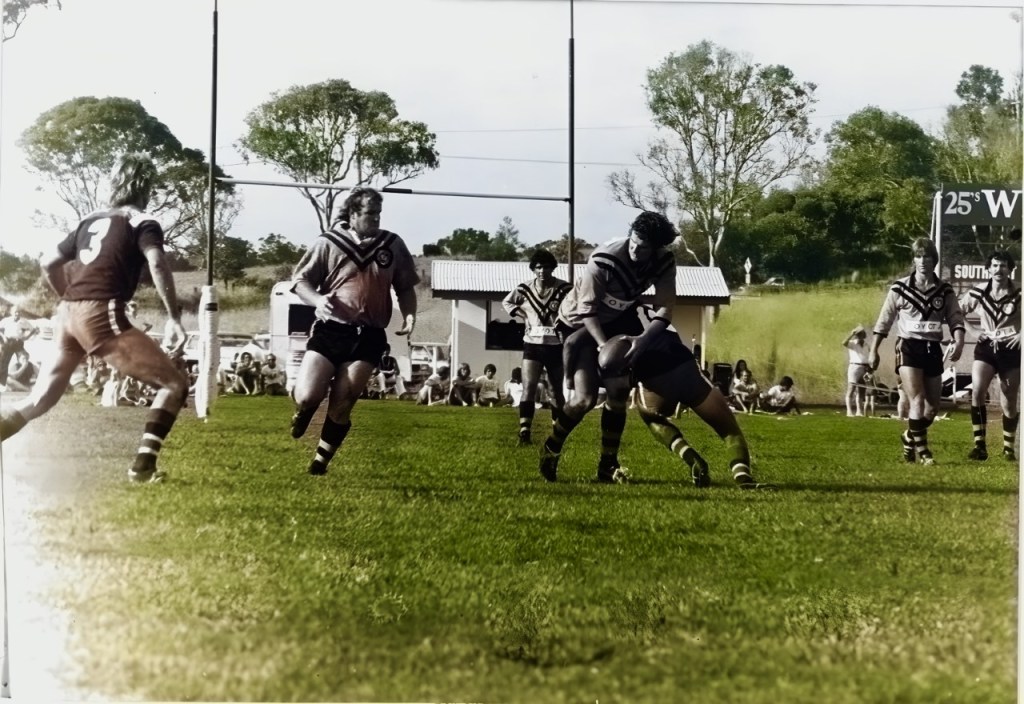
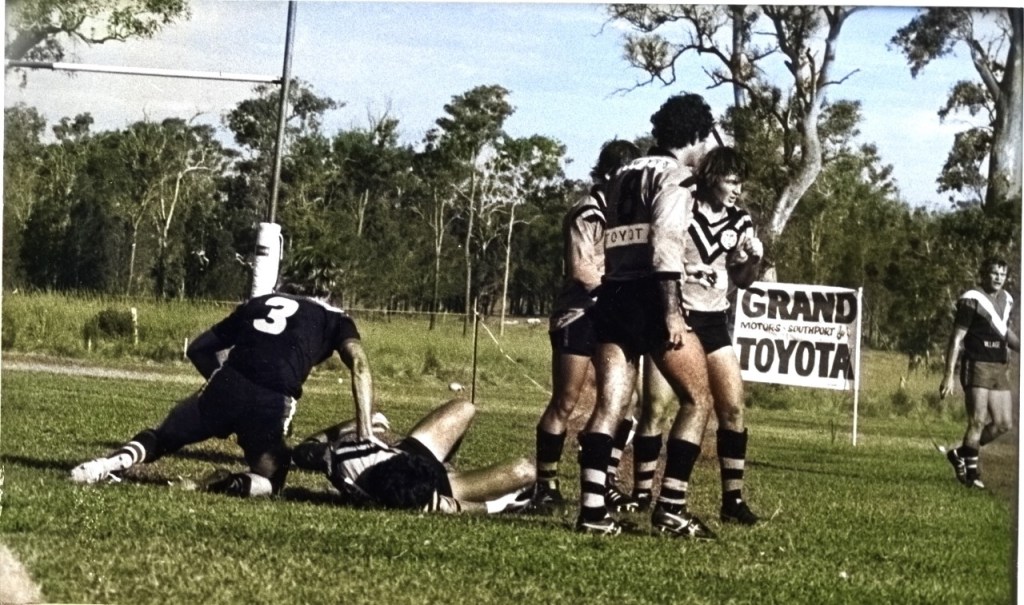
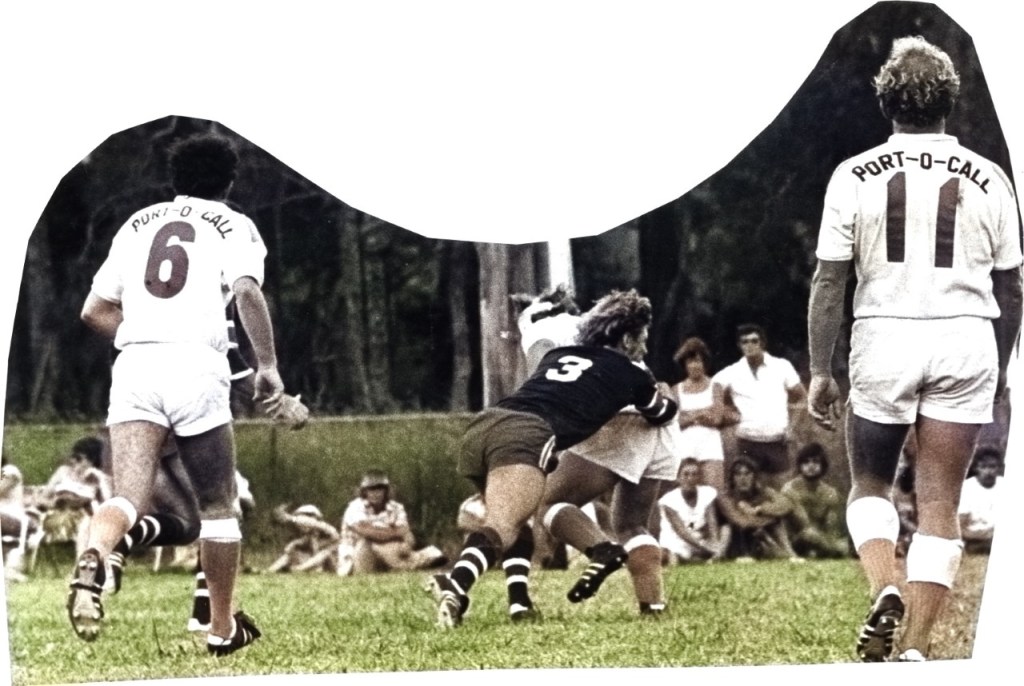
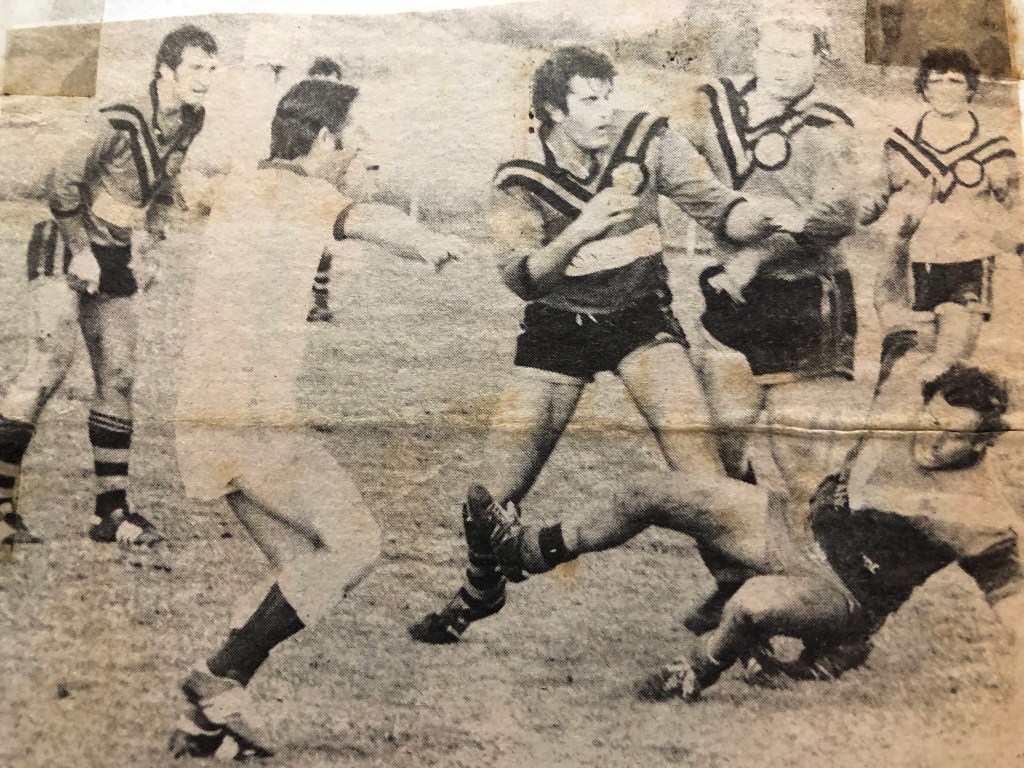
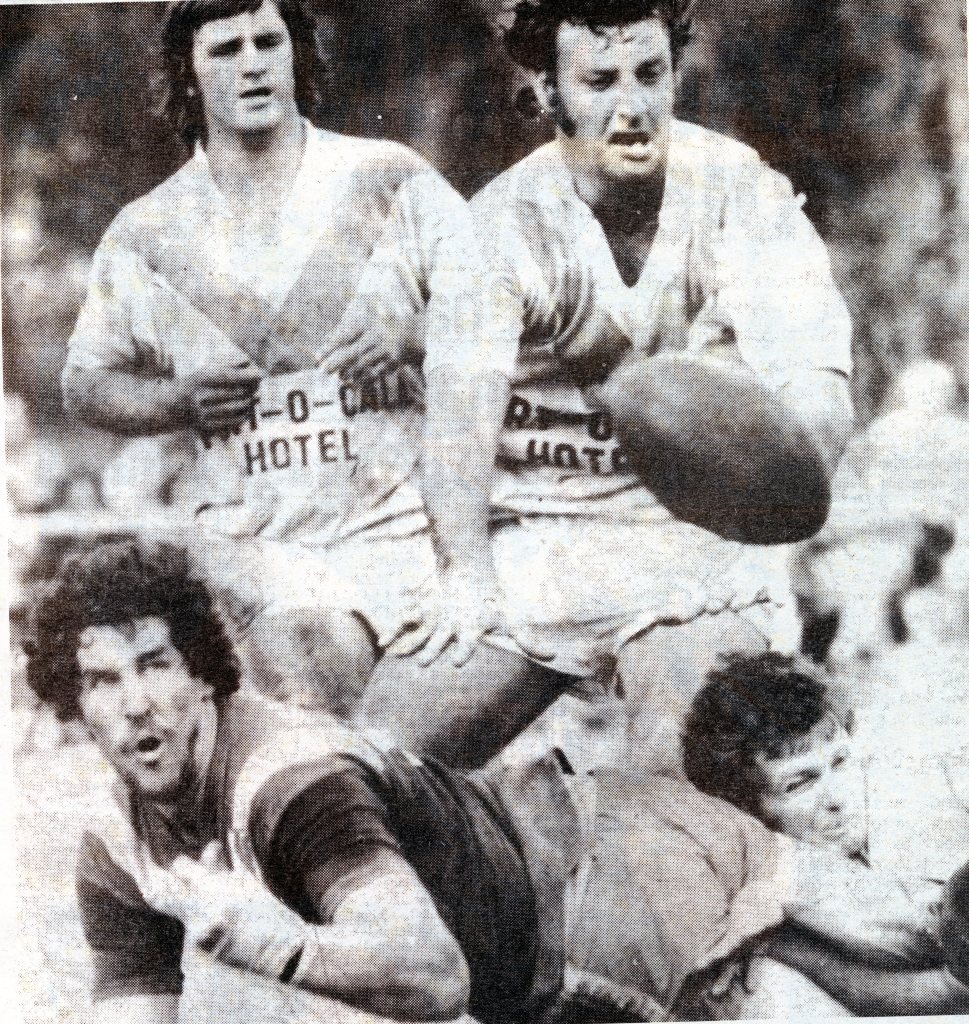
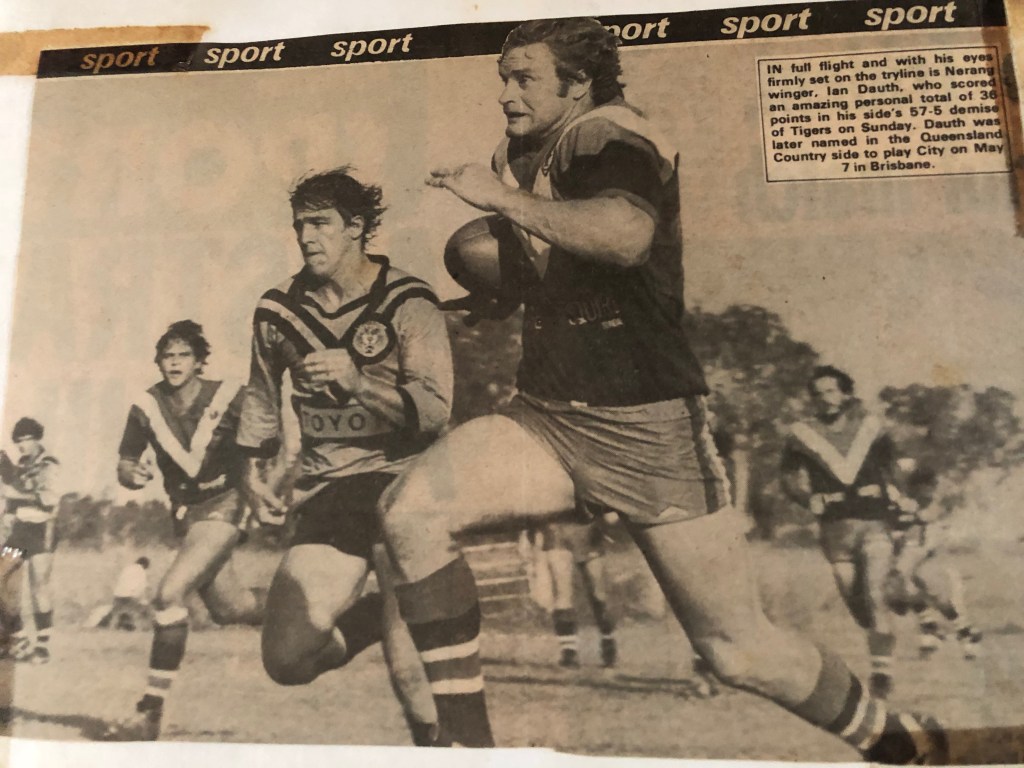
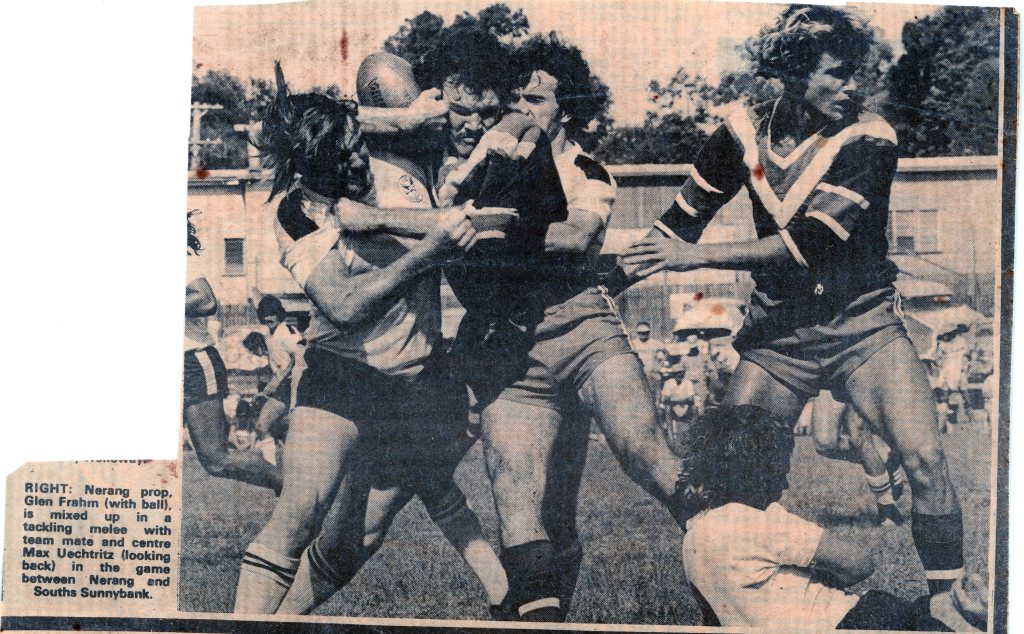
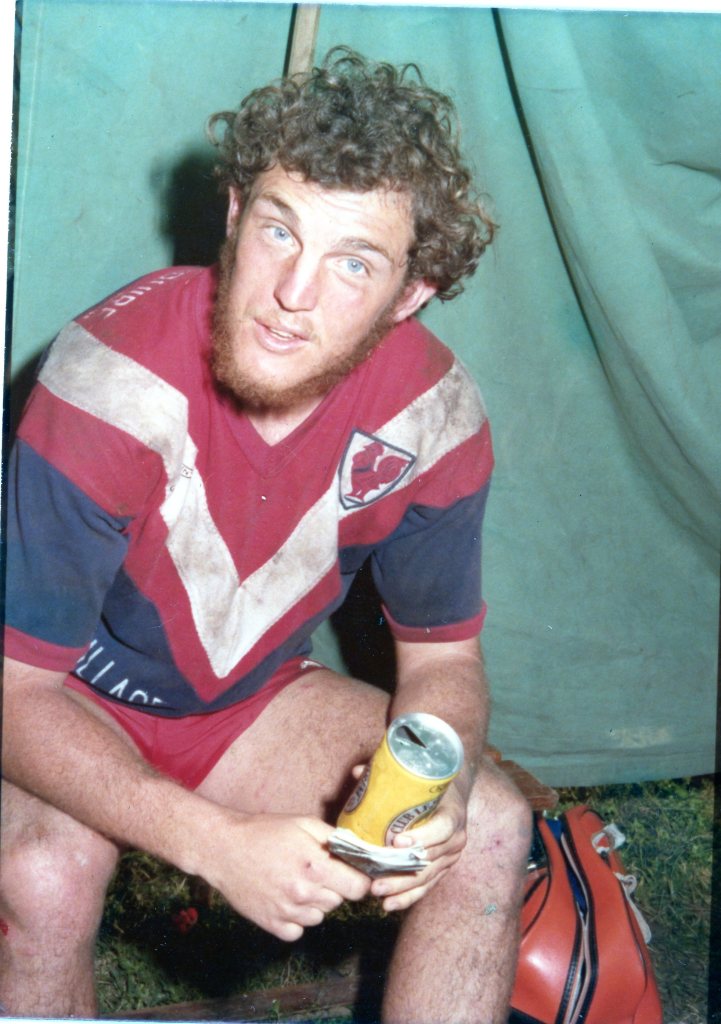
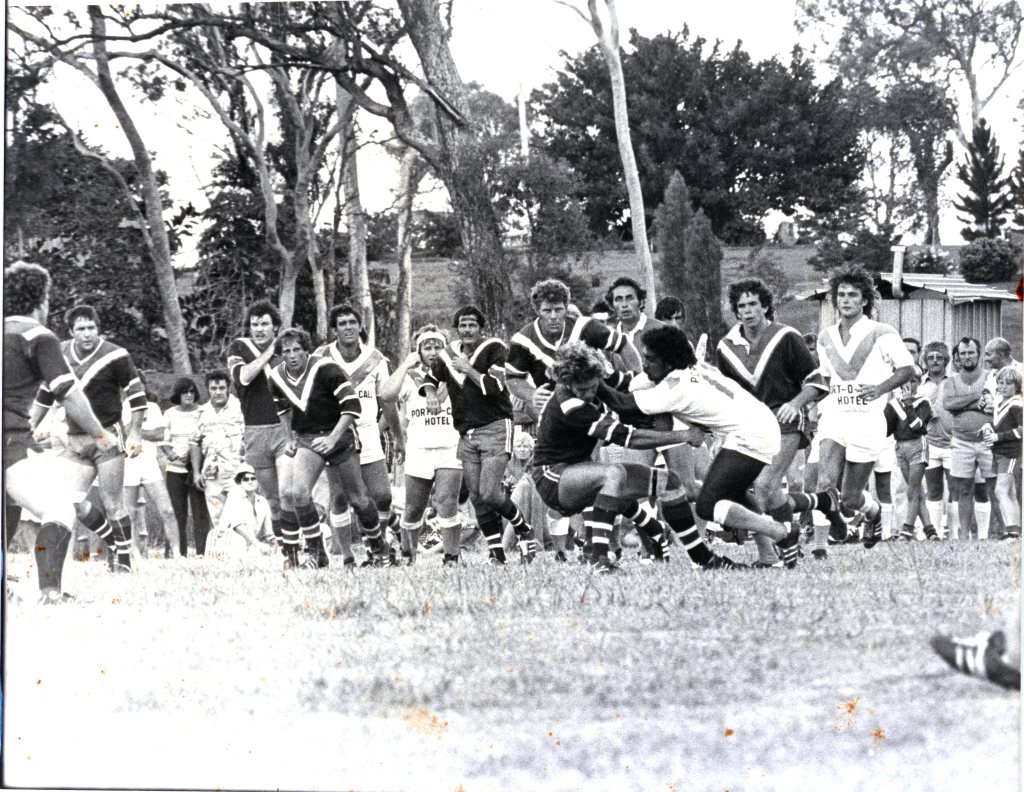
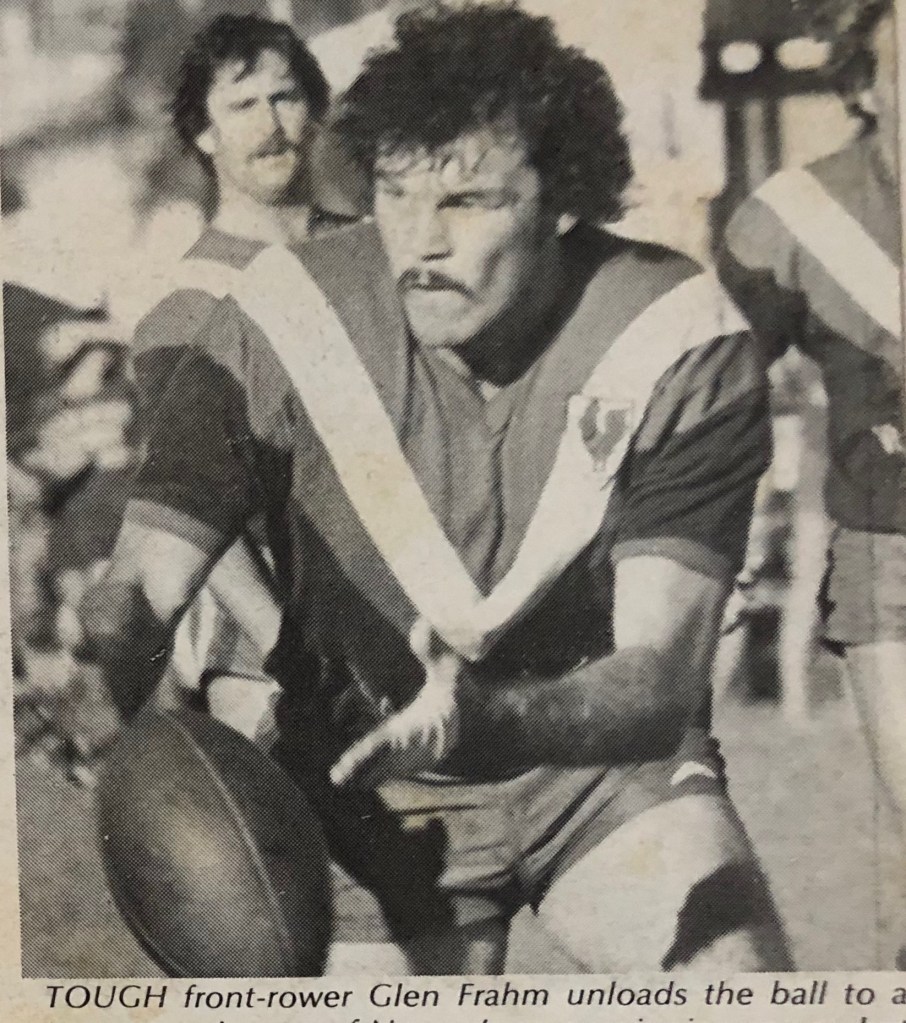
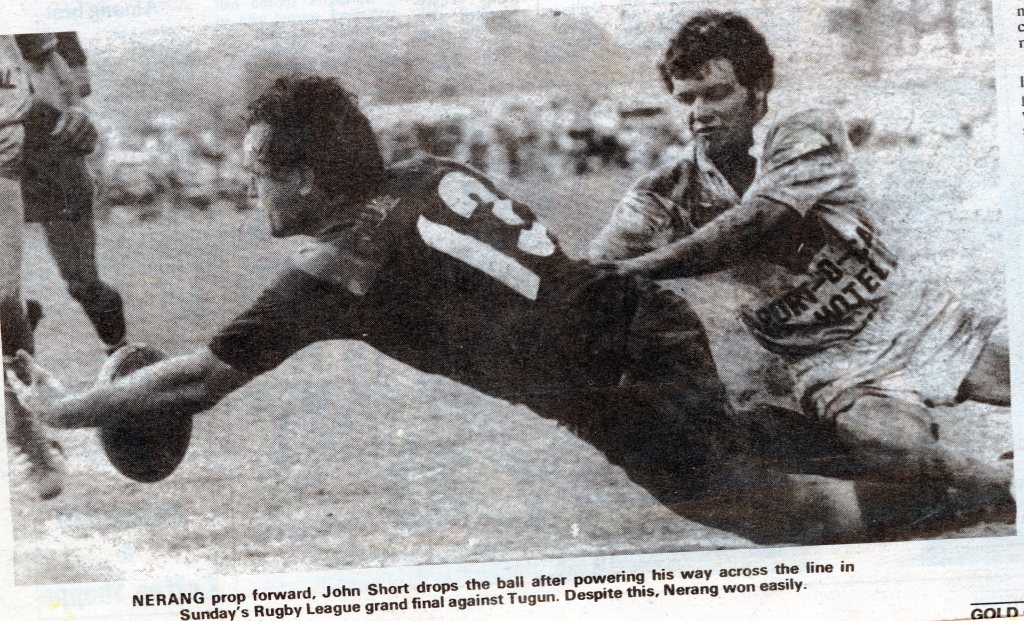
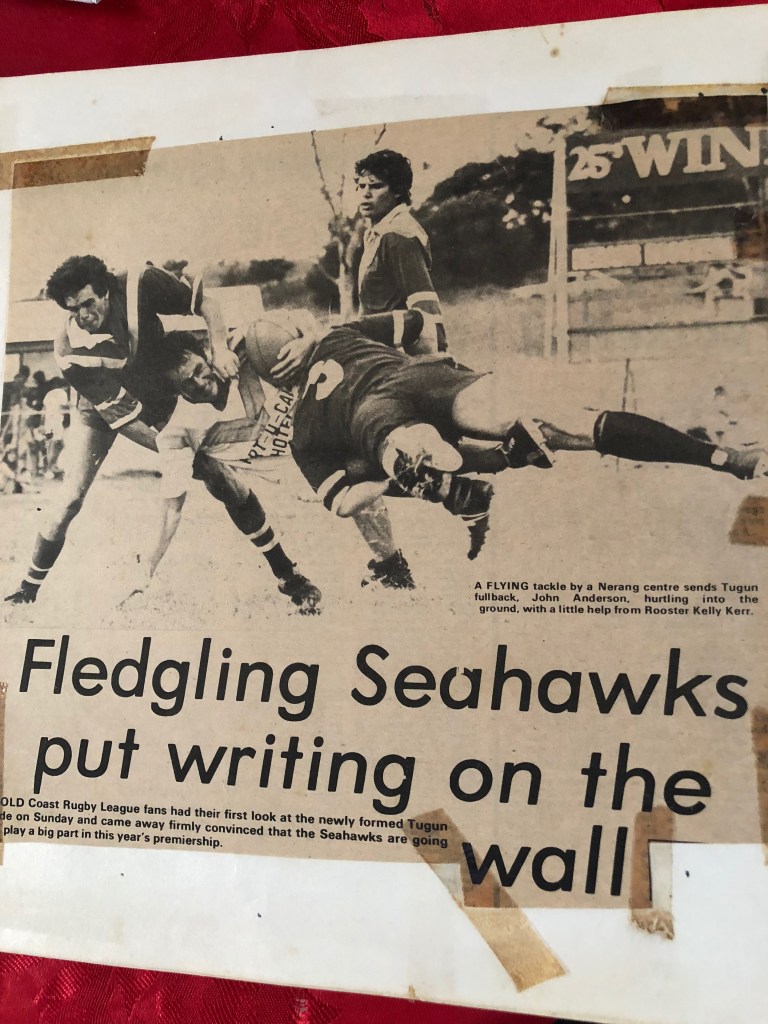
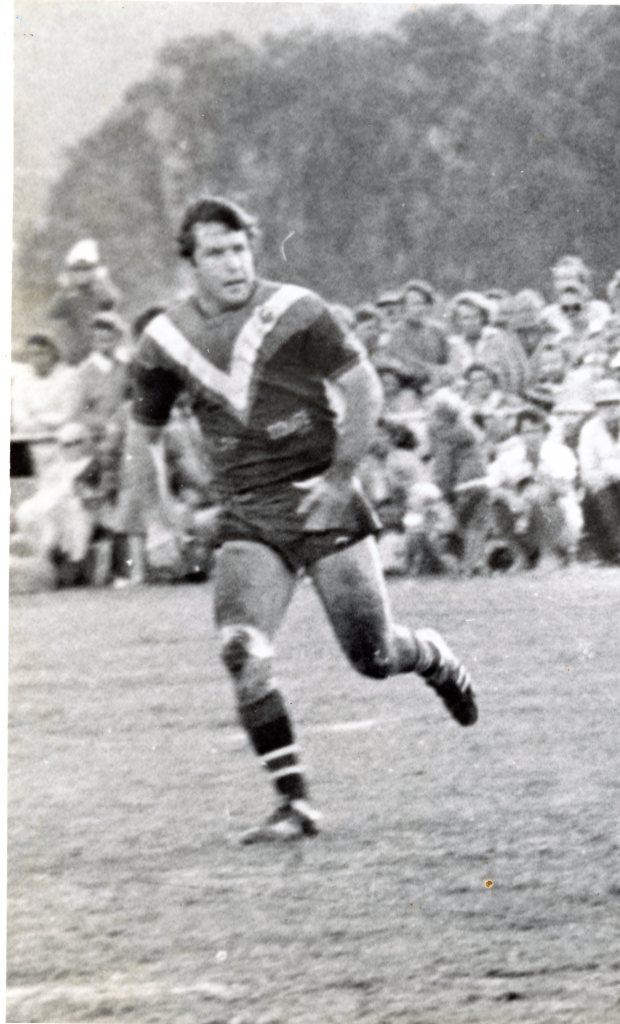


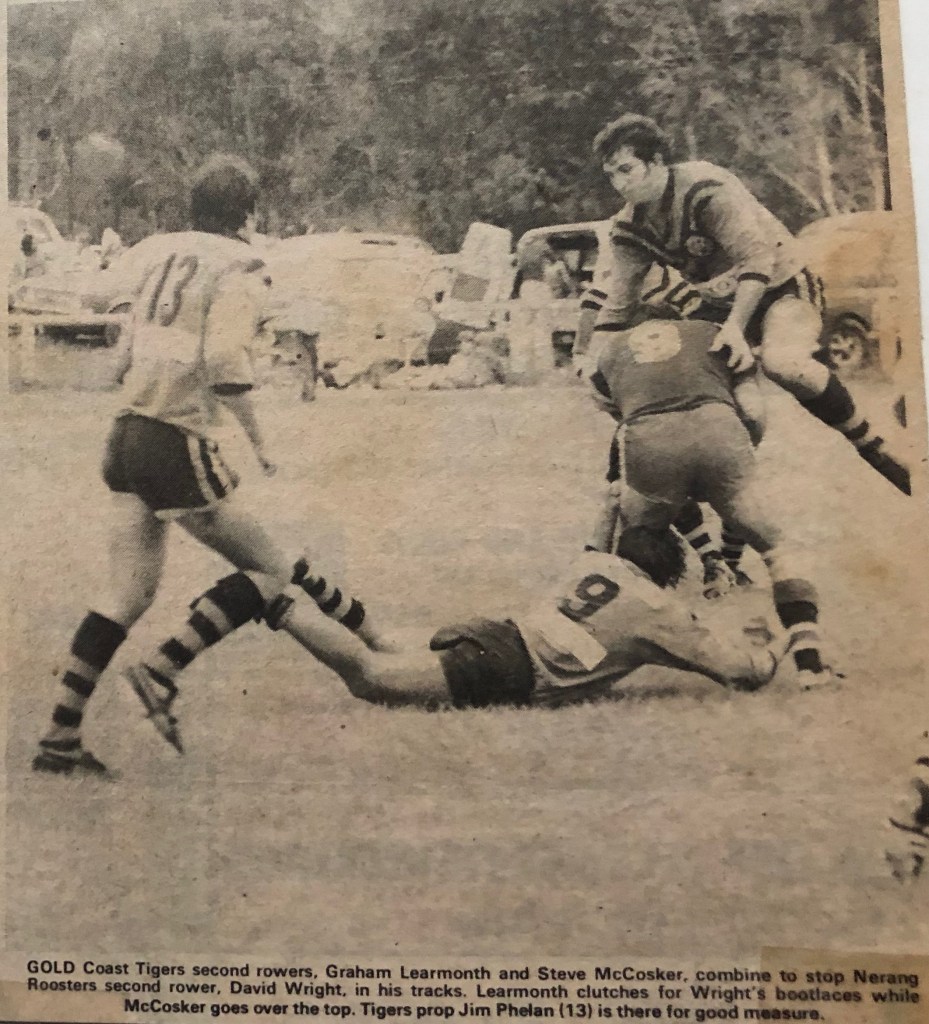
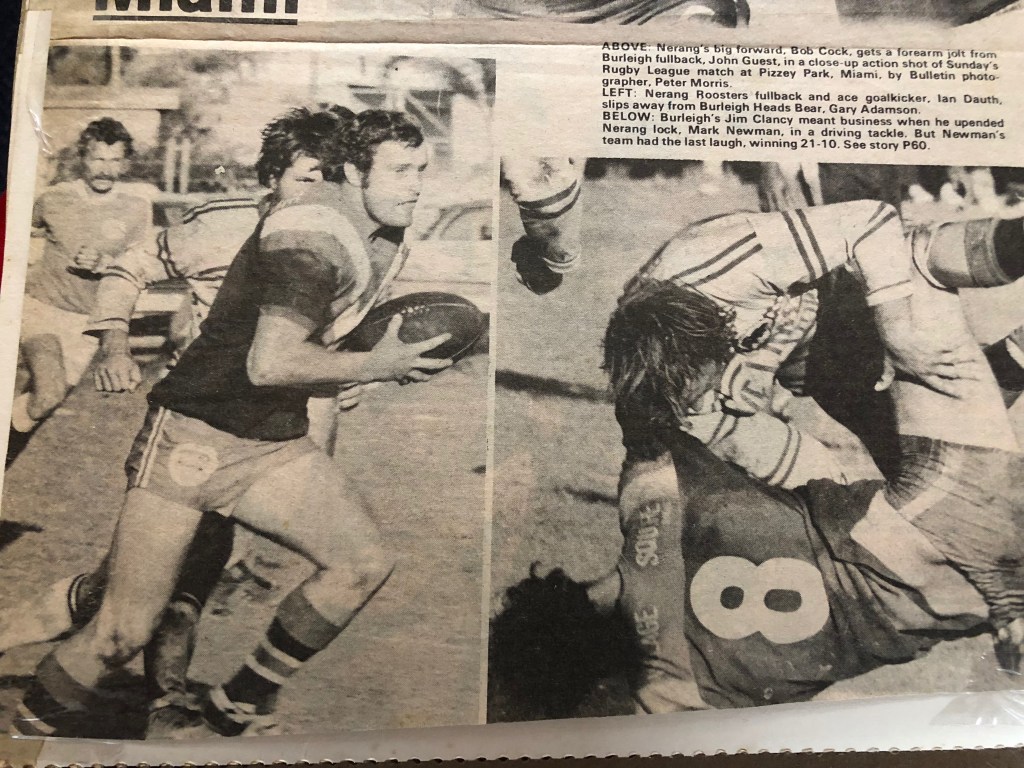
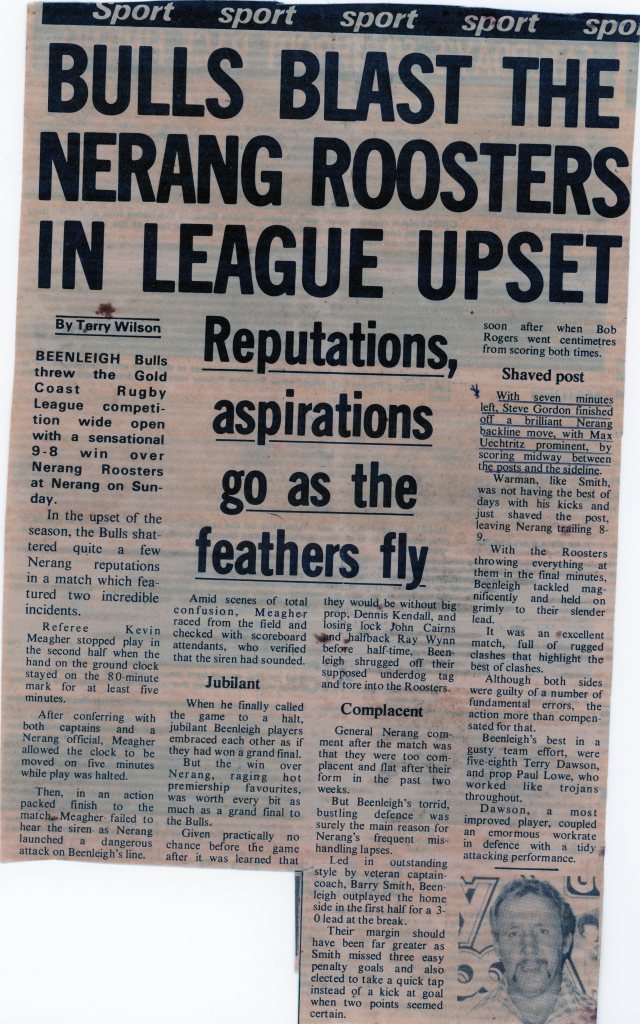
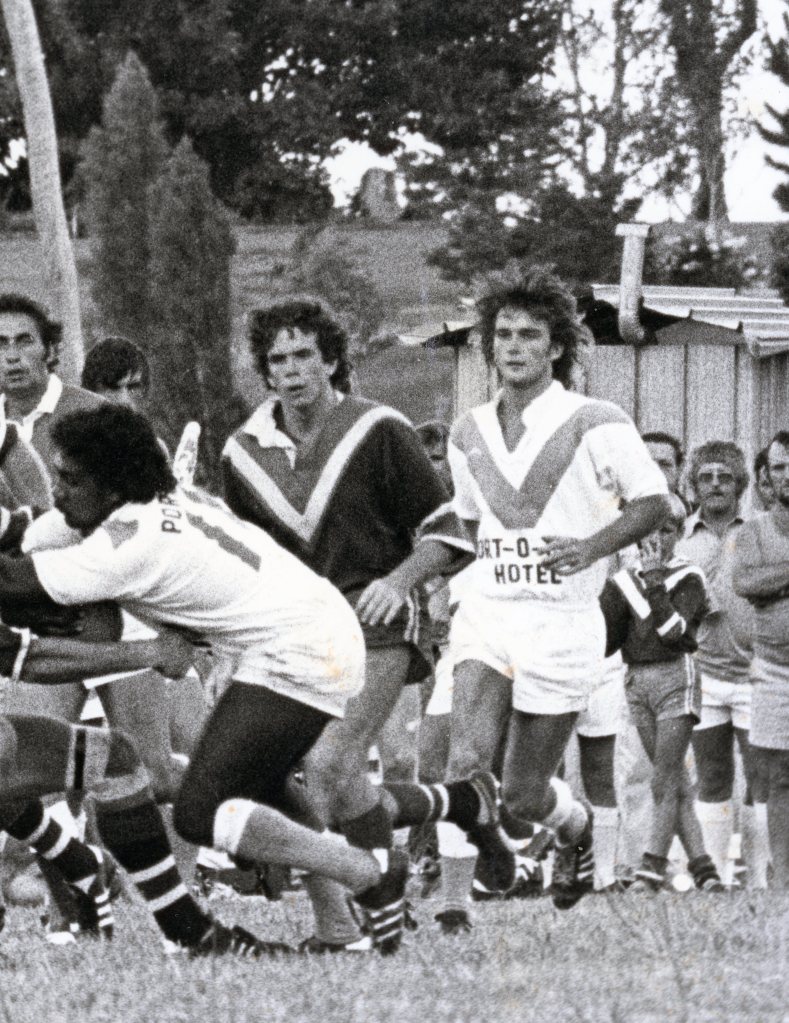
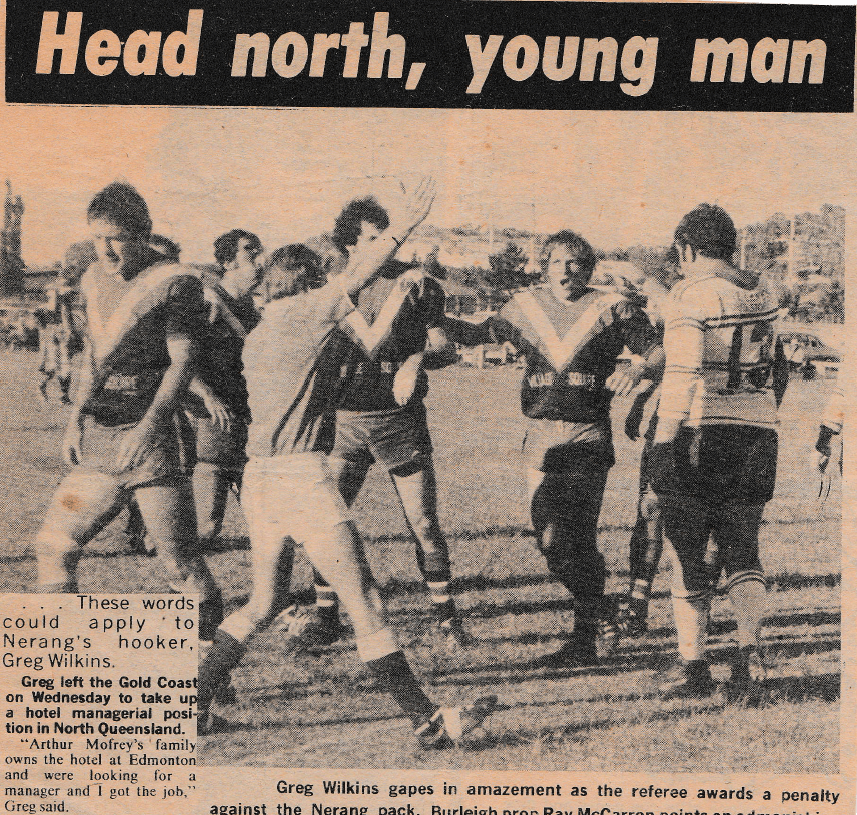
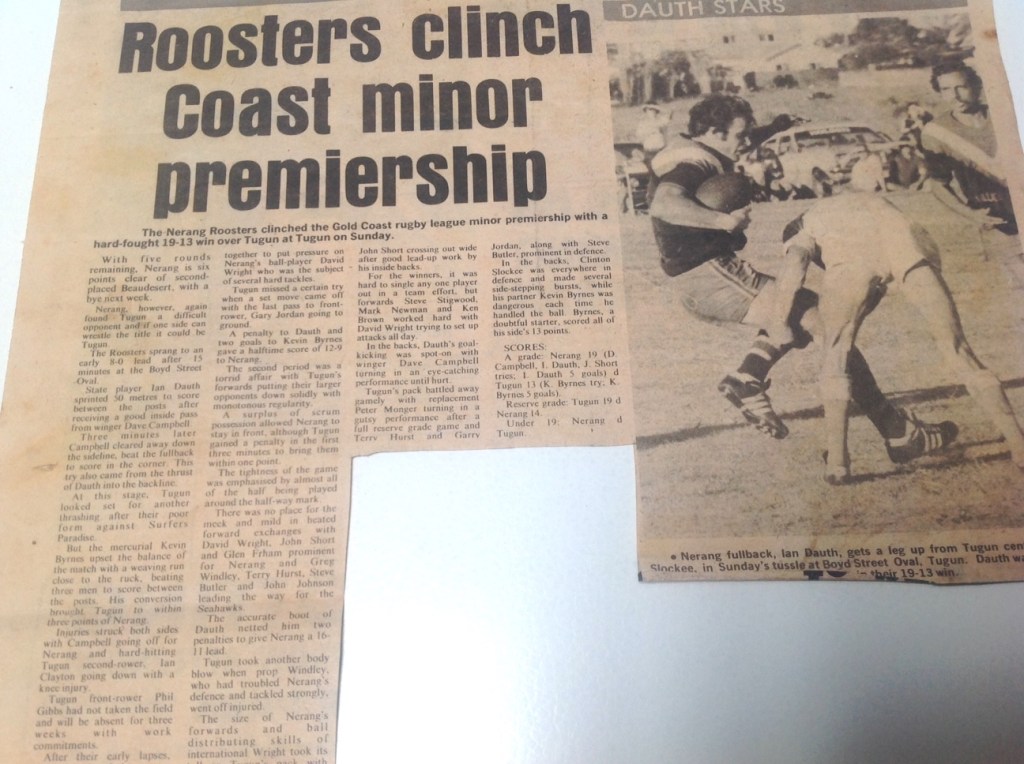
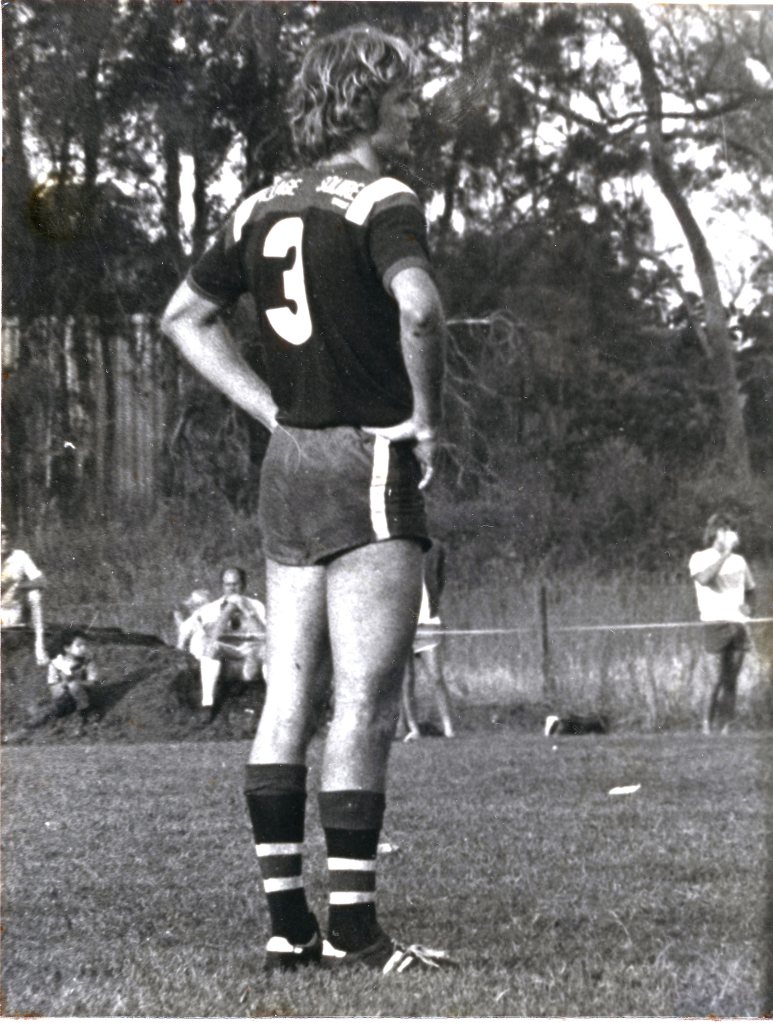
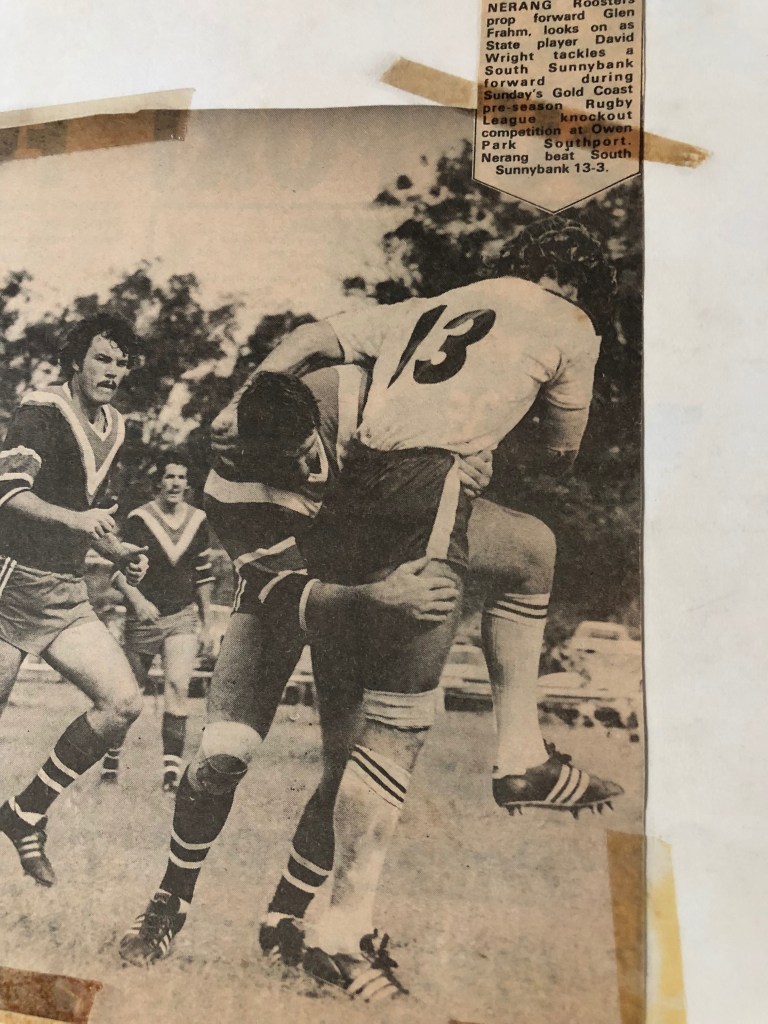
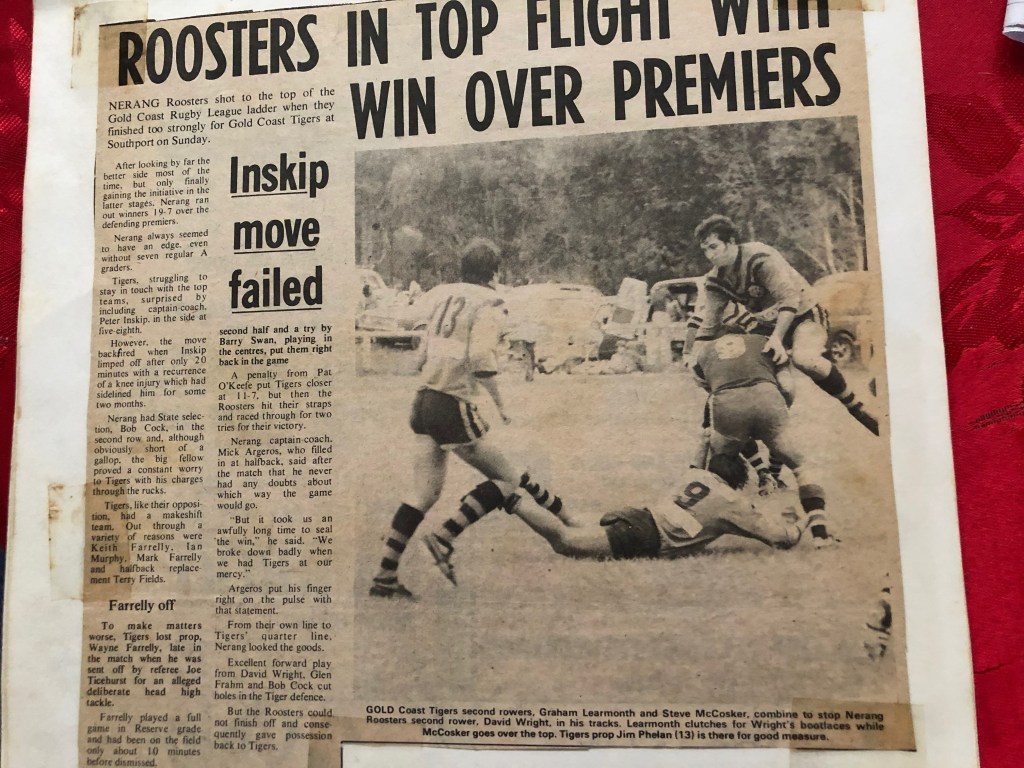
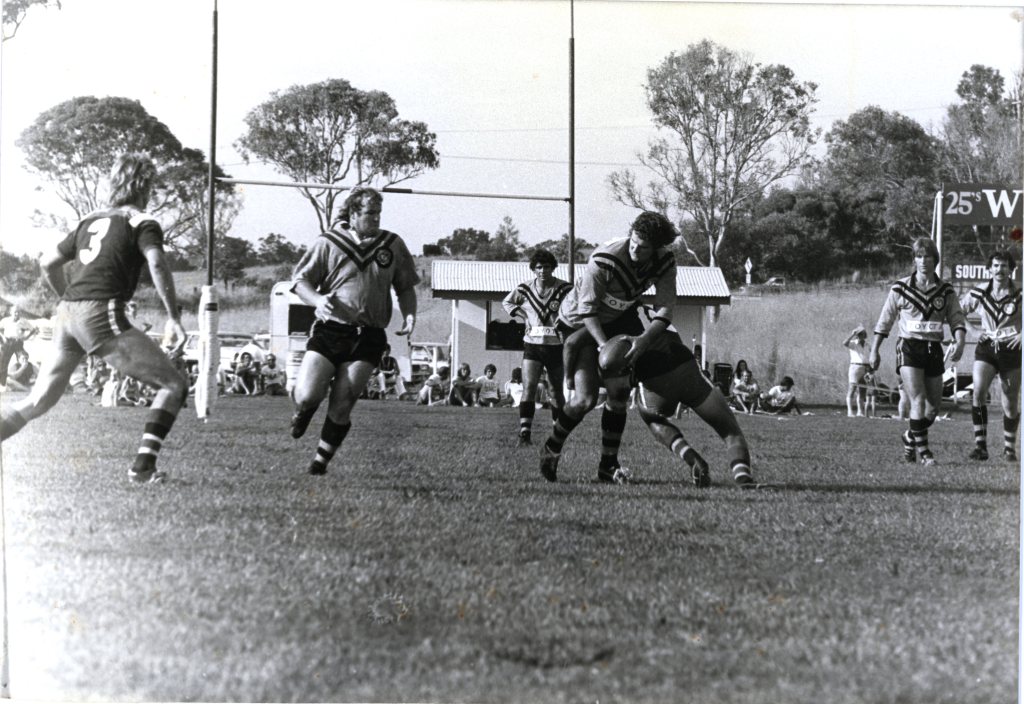
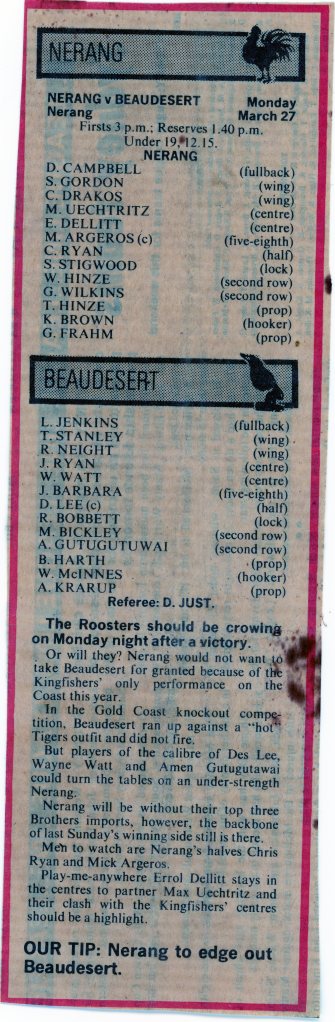
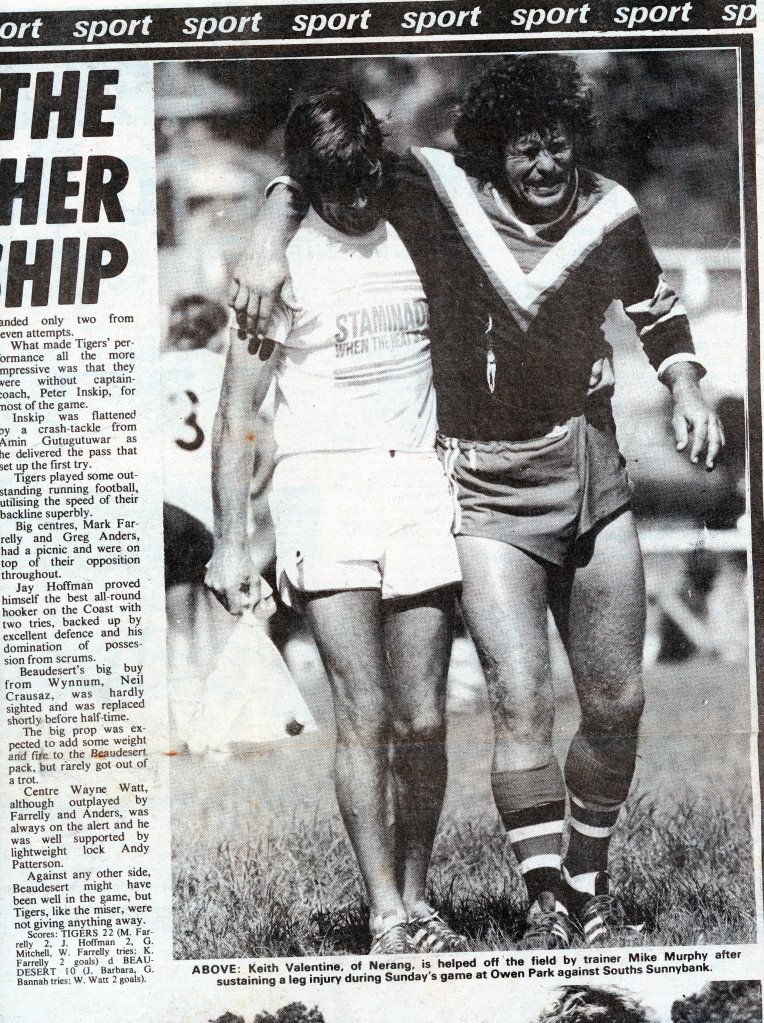
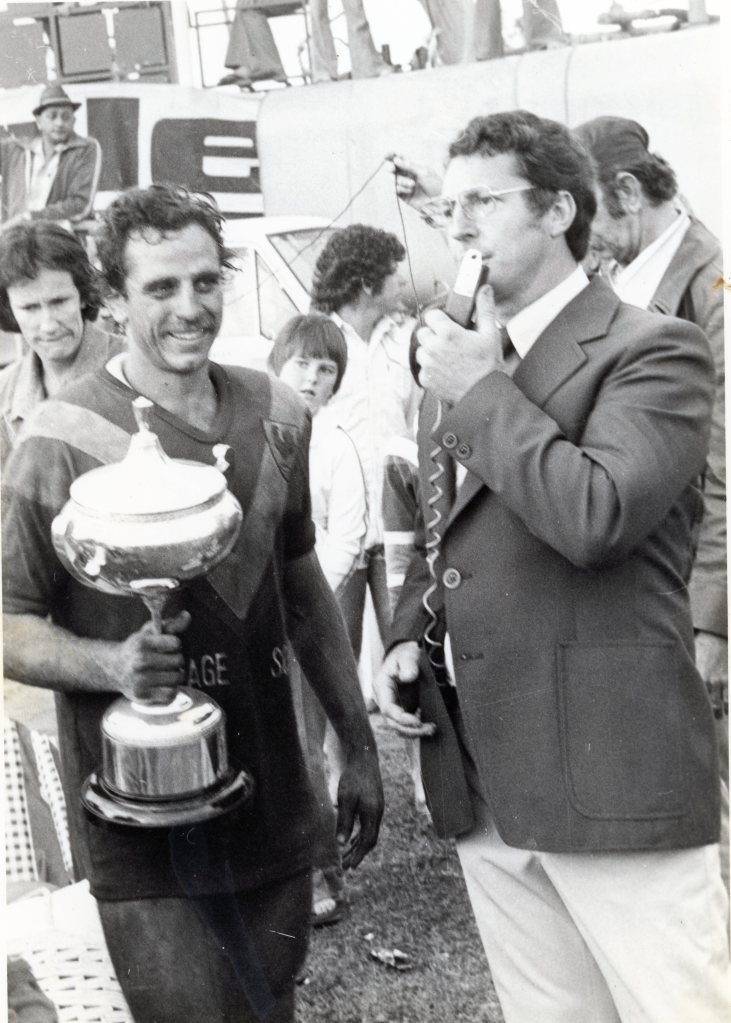
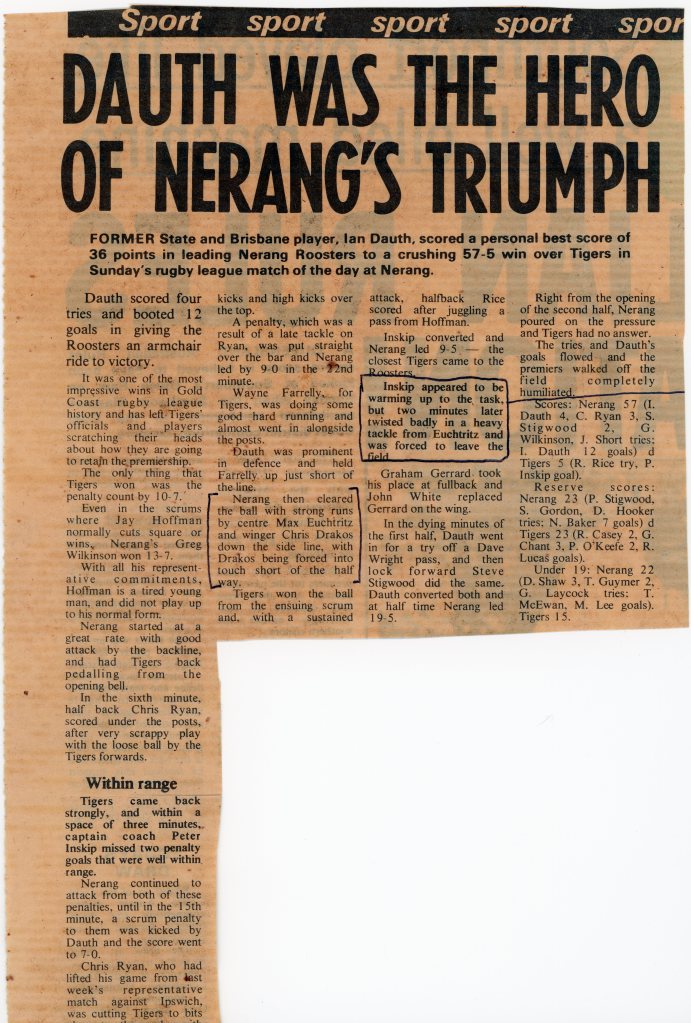
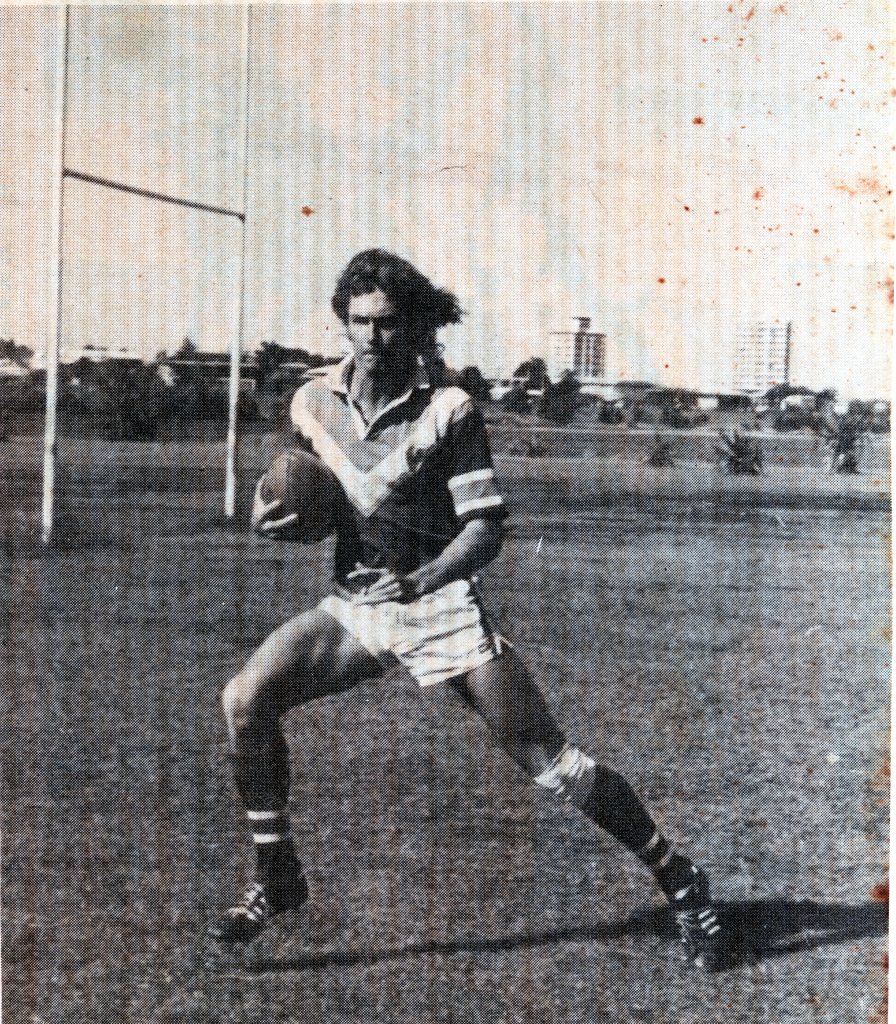

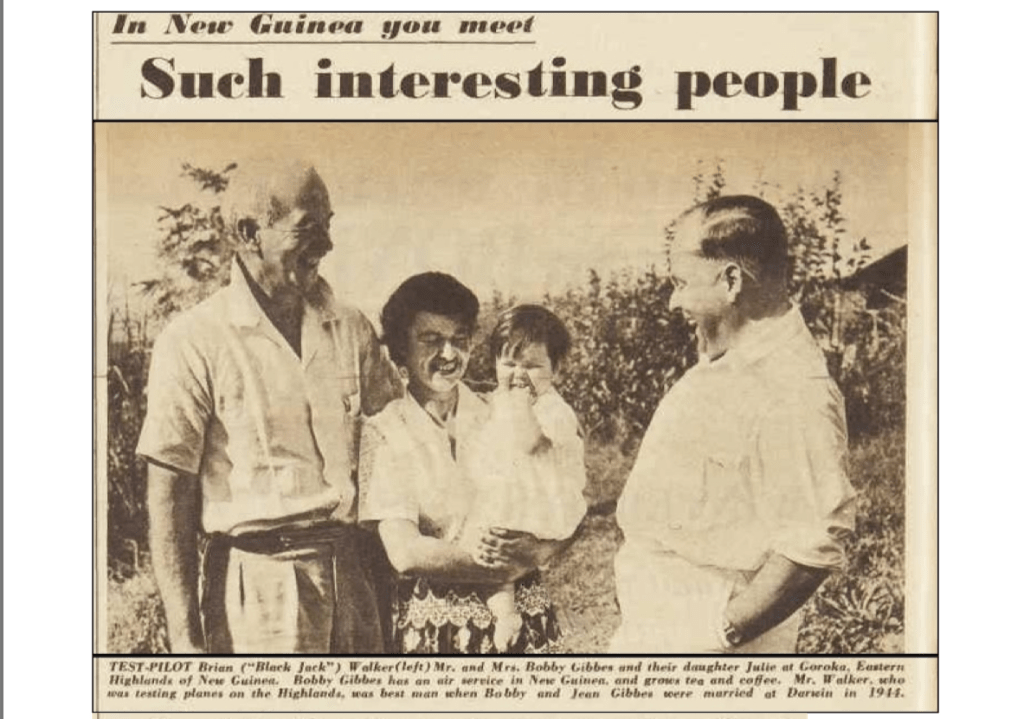
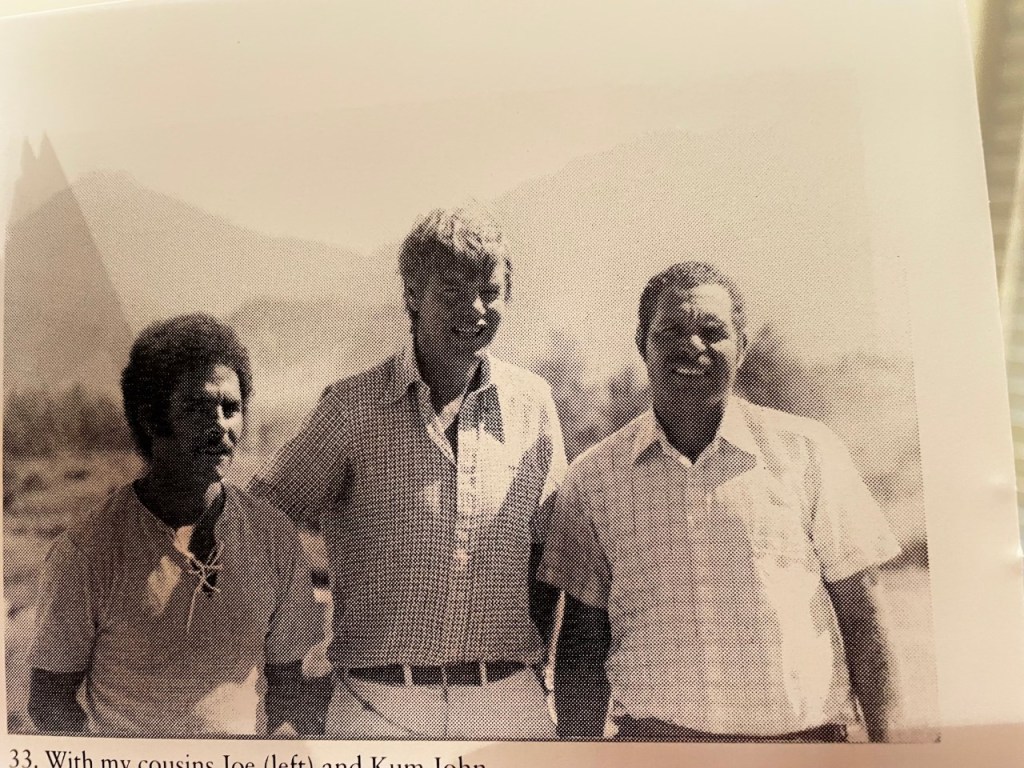
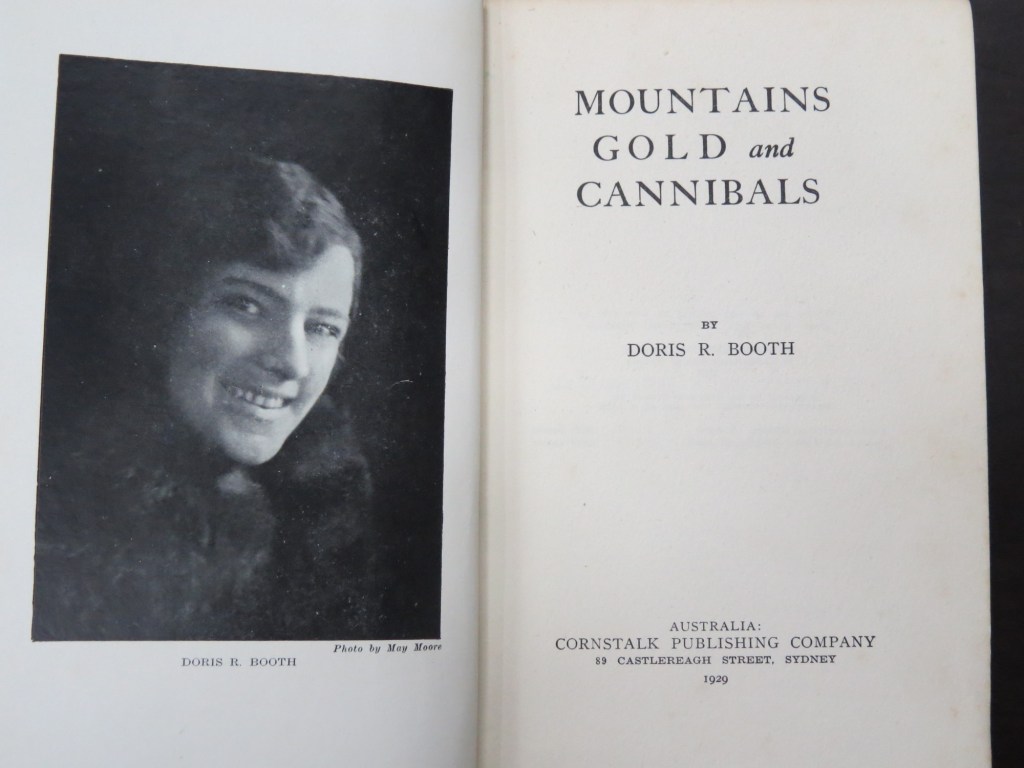

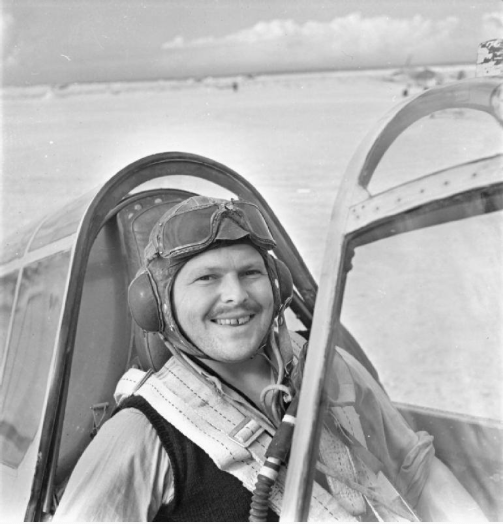
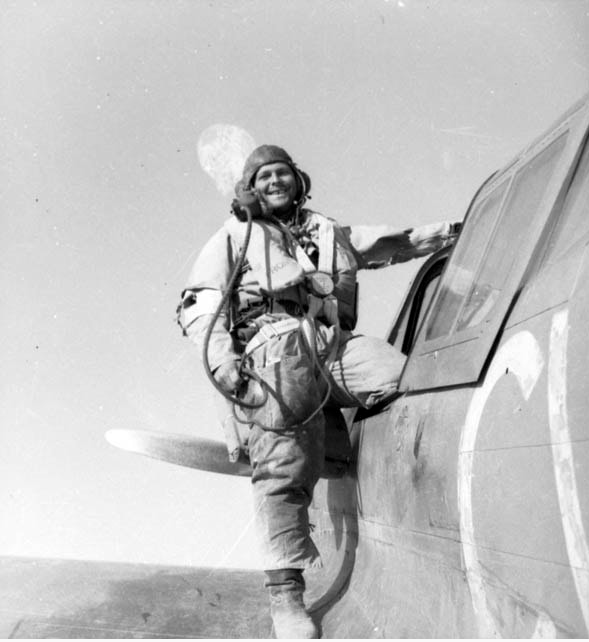
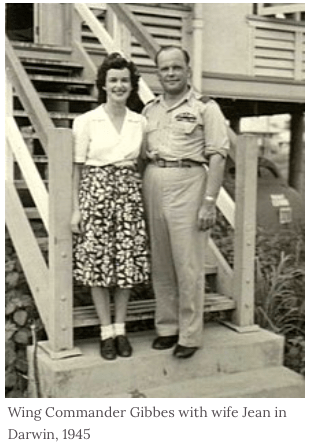

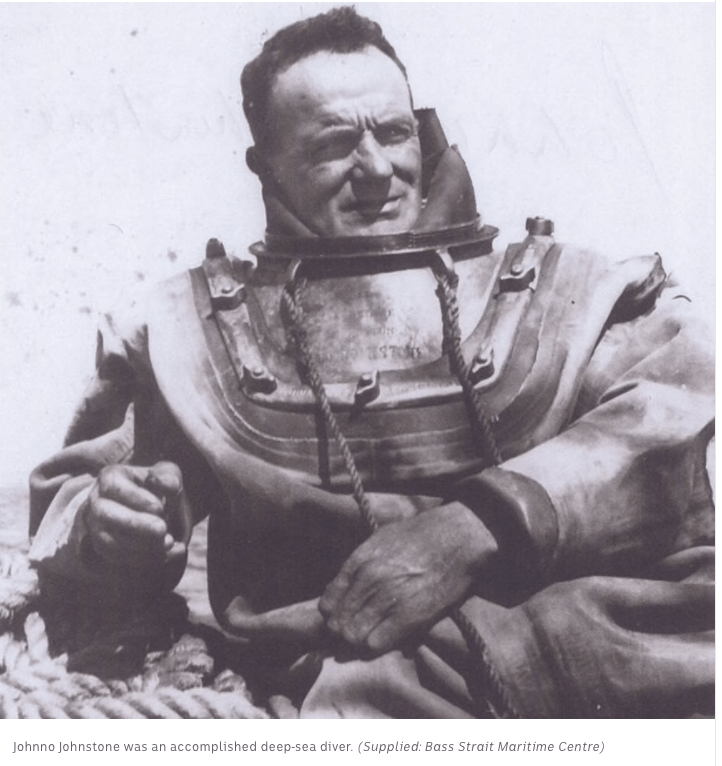
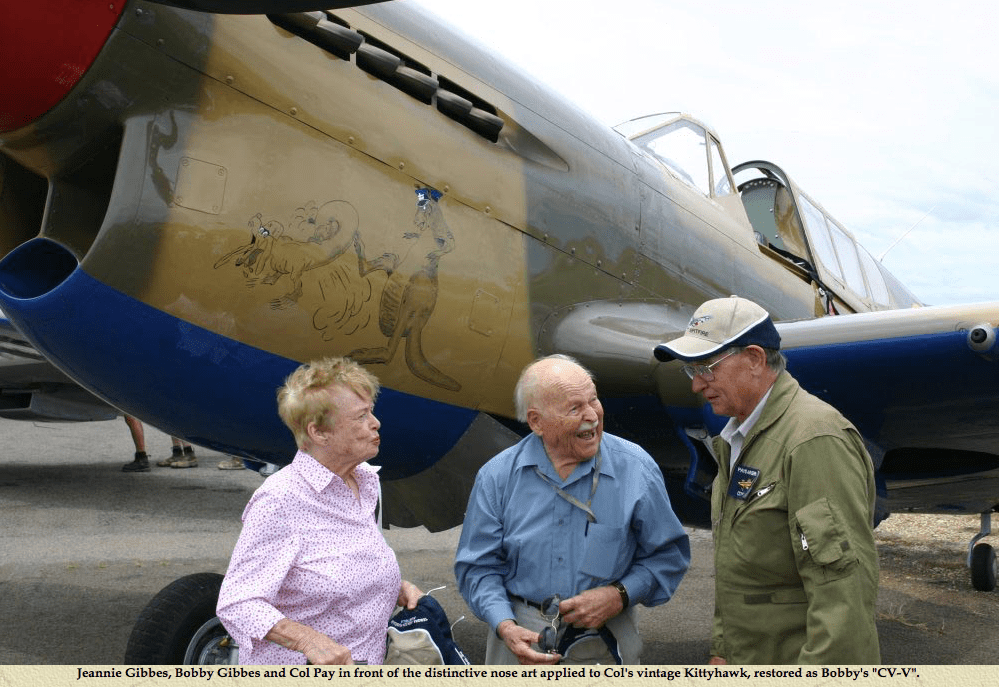
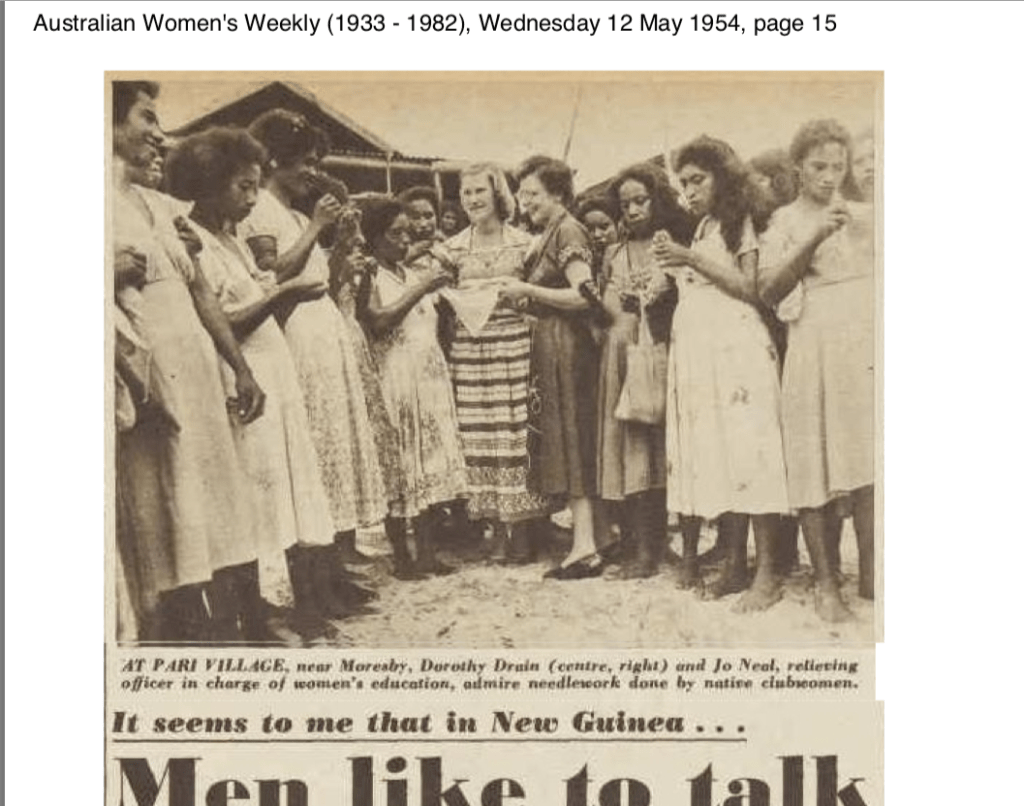
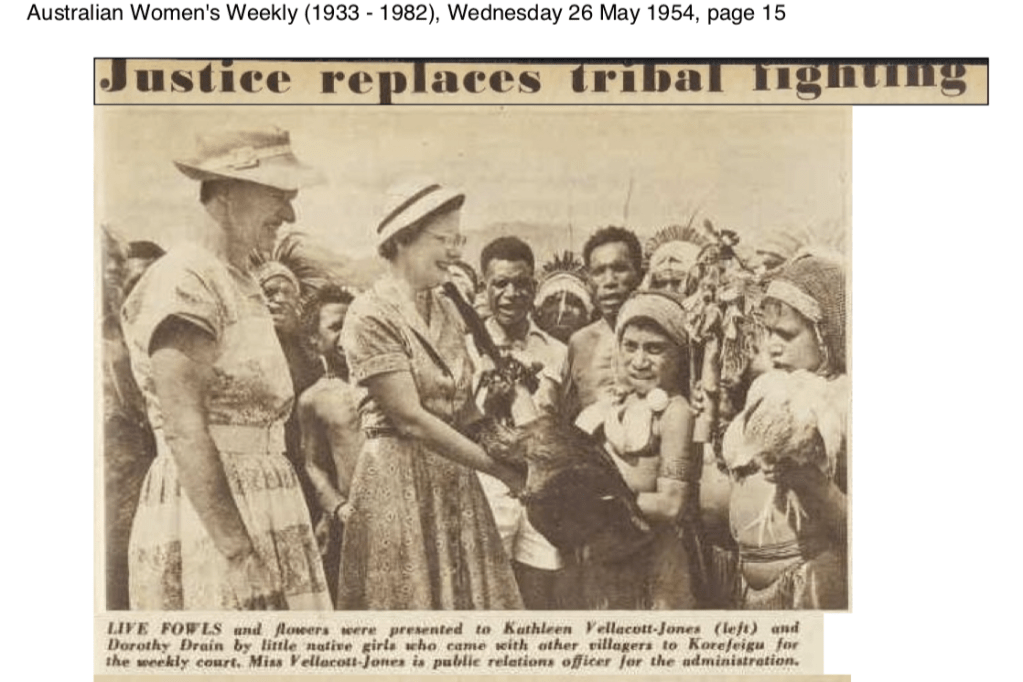
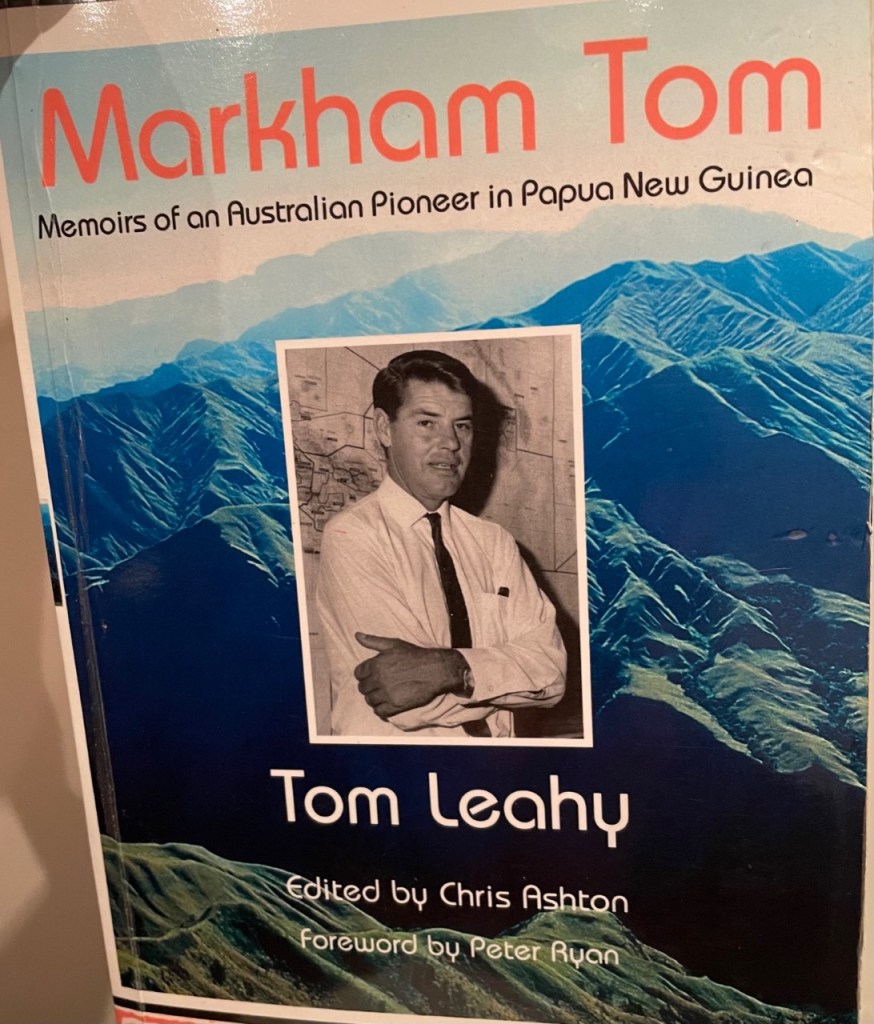
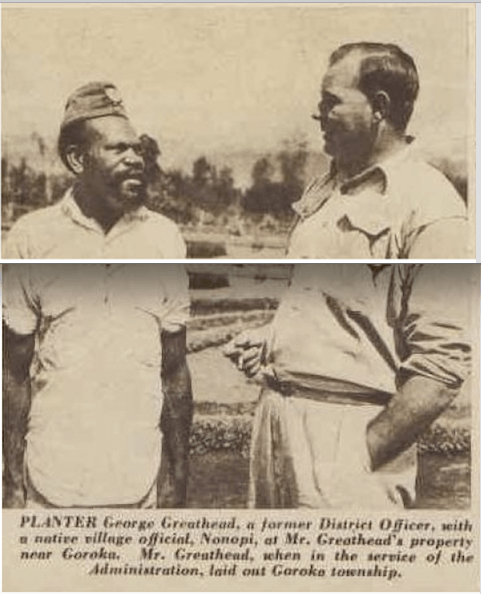
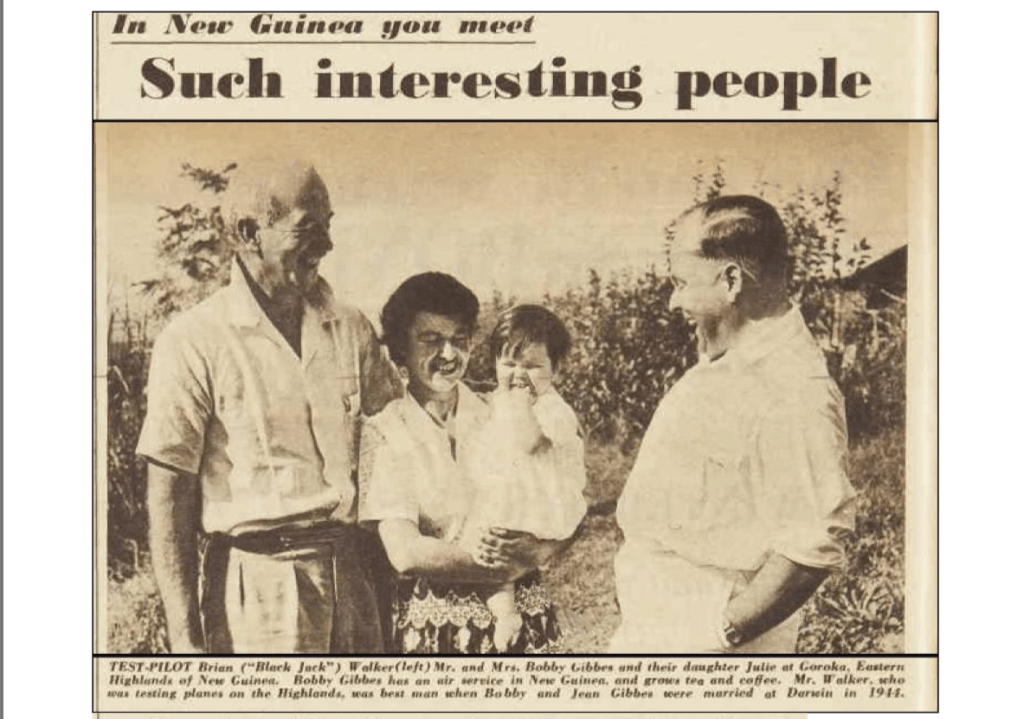
 Max Moments