
By Max Uechtritz
It was almost as if 103-year-old digger Barney Cain held on to give one last final, sombre salute to lost mates.
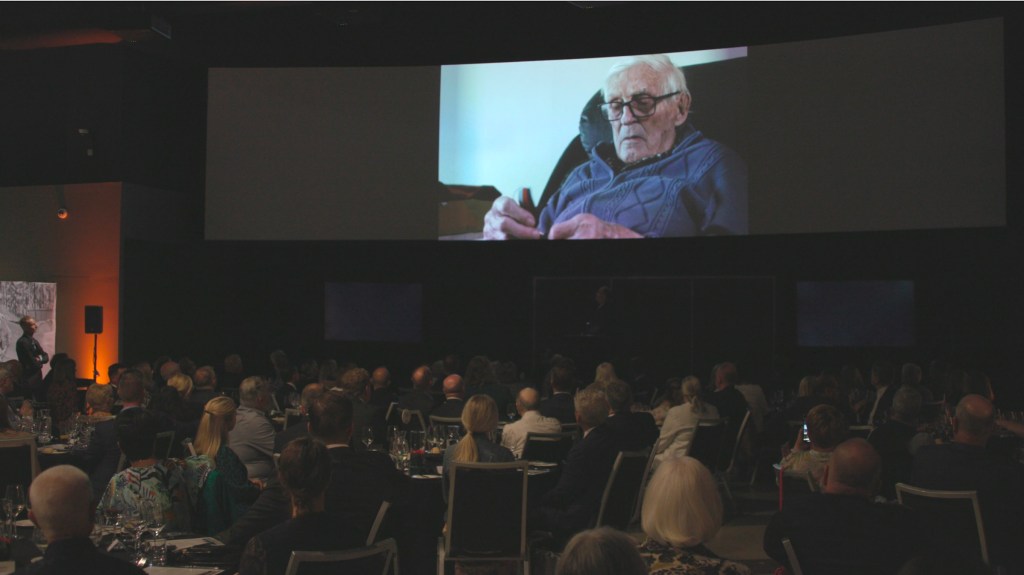
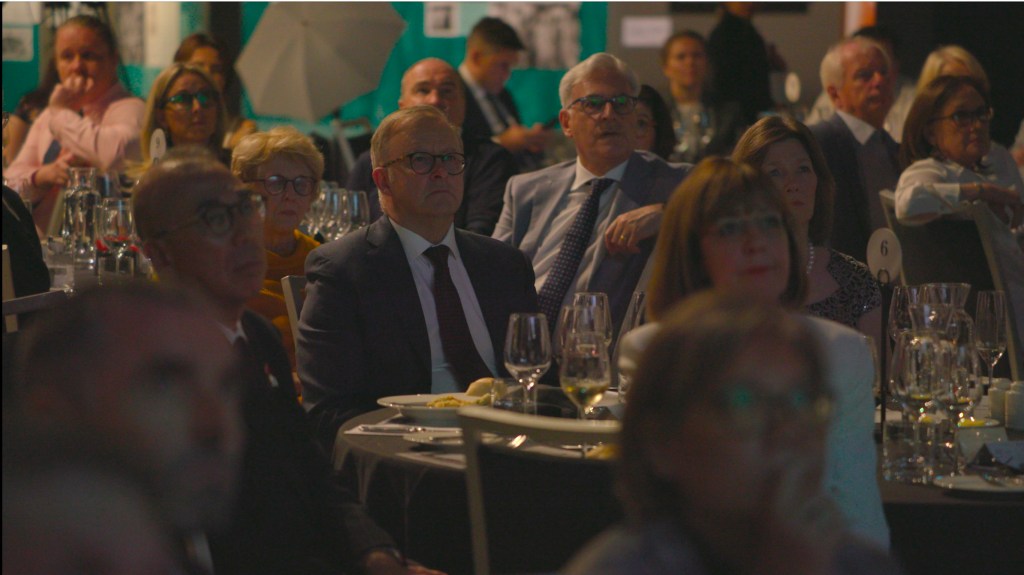
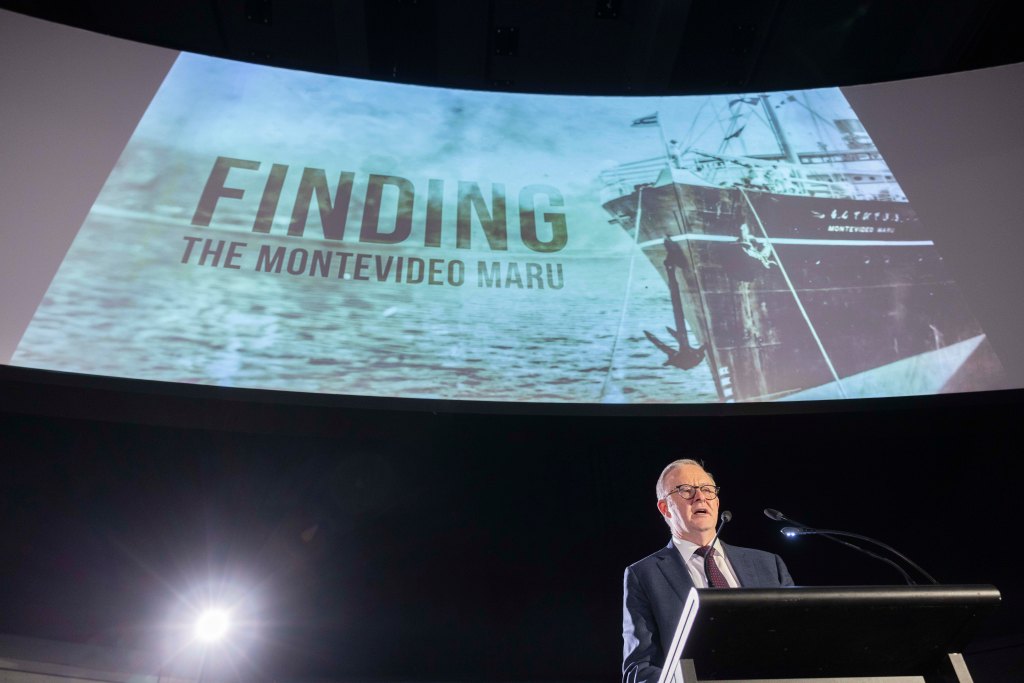
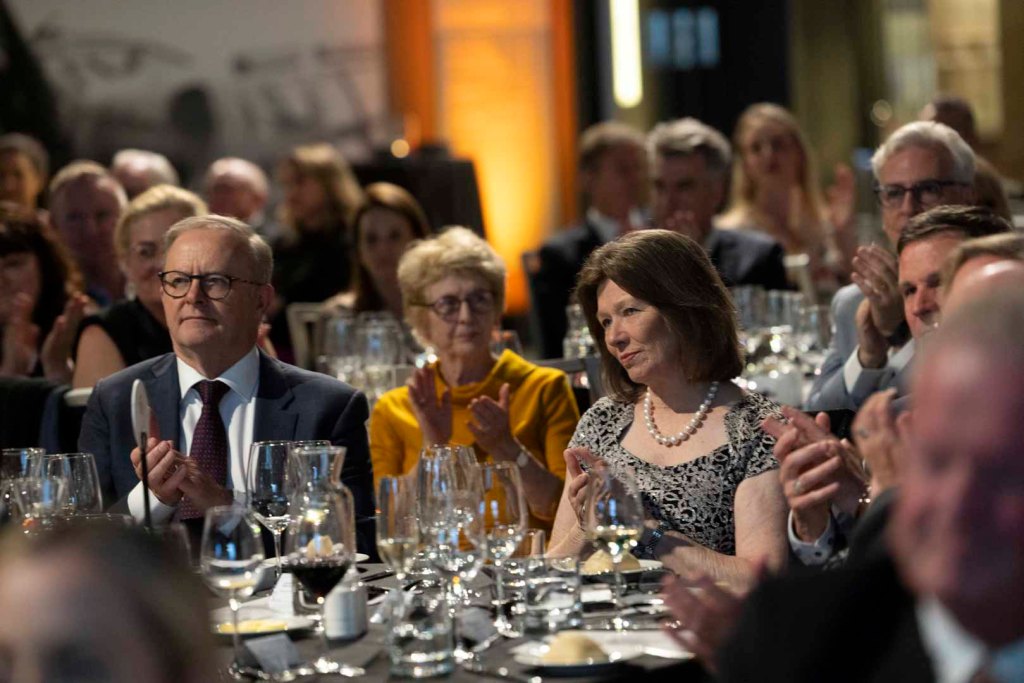
And what a stylish cameo send-off it was: there on a huge screen in front of the Prime Minister, Chief of Army and multiple international ambassadors at a commemorative dinner at the Australian War Memorial on Monday night.
It was to be his final bow. A few hours later Barney Cain VX3069 slipped away. He was the last survivor of the first WW2 attack on Australian territory – the Japanese invasion of Rabaul on January 23, 1942.
He was the last person to see alive the nearly 1000 Australians who perished aboard the prison ship MV Montevideo Maru in our greatest maritime disaster.
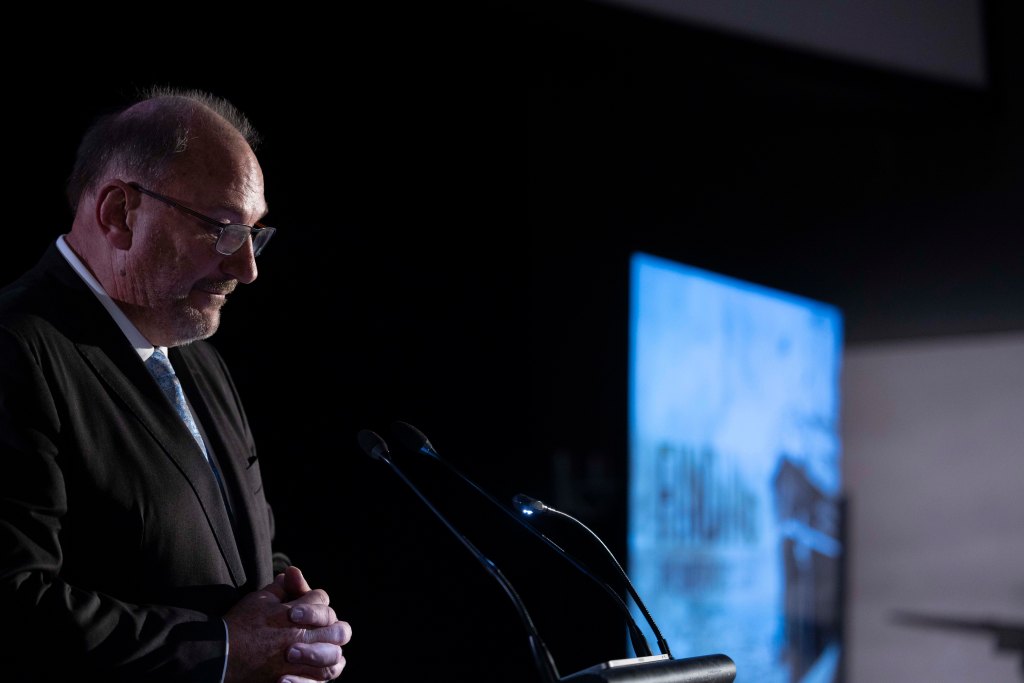
So, who better to feature in a documentary I’d made for a special dinner for descendant families of those poor souls. An event hosted by John Mullen, the Silentworld Foundation chairman who’d led our expedition to finally locate the wreck and war grave of the ship at a depth deeper than the Titanic in April this year.
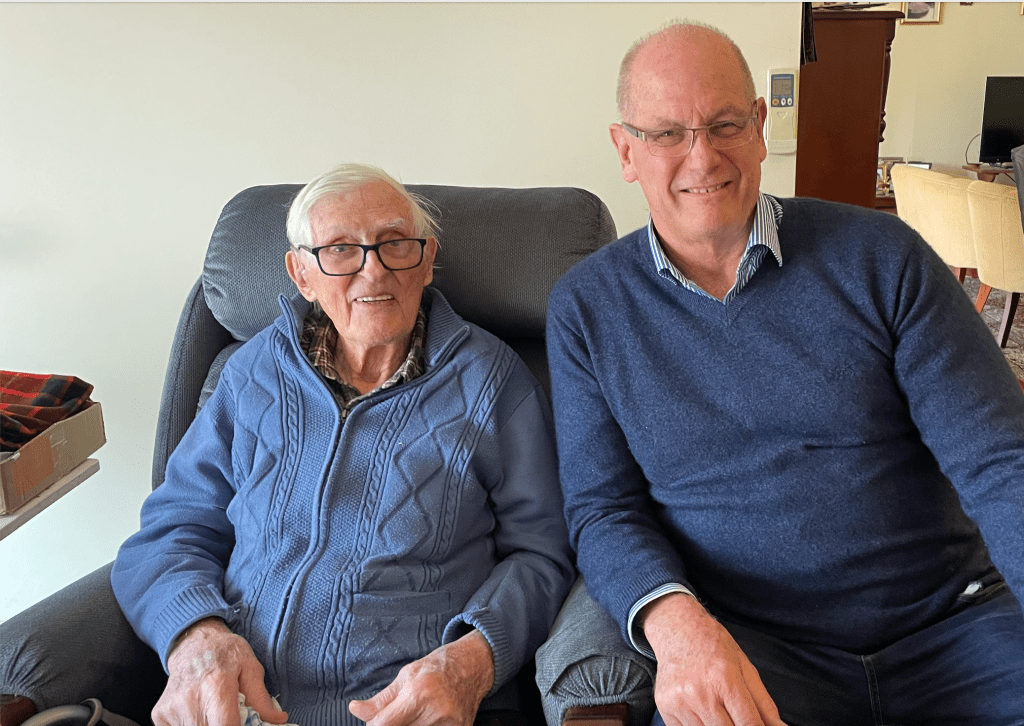

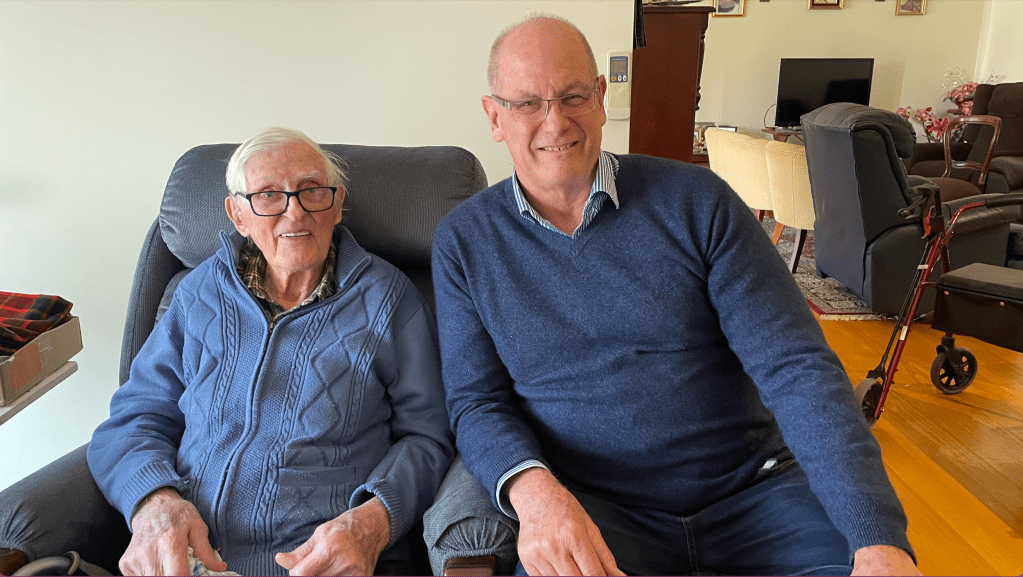
It was a privilege for cinematographer Neale Maude and me to meet and interview Barney in May when he still, defiantly, lived independently in his own home on the Mornington Peninsula.
And fun! A renowned wise-cracker, Barney had us in stitches at times.
“Deaf as a beetle!” … he roared and laughed at himself repeatedly as his son Dennis and daughter-in-law Yvonne relayed questions via instant text transcripts on the Iphone.
Then, we’d struggle with our emotions along with Barney when he talked about the mates who never managed to escape from Rabaul like he did when the order went out “every man for himself”.
There were more than a few moist eyes among the 140 dinner guests as they watched Barney falter ever so slightly then sink into silence, his eyes and face momentarily a haunting kaleidoscope of grief, memories and what he saw as the sheer folly of war.
Neale and I listened in awe as Barney described his 78-day escape ordeal through jungle, over mountains and across croc-infested rivers dodging Japanese hunting them from land, sea and air. Before finally being plucked from a plantation beach by a rescue boat, Barney had suffered intense malaria, dysentery and malnutrition. His clothes and boots rotted off and giant leeches sucked his blood. His soul was shattered when he saw others die or give up, surrendering to the Japanese in the hope of food, rest and the Geneva Convention.
“We didn’t have a bloody chance,” Barney said about his under-equipped, out-gunned Lark Force of 1400 when a massive Japanese fleet (fresh from Pearl Harbour) sailed into Rabaul Harbour disgorging thousands of troops and hundreds of warplanes from aircraft carriers.
As his ailments worsened during what was one of the greatest escape treks in Australian history, Barney felt he had about two weeks of life left in him.
His health was nearly a moot point when he rounded a corner near a plantation called Tol. He and his mates saw some barges, as he’d recounted previously.
Barney remembers the moment the Japanese arrived as if it was yesterday.
“There were a lot of troops there, all in these small parties, and a Major Bill Owen was organising to get everyone over to the other side of the river,” he said.
“The natives were going to ferry us across in canoes, and around the corner came these barges.
“Someone said, ‘They’ve come to rescue us,’ but I had a pair of binoculars, and I won’t tell you what I said first.
“I said, ‘No, they’re Japanese,’ and they let us know then. Boom, boom, boom. They started firing – I think they were mortars – and it scattered the natives, so they abandoned us, and took off in the canoes.”
Amid a hail of fire, Barney’s bunch took off into the hills. About 160 other Australian soldiers and civilians were captured that dreadful day at Tol and were brutally killed in what’s known as the Massacre of Tol and Waitavolo.*
One man who’d been bayoneted 11 times and left for dead – Private Billy Cook – crawled out of the jungle to join Barney’s group in what was the most incredible of survival stories.
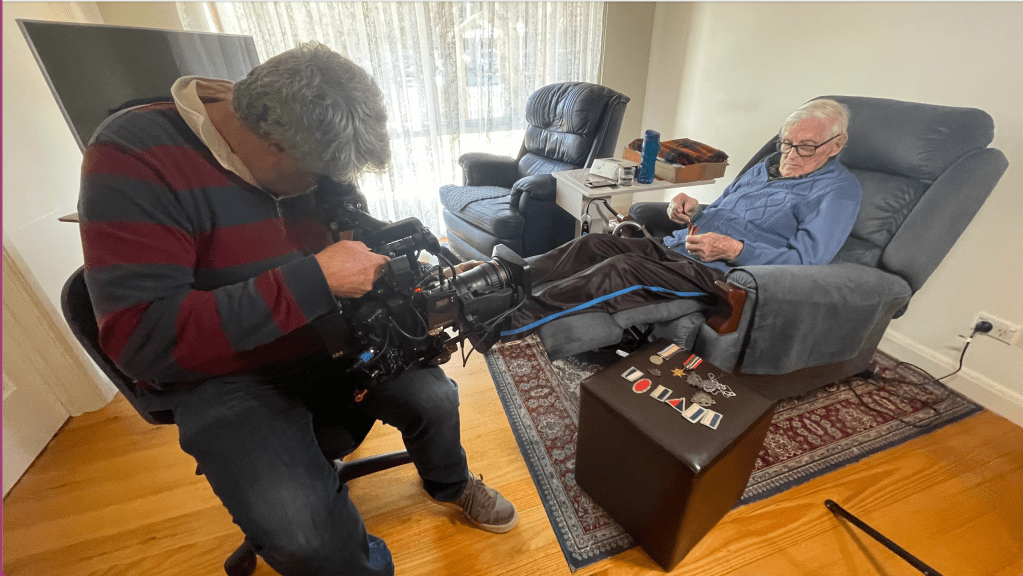
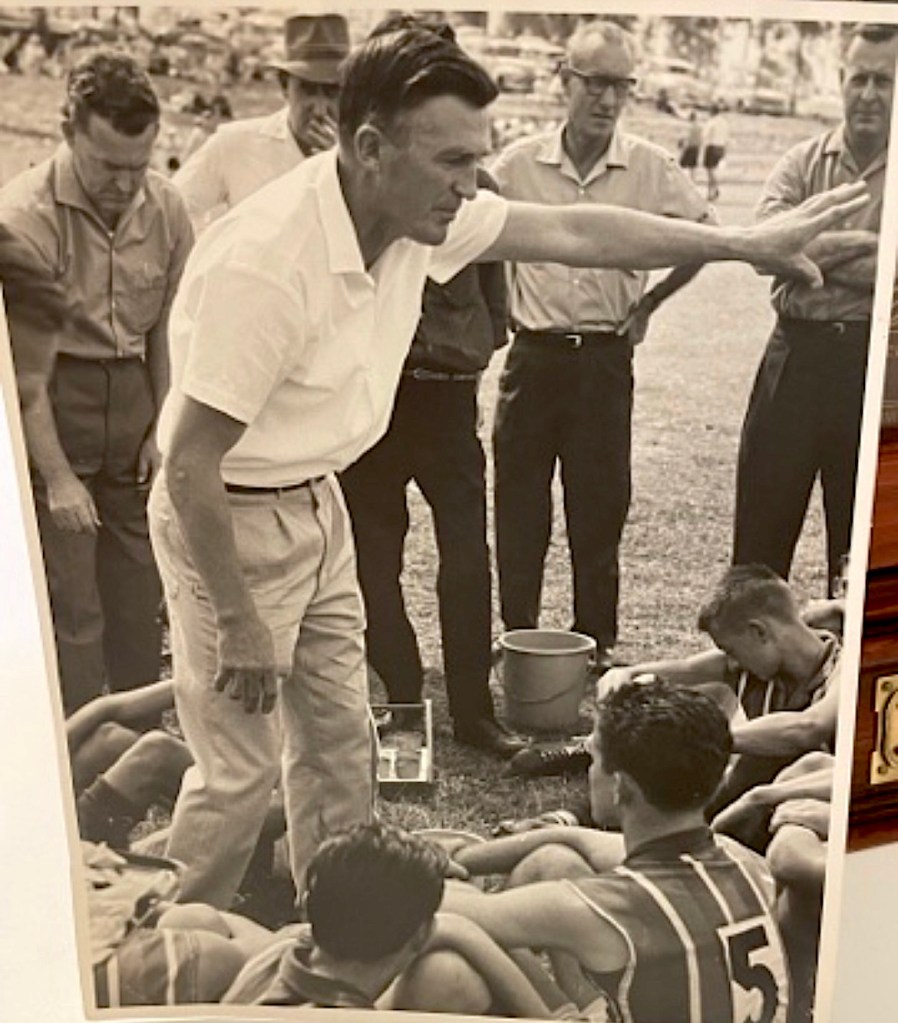
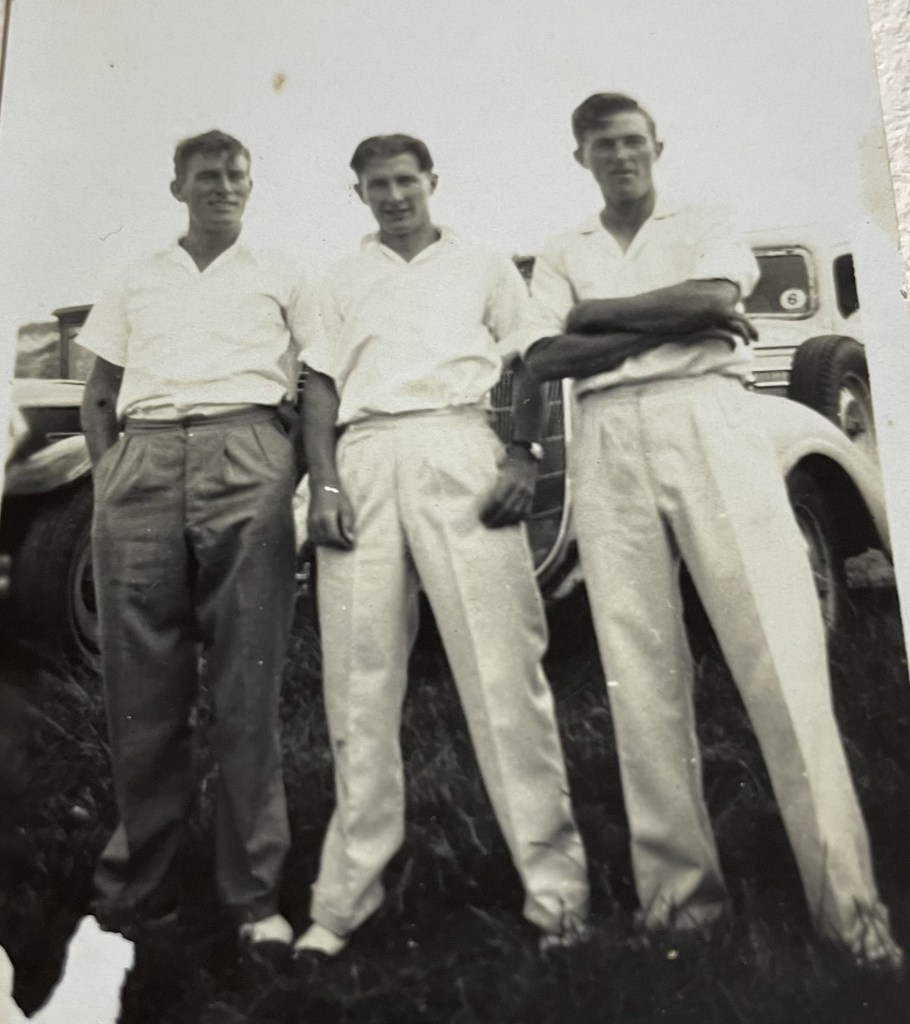
I am indebted to Claire Hunter of the AWM who met and interviewed Barney as well and wrote a beautiful pen picture.
Barney went on to serve with the 2/4th Battalion during the Aitape-Wewak campaign. Three of his younger siblings also served during the war: his brother Jimmy served with him in the 2/4th Battalion until he was struck down by Dengue fever; his sister Sally served as a corporal in Signals; and his brother Mick served as a postmaster in the air force.
Today, Barney still lives independently, enjoys dabbling in new technology and likes to swing a golf club from time to time. He celebrated his 100th birthday earlier this year (2020) and has seven grandchildren, 12 great grandchildren and one great-great grandchild.
“People say, ‘I was that scared,’ but I can’t say I was ever really scared,” he said.
“You get revved up a bit, and … you get to the point when you are ill, and you are that crook, that you start to worry a bit whether you are going to make it or not, but I couldn’t say I was ever that scared…
“It’s weird, but you get to the stage that you are just accepting of it – I might get killed tomorrow –and I’d say the big majority of blokes were like that.
“As a unit, you depend on one another for your whole life, and if you don’t work together, there’s every chance you are going to die.”
“There’s no way you would have got me to tell you all this after the war,” he said.
“I didn’t talk about it up until recently, but I think it probably helps to get things off your chest, doesn’t it?
“I always thought of my mother afterwards. They were informed that I was missing-in-action, and well, my father was in World War I, so naturally, he knew straight away what that meant, and then they said I was missing for three months; he thought I was dead.”
Today, Barney is known for his witty one-liners and his home-made bread. Looking back, he still considers himself fortunate; fortunate to have survived the three and a half months in the mountains and jungles of New Britain, fortunate to have married the love of his life, and fortunate to have had a sense of humour and zest for life that helped him through it all.
“I’d tried too hard to stay alive,” he said. “You’re not going to waste it, are you?”
Vale Barney Cain. Rest easy digger. We hope you’ve joined your mates lost on the Montevideo Maru.
*a personal footnote, Waitavolo plantation was owned by my relative Tilly Ross who has escaped to Australia. On the way to Tol, men who died at Tol or on the Montevideo Maru took refuge at our family plantation Sum Sum. Nearly 100 RAAF men escaped to Sum Sum and were airlifted to safety on flying boats.

 Max Moments
My name is Brian Cairns. Ray Cairns, one of the 2/22nd Salvation Army bandsmen, was my uncle. By a strange coincidence, my wife’s cousin, Lance Howlett, was also with the 2/22nd. Both were lost in the Montevideo Maru. My wife for 62 years sadly passed away recently and I would have very much liked to have attended the recent Dinner, and on her behalf also, to honour and remember Ray and Lance. Unfortunately, I was unaware that the function was taking place. I am very disappointed and I wonder if it would be possible to maybe develop some type of mechanism whereby descendants of 2/22nd servicemen could be advised of commemorative functions etc in future?
LikeLike
Hi Brian, there is a 2/22nd Battalion association based in Victoria. Tony Webster is the best contact.wynot17@outlook.com there is a planned trip to Rabaul for descendants for Anzac Day 2024. Regards
LikeLike
Wonderful tribute!
LikeLike
Many thanks !
LikeLiked by 1 person
hi Brian I am very sorrry you missed out on the night it was my father in law that was interviewed and then the Interview showed up on the big screen. I was very proud to be there dad passed away the next morning which was very sad but it was fitting that he was ack knowledged on that night. They gave me a Medallion on the night in respect for the people that were lost at the Monteo maybe you could get in contact with somebody about receiving one as well on behalf of your family yvonne cain
LikeLike
charming! 64 2025 Bill Newton VC, the RAAF legend of the New Guinea war dubbed “Firebug” by his Japanese foes. radiant
LikeLike